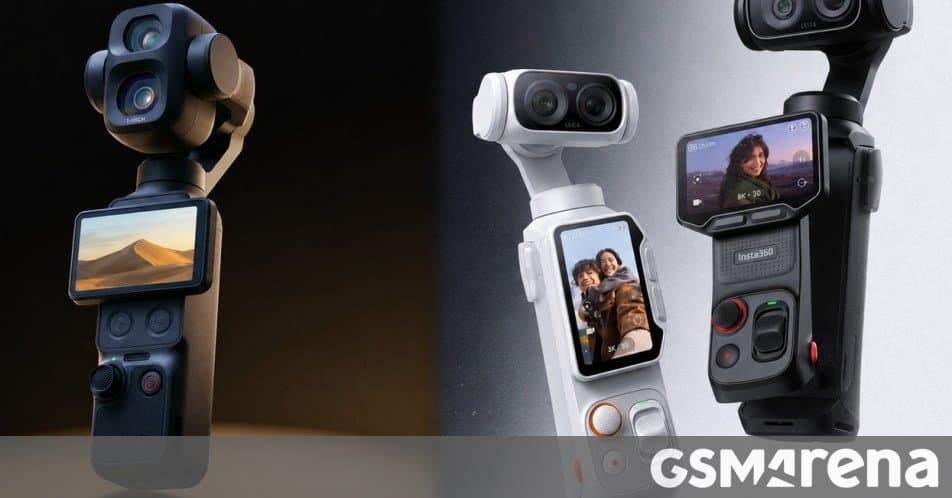
DJI’s patent fight with Insta360 turns a pocket gimbal launch into a bigger test of how much of a creator camera can be protected once form, tracking, and app workflow start looking alike.
Announcement
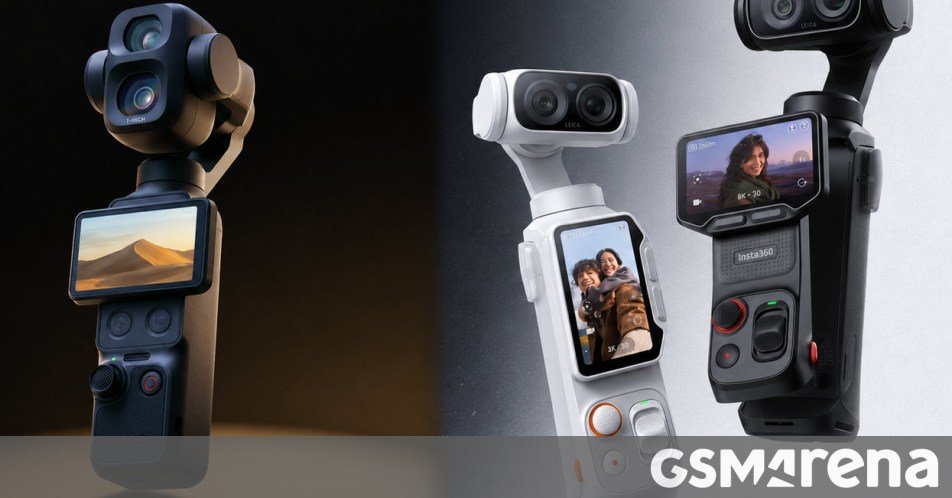
DJI has filed two U.S. lawsuits against Insta360 over the new Luna Ultra, arguing that Insta360’s handheld gimbal camera is too close to DJI’s Osmo Pocket design and feature set. According to the supplied GSMArena report, the first lawsuit focuses on design patents tied to the look and physical layout of DJI’s Osmo Pocket line, while the second cites utility patents covering how a self-contained gimbal camera handles mode switching, subject tracking, motor control, and live on-device display.
The timing is not subtle. Insta360 only just made the Luna Ultra official as a direct rival to DJI’s compact creator cameras. Recent coverage from The Verge and TechRadar describes the Luna Ultra as a $769.99 dual-camera, 3-axis gimbal device with 8K recording, a 1-inch main sensor, a telephoto camera, AI tracking, and a detachable 2-inch OLED control module. That puts it right in the same practical use case as DJI’s Osmo Pocket family, meaning small cameras for solo creators who want stabilized video without carrying a phone gimbal, mirrorless camera, tripod, and wireless monitor.
DJI is not only asking a court to decide whether the products look alike. The company is reportedly seeking an injunction that could stop sales of the Luna line in the U.S. if it wins. For buyers, that matters because this is not a background licensing dispute with no visible effect. If the court grants sales restrictions, availability, accessories, firmware support, and retailer inventory could all become part of the story.
Key Features
The design patent side is the easier part for regular buyers to understand. DJI says Insta360’s Luna series copies protected visual elements from the Osmo Pocket line, including the elongated handheld body, the neck connecting the body to the gimbal assembly, the camera module at the top, the rotatable display and bezel, the lower control area with a wheel and record button, a side accessory slot, and a port opening at the base. In plain terms, DJI is arguing that the Luna Ultra does not just share the same category, it shares too much of the same physical language.
That distinction matters. A pocket gimbal camera will almost always need a grip, a motorized head, a camera module, controls, a battery, and a port. Similarity alone is not automatically copying. The legal question is whether Insta360’s execution borrows protected ornamental details, rather than merely using the obvious ingredients of a handheld stabilized camera.
The second lawsuit is more technical. DJI’s utility patent claims reportedly cover functional behavior, not only appearance. One patent describes a gimbal control device that switches between follow and locked modes with a single control. Another covers a handheld gimbal with integrated subject tracking and real-time display, removing the need to rely on a separate phone app for framing. A third addresses using the device’s own image of the subject to generate motor commands for the gimbal. A fourth covers a self-contained system that tracks a subject and shows the image on the gimbal’s screen.
That gets close to the core appeal of these devices. The promise of a Pocket or Luna camera is that it behaves like a tiny camera operator. It sees a face, body, product, or moving subject, then moves the gimbal to keep that subject framed. The user does not need to rebalance a stabilizer or mount a phone as a monitor. The camera becomes the capture device, monitor, stabilizer, and tracking computer in one hand.
On specs, Luna Ultra appears to be aiming above basic vlogging use. Reports list dual 8K-capable cameras, a 1-inch main sensor paired with Leica-branded optics, a secondary telephoto camera with up to 12x digital zoom, 8K recording at 30fps, Dolby Vision, 10-bit I-Log, Leica color profiles, Deep Track 5.0, 47GB of built-in storage, microSD expansion up to 1TB, USB-C charging, and a claimed battery life of up to four hours. The detachable OLED control module is the most distinctive consumer-facing feature because it lets a solo creator start, stop, frame, and monitor footage from a short distance away.
DJI’s Osmo Pocket identity has traditionally been about compactness, fast startup, reliable stabilization, face tracking, and integration with DJI’s mobile software. The current DJI Osmo product family sits alongside DJI’s broader creator stack, including DJI Mimo, LightCut, wireless microphones, action cameras, drones, and accessory mounts. That is why this fight feels bigger than the outline of a camera body. DJI is defending the Pocket as a system, not just a shape.
There is no major phone OS version change attached to this announcement. The supplied report does not list minimum iOS or Android versions for Luna Ultra control, activation, editing, or firmware updates. The practical OS angle is still real, though. These cameras increasingly depend on companion apps for setup, firmware, templates, export tools, livestreaming, file transfer, and social-ready framing. Buyers should check current iOS and Android compatibility in the Insta360 app downloads and DJI’s app pages before buying, especially if they use older phones or corporate-managed devices with app install limits.
Ecosystem Context
The lawsuit also lands at a moment when creator cameras are starting to look more like mobile devices. A modern pocket gimbal is not only glass, motors, and plastic. It is an app-connected computer with image processing, subject recognition, wireless audio support, removable storage, color profiles, firmware updates, and export pipelines for TikTok, YouTube Shorts, Instagram Reels, and longer edits.
That is where ecosystem lock-in shows up. If someone already owns DJI microphones, DJI action cameras, and drones, an Osmo Pocket model fits into a familiar workflow. Files, color profiles, controls, app behavior, mounts, and muscle memory all matter. The same is true for Insta360 users who already rely on the Insta360 mobile app, Insta360 Studio, reframing tools, 360 cameras, and Insta360’s AI-assisted editing features. Switching brands can mean switching accessories, learning a new app, changing color workflows, and rebuilding presets.
For consumers, the most interesting part of Luna Ultra is not that it resembles an Osmo Pocket from across the room. It is that Insta360 is bringing its own strengths into DJI’s category. Insta360 has been strong in reframing, AI-assisted edits, mobile-first tools, and compact camera tricks that reduce friction for solo shooters. DJI has the advantage of years of Pocket hardware refinement, gimbal tuning, creator accessories, and a large installed base. A buyer choosing between them is not only comparing 8K versus 4K, or detachable screen versus integrated display. They are choosing which company they want managing the capture-to-edit path.
The legal risk complicates that choice. Early adopters often accept some uncertainty, but a patent case can change the ownership experience after purchase. If Luna Ultra sales continue normally, the device could pressure DJI to respond faster on specs and software. If DJI wins a meaningful injunction, U.S. buyers could face reduced availability or delayed support. If the companies settle, consumers may never see much change beyond licensing costs absorbed into future pricing.
The case also reflects a broader tension in consumer tech. Product categories mature until the best designs start converging. Phones became slabs, earbuds became stems or buds, smartwatches became rounded rectangles, and pocket gimbal cameras naturally cluster around a grip, screen, gimbal head, and lens module. Patent law has to separate genuine copying from normal category convergence. That is hard in a product where usability pushes every brand toward similar answers.
For now, the practical advice is simple. Anyone buying a Luna Ultra should pay attention to return windows, warranty terms, firmware update history, app compatibility, and accessory availability in their country. Anyone waiting on DJI’s Osmo Pocket 4P should watch for final specs, especially sensor size, lens options, tracking behavior, display design, internal storage, audio support, and app requirements. The lawsuit may be the headline, but the real consumer decision is still about which small camera makes it easier to get stable, well-framed, good-looking footage without dragging a larger kit around.
Comments
Please log in or register to join the discussion