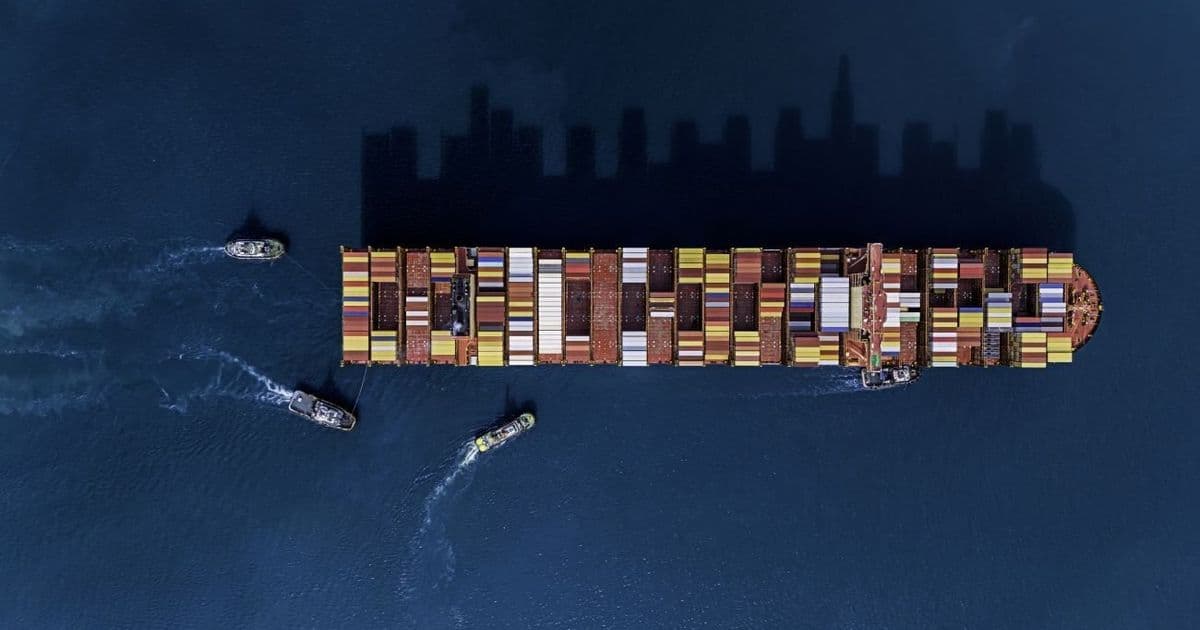
How Netstar eliminated custom integration overhead and achieved real-time fleet monitoring through Drasi's change-driven architecture, providing operational insights that reduce delays and improve coordination with partners like Maersk.
Drasi Transforms Netstar's Fleet Operations: From Fragmented Integrations to Real-Time Logistics Visibility
The Challenge: Fragmented Fleet Visibility and Integration Overhead
When a high-value container goes silent between waystations, logistics teams lose critical visibility, risking delays that cascade into port congestion and missed connections. For Netstar, a connected fleet solutions provider supporting customers like Maersk, this challenge intensified as operations scaled. The company needed timely notifications of delays, arrivals, and status changes to keep cargo moving efficiently through complex port systems.
Tracking a container's journey from pickup to port terminal required reconciling data from siloed systems: vehicle identifiers, waypoints, GPS location feeds, and IoT telemetry signals. With each new operational requirement—whether monitoring vehicle health or detecting route deviations—development teams found themselves rebuilding similar integration patterns.
"We were essentially rebuilding the same integration architecture for every use case," explains Daniel Joubert, General Manager and technical lead at Netstar. "One week we'd build a dashboard for location tracking. The next week, we'd build another one for breakdown detection. The engineering overhead was unsustainable."
Batch-based processing compounded the issue. Critical signals such as missed health reports or route delays often surfaced long after they occurred, potentially limiting Netstar's ability to take timely action.
The Solution: Drasi's Change-Driven Architecture
Rather than continue building point solutions, Netstar adopted Drasi as the backbone of its real-time data architecture. Drasi, an open-source platform built for change-driven solutions, provides continuously updated query results and automated reactions to data changes, enabling systems to detect and respond to critical events as they happen.
Drasi connects directly to existing data sources—Azure SQL databases for vehicle identifiers and waypoints, and Azure EventHub for GPS location data and IoT telemetry. Through Continuous Queries, Drasi joins this information into a single, always-current operational picture. Instead of multiple custom-built pipelines, Netstar gained a single source of truth for its fleet.
Using Drasi Reactions, Netstar defined actions that trigger when specific events occur. When a truck fails to send a health signal within its expected window, or when a delay notification indicates potential supply chain disruption, the system responds immediately without human intervention, reducing the likelihood of missed events.
Comparative Analysis: Before and After Drasi
Before Drasi
Netstar's previous approach involved:
Multiple Custom Pipelines: Each business requirement led to new integration development, with similar patterns rebuilt repeatedly across different use cases.
Batch Processing: Critical events were detected through periodic checks, creating delays between when events occurred and when they were identified.
Fragmented Views: Operators reconciled conflicting data across separate tools for vehicle health, location, alerts, and route deviations.
High Maintenance Overhead: Engineering teams spent significant time maintaining dozens of custom pipelines instead of developing new capabilities.
After Drasi
With Drasi, Netstar implemented:
Unified Architecture: A single Drasi instance supports multiple business use cases without building new infrastructure or writing additional code.
Real-Time Processing: Events trigger immediate responses, eliminating the lag between detection and action.
Integrated Dashboard: Using the Drasi plugin for Grafana, operators track all fleet metrics from a single interface.
Reduced Development Overhead: The same Drasi-driven architecture now supports tracking, health monitoring, route optimization, and customer billing status.
Business Impact and Measurable Improvements
Netstar reports tangible improvements across engineering operations and real-time responsiveness:
Faster Incident Response: Missing health signals now trigger alerts immediately rather than being discovered later through manual checks, improving the speed and reliability of operational response.
Improved Logistics Coordination: Real-time visibility into container movement through waystations and toward port terminals has enabled Netstar and partners like Maersk to coordinate shipments more efficiently, with automated alerts keeping all stakeholders informed as conditions change.
Reduced Development Overhead: Using Drasi has significantly reduced the amount of custom development previously needed to support fleet monitoring capabilities. The same Drasi-driven architecture now supports multiple business cases, from tracking and health monitoring to route optimization.
Streamlined Operator Experience: Teams moved from several monitoring tools to a single Drasi-powered Grafana interface, simplifying daily operations and eliminating time spent reconciling conflicting data from different systems.
Beyond Fleet Tracking: Extending the Architecture
Drasi's flexibility extends beyond fleet tracking. By attaching additional data sources and defining new Continuous Queries, the same Drasi instance now surfaces changes in customer billing status and legal contracts. This work required no new infrastructure, just connecting the source and writing queries (leveraging Drasi's custom Delta functions), providing business teams with up-to-date information without a separate integration effort.
Building on this foundation, Netstar is now investigating how Drasi can support predictive maintenance—spotting patterns in vehicle health data early enough to prevent failures altogether. The same change-driven architecture could also streamline coordination across broader supply chain workflows.
Industry Context and Strategic Implications
Demand for real-time supply chain visibility has intensified as global logistics disruptions highlight the risks of delayed reporting. "Our customers don't just want historical reports anymore. They need to know what's happening right now and be alerted the moment something changes," Daniel Joubert explains. "That shift from batch processing to continuous monitoring is becoming table stakes in fleet management."
Netstar's implementation reflects a wider architectural move emerging across operational solutions: from systems that store and query data to platforms that detect and react to changes as they happen. In fleet logistics, financial systems, and industrial operations, the competitive advantage increasingly lies in eliminating the lag between event and response.
"Building custom integrations for every use case was slowing us down and limiting what we could deliver to customers," Dustyn Lightfoot reflects. "Drasi gave us a reusable foundation that handles the hard parts, integrating disparate data sources and detecting meaningful changes, so we can focus on solving business problems rather than rebuilding infrastructure."
Conclusion
The collaboration between Drasi and Netstar demonstrates how open source change-driven platforms can simplify complex operational challenges while providing actionable insights across distributed systems. As logistics operations evolve, architectures like Drasi's may define the next era of competitive advantage—one where actionable insight arrives the moment conditions change.
For organizations facing similar integration complexity and real-time monitoring challenges, Netstar's experience offers valuable lessons: look for platforms that can unify disparate data sources, detect meaningful changes, and automate responses without requiring custom development for each use case. The result is not just improved operational efficiency, but a foundation for continuous innovation as business requirements evolve.
To learn more about Drasi and its change-driven architecture, visit Drasi.io.
Comments
Please log in or register to join the discussion