TerraPower receives first reactor construction permit in a decade, but faces fuel supply challenges and lack of operational experience with its sodium-cooled design.
The Nuclear Regulatory Commission has authorized staff to issue a construction permit to TerraPower for its Natrium reactor in Kemmerer, Wyoming, marking the first such approval in the United States in over a decade. The Bill Gates-backed nuclear startup can now proceed with building what it claims will be the first commercial-scale advanced nuclear plant, though significant challenges remain before the reactor can actually operate.
TerraPower's design represents a departure from traditional nuclear technology. The Natrium reactor uses liquid sodium as a cooling agent instead of water, operating at low pressure and relying on natural convection to help cool the reactor during emergencies. This approach is theoretically safer than conventional designs, but comes with its own set of engineering challenges that TerraPower has yet to prove it can overcome in practice.
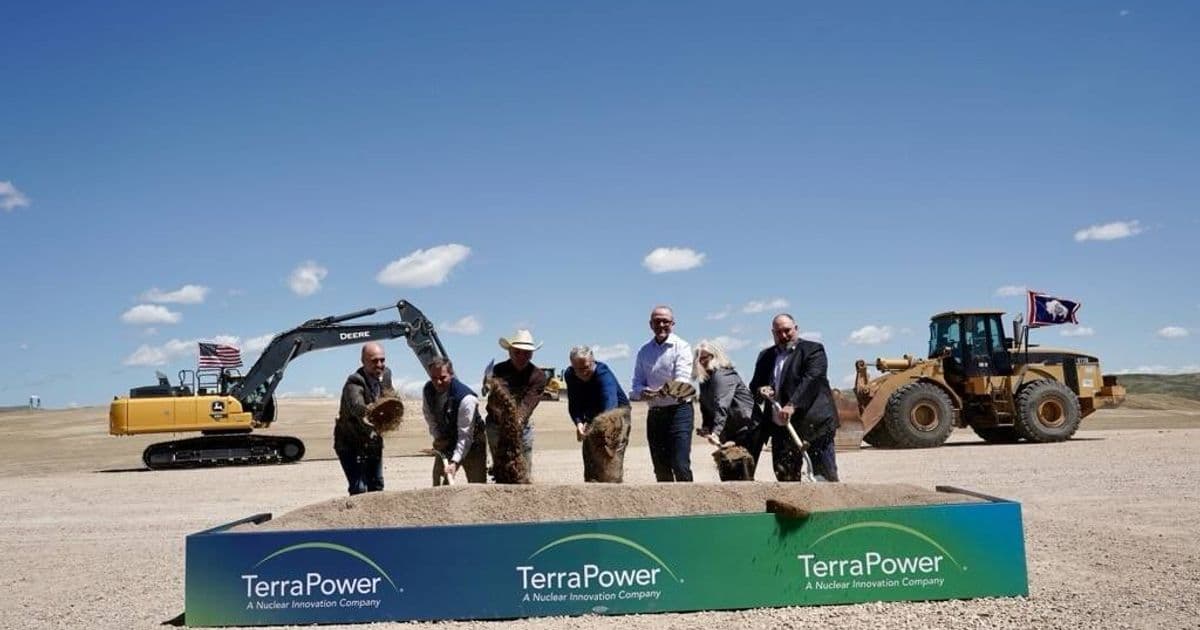
The company's path to this point has been anything but smooth. After abandoning its initial "traveling wave reactor" concept - an ambitious design that would have run on depleted uranium - TerraPower shifted to the more conventional Natrium approach. However, the company broke ground on the Kemmerer facility in 2024 without having secured the necessary construction permit, a risky move that could have left it with an expensive hole in the ground if the NRC had denied approval.
Perhaps the most pressing issue facing TerraPower isn't regulatory but logistical: fuel supply. The Natrium design requires high-assay, low-enriched uranium (HALEU) fuel, which differs from the standard low-enriched uranium used in traditional reactors. The United States has historically lacked a reliable domestic supply of HALEU, creating a bottleneck for advanced reactor development.
While the situation is improving, with several companies working to establish HALEU enrichment capabilities, most remain at pilot production levels. Industry experts estimate that commercial-scale HALEU fuel won't be widely available in the US until the end of the decade. TerraPower claims to have secured agreements with suppliers like ASP Isotopes and says it's prioritized for government-developed enrichment capabilities, but these arrangements remain untested at commercial scale.
Adding to the uncertainty is TerraPower's complete lack of experience building and operating reactors of this type. The company has never constructed a working test reactor, let alone a commercial-scale facility. This represents a significant departure from the nuclear industry's traditional approach of extensive testing and incremental scaling before commercial deployment.
For context, the only other next-generation nuclear reactor designs approved by the NRC are small modular reactors from NuScale. Neither has been built yet, with a previous attempt to deploy one failing when the project couldn't secure enough customers to proceed. This track record raises questions about whether TerraPower's ambitious timeline is realistic.
The company plans to begin construction "in the coming weeks" and hopes to have the reactor operational by 2030, reaching commercial scale by 2031. However, these targets depend not only on successful construction but also on obtaining an operating license from the NRC - a separate process that has yet to begin and could take several years.
TerraPower's progress comes amid broader debates about the role of nuclear power in addressing climate change and meeting growing energy demands, particularly from energy-intensive industries like artificial intelligence and cryptocurrency mining. The company's backers, including Bill Gates, see advanced nuclear as a crucial component of a carbon-free energy future.
Yet the challenges facing TerraPower illustrate the persistent difficulties in commercializing new nuclear technologies. Even with regulatory approval, the company must navigate complex supply chain issues, prove its design works at scale, and demonstrate it can operate safely and economically. The coming years will reveal whether TerraPower can overcome these hurdles or join the long list of nuclear startups that promised revolutionary advances but failed to deliver.
As the first company to receive a construction permit for an advanced reactor design, TerraPower has cleared a significant regulatory hurdle. But the real test - building and operating a safe, reliable, and economically viable nuclear plant - remains ahead. The nuclear industry and energy observers will be watching closely to see if this ambitious project can finally deliver on the promise of next-generation nuclear power.
Comments
Please log in or register to join the discussion