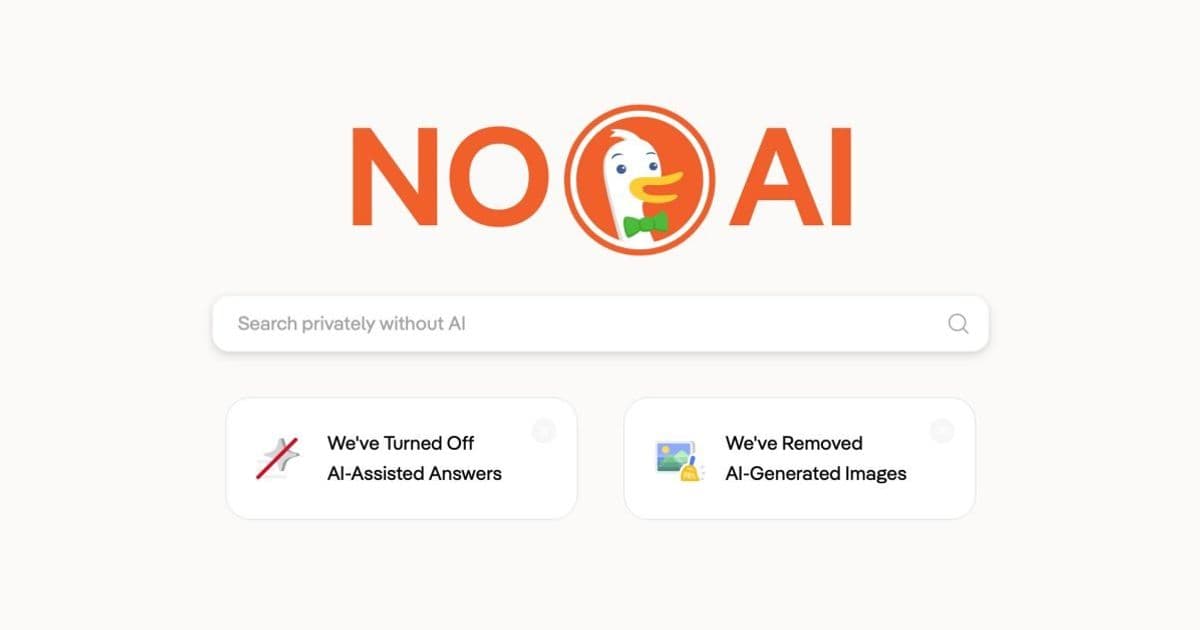
Following Google's AI-heavy I/O announcements, DuckDuckGo reports a significant spike in iPhone installs in the US, with users increasingly seeking privacy-focused, AI-free search options.
Google's recent I/O keynote, which emphasized AI integration across its ecosystem, has triggered an interesting shift in user preferences that mobile developers should note. The company announced what it called "the biggest upgrade (to Google's Search box) in over 25 years," featuring enhanced AI capabilities and a more generative search experience. While these innovations may appeal to some users, others are clearly seeking alternatives that don't push AI integration so aggressively.
DuckDuckGo has reported a substantial increase in adoption following these announcements, with particularly strong growth on iOS. According to the privacy-focused search engine, iPhone app installs in the US were up 33% week over week on average, significantly outpacing the 18.1% growth seen across all platforms. This surge indicates that iOS users in particular are actively seeking alternatives to Google's increasingly AI-driven search experience.
The growth pattern reveals several important insights for mobile developers:
Platform-Specific User Preferences: The concentrated growth on iOS suggests Apple users may have different expectations regarding AI integration compared to other platforms. This aligns with Apple's historically more cautious approach to AI implementation.
Privacy-Conscious User Base: The spike in visits to noai.duckduckgo.com (up 22.7% week over week) demonstrates a clear demand for AI-free search options. For developers implementing search functionality in their apps, this suggests offering privacy-conscious alternatives could be valuable.
Regional Considerations: DuckDuckGo notes that US growth "ran multiples of the international rate," indicating this may be a response to Google's US-centric announcements rather than a global trend. Developers should consider regional differences when implementing search features.
For mobile developers maintaining cross-platform applications, these trends highlight several important considerations:
Search Implementation Strategy: When integrating search functionality, consider offering multiple search engine options rather than defaulting to Google, especially if your app serves privacy-conscious users.
Platform-Specific Customization: The iOS-specific surge suggests platform-specific customization may be valuable. Developers might consider making DuckDuckGo the default search engine for iOS users while maintaining Google for Android, or offering a user preference setting.
Privacy Features: The migration toward DuckDuckGo underscores the continued importance of privacy features in mobile applications. Consider how your app handles user data and whether privacy-focused alternatives would enhance your offering.
Interestingly, DuckDuckGo has been experimenting with AI features while ensuring they remain optional. This balanced approach may appeal to developers looking for middle ground between full AI integration and traditional search. The company's AI-free search page provides an interesting model for how optional AI features can be implemented.
For developers implementing search functionality, the current landscape suggests several approaches:
Multi-Engine Support: Implement support for multiple search engines, allowing users to choose between AI-enhanced options and traditional search.
Privacy by Default: Consider making privacy-focused search engines the default option, with AI-enhanced search as an opt-in feature.
Platform-Specific Defaults: Given the iOS-specific surge, consider platform-specific default search engines that align with each platform's user base preferences.
The sustained growth through Memorial Day weekend, when activity typically dips, suggests this isn't just a temporary reaction but potentially the beginning of a longer-term shift in user preferences. Mobile developers should monitor these trends closely as they plan search functionality for their applications.
As the search landscape continues to evolve, developers will need to balance innovation with user preferences. The current migration toward AI-free alternatives doesn't necessarily mean rejecting AI outright, but rather offering choice and ensuring that traditional search methods remain accessible. For cross-platform development teams, this presents an opportunity to differentiate their applications by respecting diverse user preferences while maintaining functionality across platforms.
Comments
Please log in or register to join the discussion