
Epiq introduces a terminal-native issue tracking system that leverages Git for distributed collaboration and event sourcing for traceability, aiming to streamline project management within the developer's existing workflow.
The terminal has seen a resurgence in developer tooling in recent years, with everything from IDEs to project management systems finding command-line interfaces. Epiq enters this space with a terminal-native issue tracking system that integrates directly with Git repositories, aiming to reduce context switching for developers.
What Epiq Claims
Epiq positions itself as a solution that brings "devX to project management" by optimizing for developer flow through keyboard navigation, command history, filters, and autocompletion. The system uses Git as its underlying storage mechanism, with isolated worktrees and state branches to enable distributed collaboration without requiring a central service.
The core innovation appears to be its event-sourced architecture, where changes are appended as events that can be replayed deterministically. This approach theoretically allows users to inspect the state of issues at any point in time, from yesterday to years ago.
Technical Implementation
Epiq's architecture consists of several interesting technical components:
Git Integration: Rather than building a separate backend, Epiq leverages Git's distributed nature. It uses isolated worktrees and state branches to manage issue data alongside code. This approach means teams can collaborate on issues using the same tools and workflows they already use for code.
Event Sourcing: The system maintains an append-only event log for all changes to issues. This creates an immutable, traceable history of issue state changes. When conflicts occur, the system is designed to converge in memory, potentially reducing merge conflicts compared to traditional approaches.
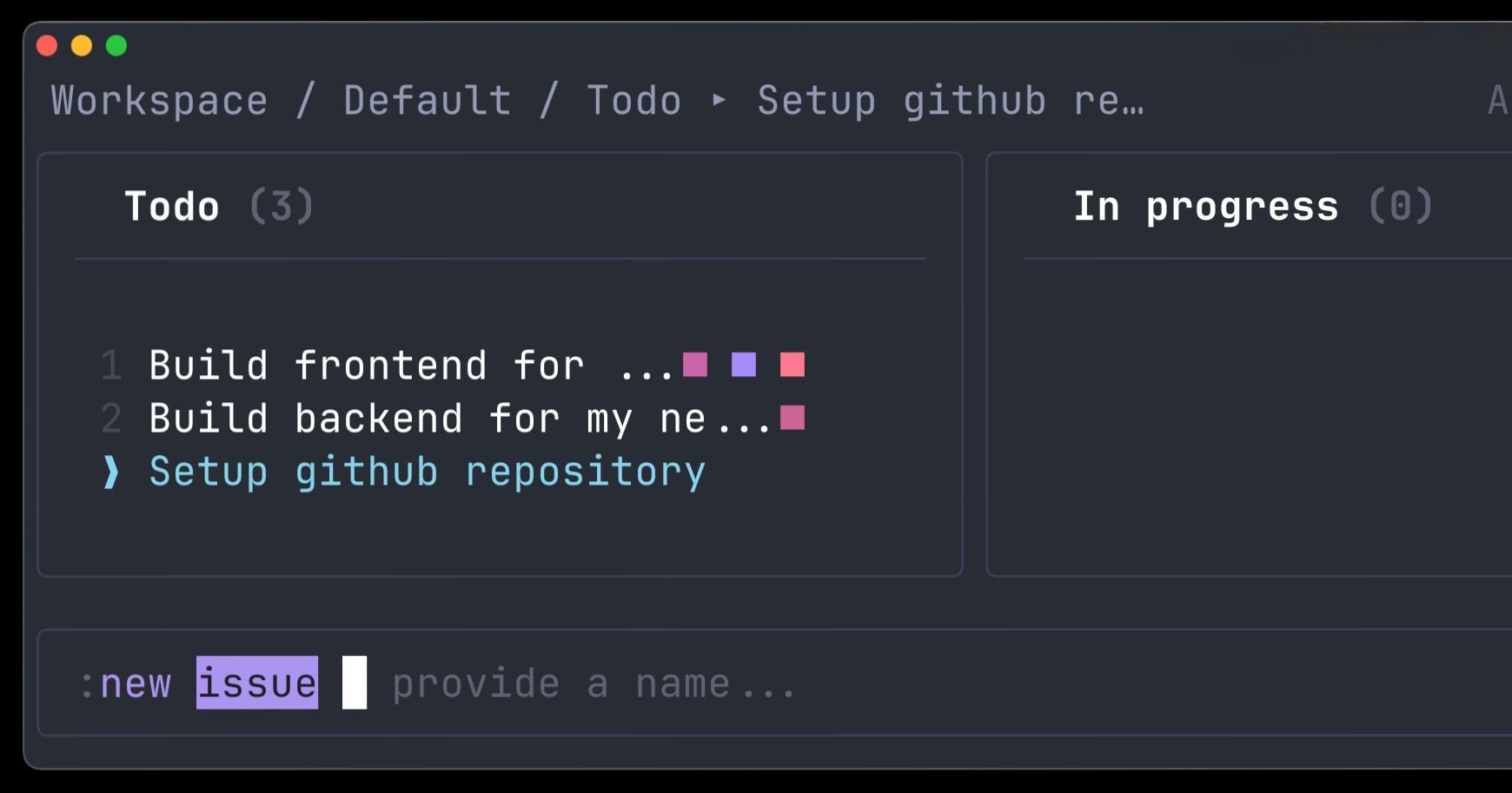
Terminal Interface: Epiq provides ASCII kanban boards navigable with vim-like controls (hjkl) or arrow keys. The interface is designed to be keyboard-centric, with filters and commands accessible through a colon-prefixed command system similar to Vim or other terminal tools.
MCP Integration: The system includes a Model Context Protocol (MCP) server, enabling AI tools to interact with Epiq in predictable ways. This positions Epiq as part of the emerging ecosystem of AI-enhanced developer tools.
What's Actually New
While terminal-based project management isn't entirely new—tools like Taskwarmer have existed for years—Epiq's integration of Git as the primary storage mechanism and its event-sourced approach represent interesting innovations.
The Git integration is particularly noteworthy. By using Git's distributed nature, Epiq potentially eliminates the need for a separate backend server while enabling familiar workflows like branching, merging, and history inspection for issues as well as code.
The event sourcing approach is another differentiator. Traditional issue trackers often store only the current state of issues, with history stored as separate records. Epiq's event sourcing creates a complete, replayable history that could be valuable for auditing, debugging, and understanding how issues evolve over time.
The MCP integration also places Epiq in the current wave of AI-enhanced developer tools, positioning it to work alongside AI coding assistants and other agent-based tools.
Limitations and Considerations
Despite its innovations, Epiq has several limitations worth considering:
Terminal Interface Constraints: While a terminal interface can be efficient for experienced users, it may present a learning curve for those accustomed to graphical interfaces. Visualizing complex relationships between issues may be more challenging in a terminal environment.
Git Complexity: Leveraging Git for issue tracking introduces the complexity of Git itself. Teams unfamiliar with Git concepts like branches, remotes, and worktrees may face additional cognitive overhead.
Collaboration at Scale: While Git works well for distributed teams, managing issue tracking across many repositories or large organizations might present challenges that a dedicated issue tracking system might handle more efficiently.
Integration Ecosystem: As a newer tool, Epiq likely lacks the integrations with other development tools (CI/CD systems, communication platforms, etc.) that more established issue trackers have built over years.
Performance Considerations: For repositories with many issues, the performance of terminal-based interfaces and Git operations could become a concern, though the event-sourced architecture might help mitigate this through efficient storage.
Practical Applications
Epiq appears particularly well-suited for:
Small to Medium Teams: Teams that already use Git extensively and prefer terminal-based workflows may find Epiq a natural fit.
Open Source Projects: The distributed nature could work well for open source projects with contributors across different organizations.
Solo Developers: Individual developers who want to keep their issue tracking close to their code without switching contexts.
AI-Enhanced Workflows: Teams using AI coding assistants that integrate with MCP could benefit from the seamless integration between code and issue tracking.
Broader Context
Epiq exists within several broader trends in developer tooling:
Terminal Renaissance: The growing popularity of terminal-based tools like Neovim, Helix, and various command-line interfaces for development tasks.
Git as a Platform: The increasing use of Git not just for version control but as a storage and synchronization mechanism for various types of data.
Event Sourcing in Developer Tools: The adoption of event sourcing patterns beyond traditional applications into developer tooling.
AI Integration: The growing integration of AI capabilities into developer tools, with Epiq's MCP server positioning it within this ecosystem.
The project's GitHub repository and documentation would provide more technical details for those interested in exploring its implementation further. For developers who primarily work in the terminal and want to minimize context switching, Epiq represents an interesting approach to issue tracking that leverages familiar tools and workflows.
Comments
Please log in or register to join the discussion