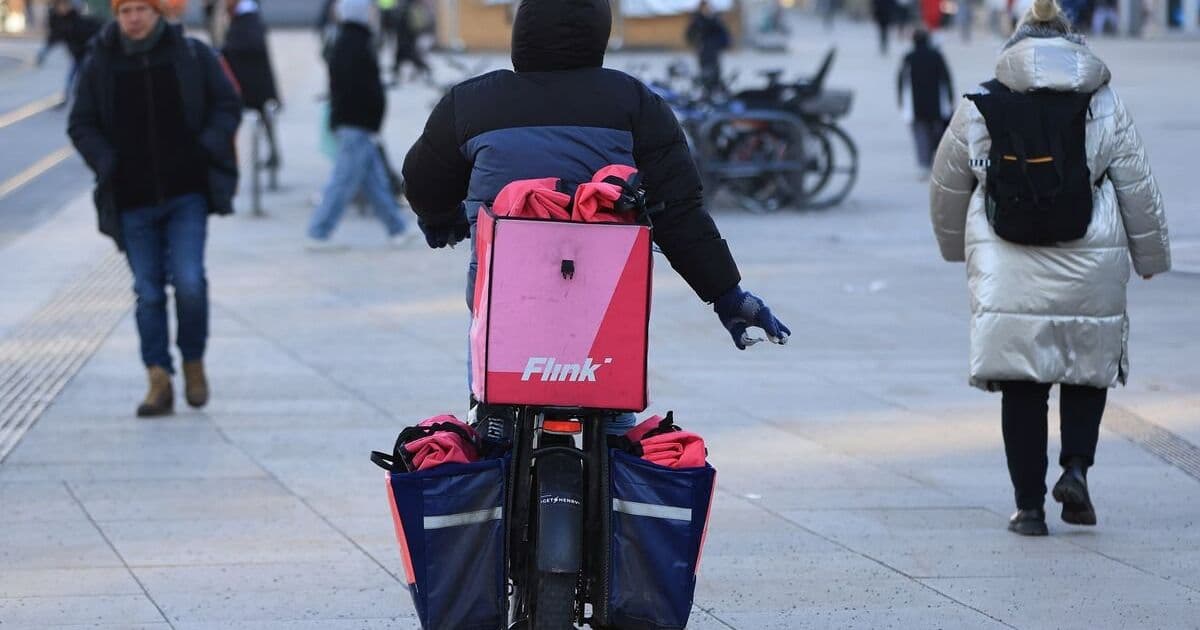
German grocery delivery startup Flink raises $100M at $900M valuation, a fraction of its $5B peak, as quick-commerce sector stabilizes after pandemic-era boom and bust.
German quick-commerce startup Flink has raised $100 million in new funding at a $900 million valuation, according to sources familiar with the deal, marking a significant reset from its pandemic-era peak valuation of $5 billion.
The funding round was led by Prosus, the Dutch tech conglomerate that has been actively investing in European grocery delivery startups. The new valuation represents an 82% decline from Flink's peak in May 2022, when the Berlin-based company was riding the wave of pandemic-driven demand for ultra-fast grocery delivery.
Flink's journey reflects the broader trajectory of the quick-commerce sector, which saw explosive growth during COVID-19 lockdowns as consumers embraced 10- to 30-minute delivery of groceries and convenience items. The model promised to revolutionize retail by using dark stores—small warehouses in urban areas—to fulfill orders rapidly.
However, the sector faced a brutal reckoning as pandemic restrictions lifted and investors questioned the economics of ultra-fast delivery. Many quick-commerce startups burned through cash at unsustainable rates, leading to widespread consolidation and failures across Europe and beyond.
At its height, Flink operated in multiple European markets and was considered one of the leading players in the space, alongside competitors like Gorillas, Getir, and Jokr. The company raised over $1 billion across multiple funding rounds before the market correction.
Sources indicate that the new funding will help Flink consolidate its position in core markets and potentially expand into new territories. The company has reportedly streamlined operations and improved unit economics since its peak valuation, focusing on profitability rather than hypergrowth.
The Prosus investment signals continued confidence in the quick-commerce model, albeit at more realistic valuations. Prosus has been building a portfolio of grocery delivery investments across Europe, including stakes in Delivery Hero and other regional players.
Industry analysts note that while the $900 million valuation represents a significant markdown from Flink's peak, it may actually reflect a more sustainable business model. The company has reportedly narrowed its focus to profitable markets and optimized its delivery network to reduce costs.
Quick-commerce remains a challenging sector, with questions about long-term unit economics and customer retention. However, the stabilization of valuations suggests that investors are willing to fund companies that have demonstrated path to profitability, even if growth has slowed.
The funding comes as the broader European tech ecosystem continues to recover from the 2022-2023 market correction. While valuations remain below pandemic-era peaks, investors are showing renewed interest in companies with clear business models and path to profitability.
Flink's ability to raise capital at a $900 million valuation, despite the dramatic reduction from its peak, suggests that the company has addressed many of the operational challenges that plagued quick-commerce startups. The investment from Prosus provides both capital and strategic backing as Flink navigates the next phase of its growth.
For the quick-commerce sector, Flink's funding represents a potential turning point. After the boom-and-bust cycle of 2020-2022, investors appear willing to support companies that have adapted to more challenging market conditions and demonstrated sustainable unit economics.
The deal also highlights the continued interest of large tech investors like Prosus in last-mile delivery and grocery technology, suggesting that while the quick-commerce gold rush may be over, there remains value in companies that can execute efficiently in this space.
As Flink moves forward with its new funding, the company will need to prove that it can achieve profitability while competing against both traditional grocery retailers expanding their delivery offerings and other quick-commerce players consolidating their positions in the market.
Comments
Please log in or register to join the discussion