
The FTX ruling turns a familiar startup story into a harder one: capital, speed, and celebrity can hide a weak control system until customers become the audit.
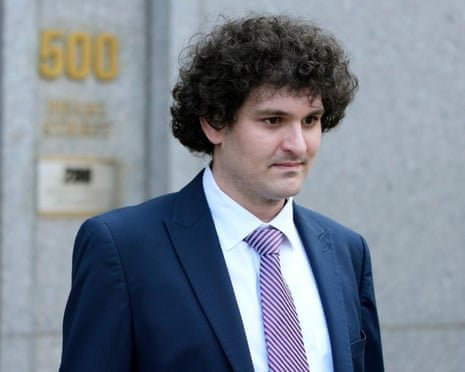
Sam Bankman-Fried has lost his bid to overturn the fraud conviction tied to FTX, the crypto exchange he built into one of the sector's most visible startups before its 2022 collapse. A three-judge panel upheld the 2023 conviction and 25-year prison sentence, according to the Associated Press, keeping one of the crypto industry’s defining fraud cases largely intact.
Company
FTX was not pitched as a fringe crypto experiment. It was marketed as a serious trading venue for digital assets, especially derivatives, with a founder who spoke the language of quantitative finance, regulation, philanthropy, and startup scale. The company sat between retail crypto speculation and institutional market infrastructure, trying to make itself look more sophisticated than many offshore exchanges while moving faster than regulated incumbents.
That positioning mattered. FTX was competing with Binance globally, Coinbase in public-market credibility, and a long list of exchanges that were trying to win liquidity, listings, and trader loyalty. Its promise was simple enough: crypto markets were fragmented, volatile, and technically awkward, and FTX would make them feel more professional. For traders, that meant liquidity, margin products, fast execution, and a slick interface. For investors, it meant a chance to own infrastructure in a market that still looked early.
The appeal decision does not change the basic story of what FTX tried to be. It changes how that story should be read. The startup narrative was not just about product velocity or market timing. It was about what happens when a company handling customer assets grows faster than its controls, governance, and internal separation of duties.
Problem They Claimed To Solve
FTX solved a real market problem before it became a cautionary case. Crypto trading was messy. Liquidity was spread across venues, derivatives demand was high, retail users wanted easier access, and professional traders wanted tools closer to what they had in traditional markets. A well-run exchange could create value by matching orders, managing collateral, reducing friction, and giving users confidence that funds were available when needed.
The hard part is that an exchange is not just a software product. It is also a trust machine. Customers hand over assets and expect the operator to maintain clean books, segregate funds, police conflicts, and survive stress events. In that kind of business, internal controls are not back-office chores. They are the product.
Prosecutors argued that FTX failed at that level. The case centered on customer funds that were misused through Alameda Research, the affiliated trading firm closely tied to Bankman-Fried. The appeals court rejected arguments that the trial had been unfair, leaving in place the conclusion that FTX customers and investors were deceived about the safety and use of their money.
For the crypto sector, the useful lesson is more precise than saying crypto itself was on trial. FTX was a centralized intermediary operating in a market that often celebrated decentralization while still depending heavily on companies that looked like brokers, custodians, lenders, exchanges, and hedge funds at once. That mix can create real efficiency. It can also blur risk until nobody outside the company can tell where customer assets end and proprietary bets begin.
Funding And Traction
The venture story was enormous. FTX raised $900 million in 2021 at an $18 billion valuation, then continued upward. In January 2022, it raised another $400 million at a $32 billion valuation, with investors reported by Axios to include Temasek, SoftBank Vision Fund 2, Ontario Teachers’ Pension Plan Board, Tiger Global, and others. Its U.S. affiliate also raised $400 million at an $8 billion valuation, according to Axios.
Those numbers gave FTX a powerful market signal. Funding at that scale told customers, employees, partners, and regulators that sophisticated investors had looked under the hood. In startup markets, that signal often substitutes for diligence in the public imagination. The FTX case is a reminder that valuation is not verification.
Traction was also visible. FTX became one of the largest crypto exchanges by volume before its bankruptcy, built a major brand through sports sponsorships and celebrity marketing, and launched ambitions beyond trading, including venture investing and financial products. The company wanted to be more than a crypto exchange. It wanted to be a broad financial platform for digital assets.
That ambition is exactly why the failure still matters to founders and investors. A startup handling money can show explosive user growth, attract elite capital, and still be structurally fragile if the operating model depends on opacity. In ordinary SaaS, a weak control environment might create churn, outages, or compliance problems. In custody and exchange businesses, weak controls can turn into missing funds.
What The Ruling Changes
The ruling narrows Bankman-Fried’s legal path, although further attempts through a full appeals court or the U.S. Supreme Court remain possible. It also keeps the sentence in place at a moment when FTX’s bankruptcy estate has been working through customer repayment processes through channels such as the FTX claims portal and the public case docket hosted by Kroll.
For the market, the bigger change is psychological. The appeal loss makes it harder to frame FTX as a misunderstood failure of risk management alone. Courts have treated the case as fraud, not merely a startup that expanded too quickly or a crypto company caught by a downturn.
That distinction affects current crypto infrastructure companies. Exchanges, custodians, stablecoin issuers, prime brokers, and wallet providers now have to sell trust in more concrete terms. Proof-of-reserves dashboards, segregated custody, independent audits, clear legal entities, and real-time risk systems are no longer nice extras for institutional buyers. They are part of the procurement checklist.
There is opportunity in that shift. The next durable crypto infrastructure companies are less likely to win because they sound more exciting than FTX. They are more likely to win because they make boring assurances visible: where assets sit, who can move them, what liabilities exist, how collateral is valued, and what happens when markets fall quickly. That is not as glamorous as a naming-rights campaign, but it is closer to what customers actually need.
FTX’s collapse also creates room for startups building compliance automation, wallet-level risk monitoring, exchange reserve attestations, bankruptcy analytics, custody orchestration, and institutional reporting. The opportunity is not to wrap old behavior in cleaner branding. It is to make financial infrastructure easier to inspect before a crisis.
The skeptical read is that the industry has heard this lesson before and only partially absorbed it. Crypto still rewards speed, liquidity, and narrative. But after FTX, the market has less patience for founders who treat governance as a tax on growth. The appeal loss reinforces that point with legal finality: when a company holds customer money, trust is not a marketing asset. It is an operating requirement.
Comments
Please log in or register to join the discussion