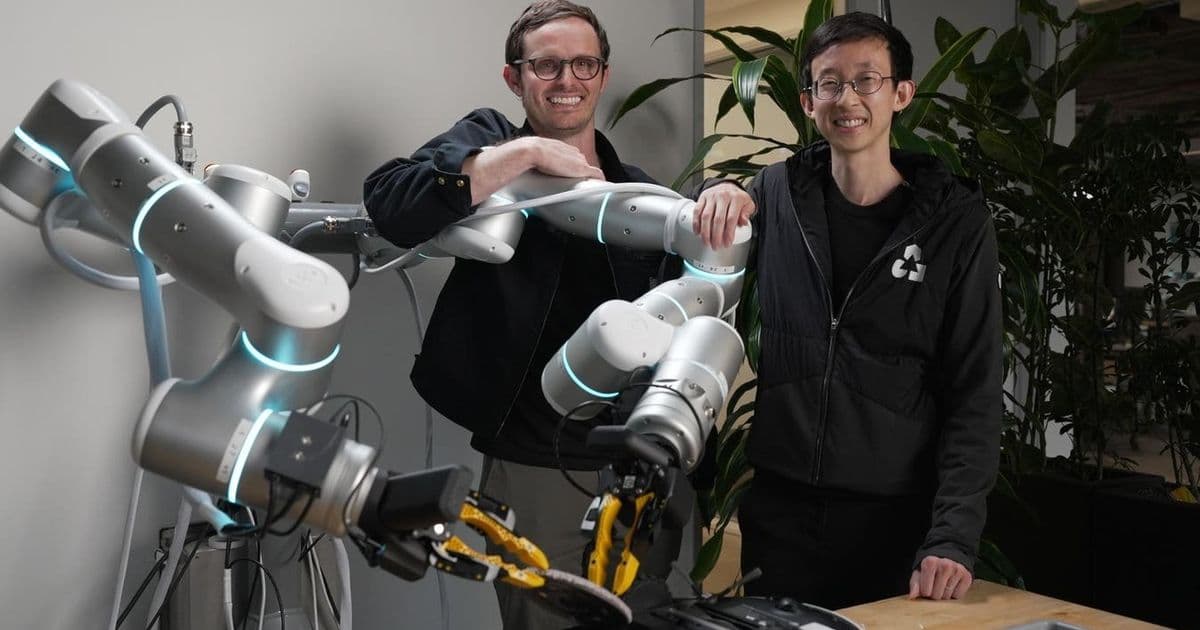
Generalist, a well-funded AI robotics startup, has unveiled GEN-1, a new AI model designed to enable robots to perform complex, dexterous tasks traditionally requiring human manipulation. The company argues that significant robotics progress will come from software advances rather than just hardware improvements.
Generalist, the AI robotics startup that raised $140 million at a $440 million valuation last year, has released GEN-1, a new AI model targeting high-dexterity robotic manipulation tasks. According to the company, the next major leap in robotics won't come from more advanced humanoid hardware, but from applying AI scaling principles to robotic control systems.
What GEN-1 Claims to Accomplish
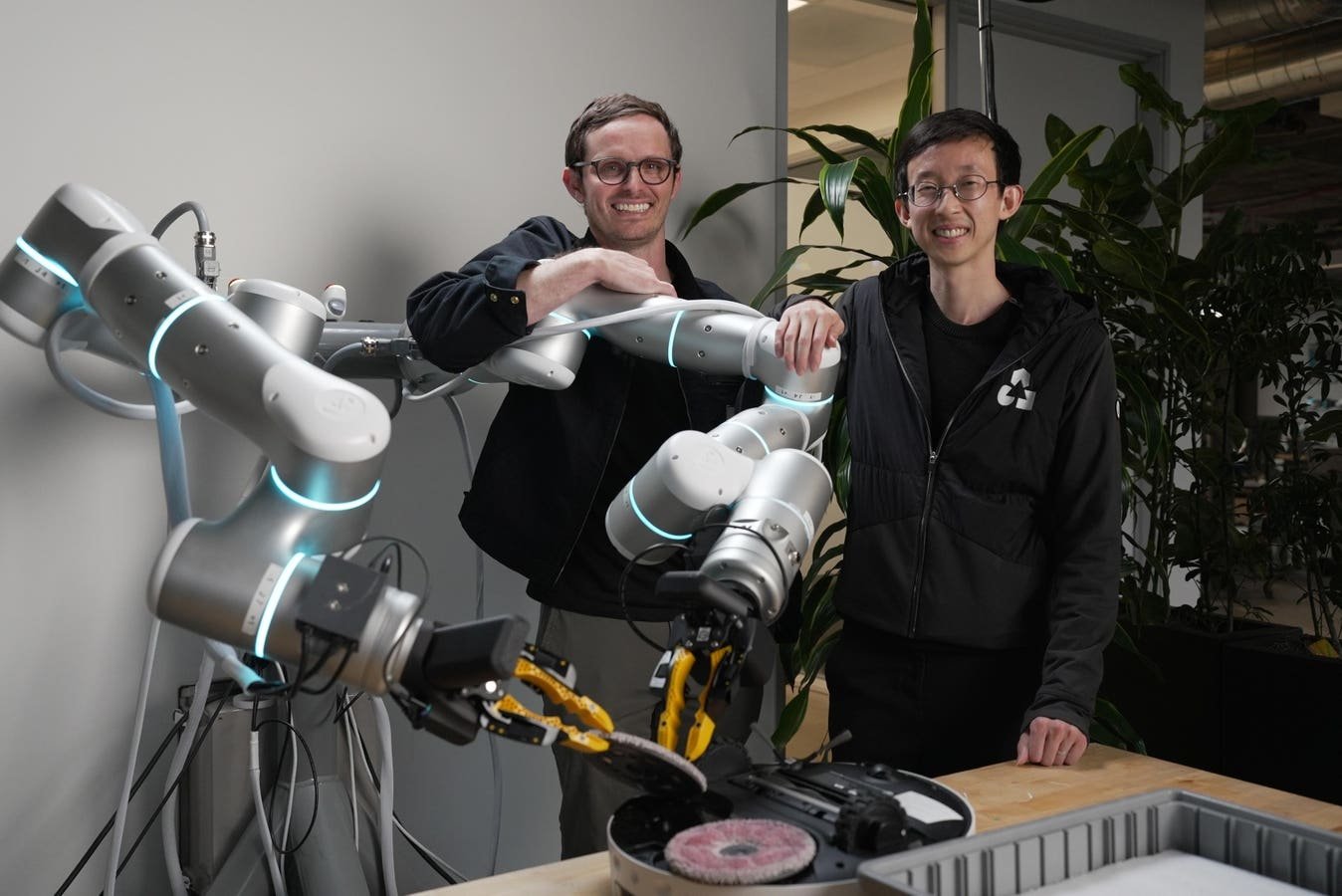
Generalist's GEN-1 is positioned as a breakthrough in robotic manipulation, promising to enable robots to perform tasks that require fine motor skills and adaptability—capabilities that have long eluded robotic systems. These include tasks like assembling small electronics, handling delicate objects, performing precise repairs, and adapting to novel object configurations in unstructured environments.
The company emphasizes that GEN-1 can generalize across different robotic hardware and task domains without extensive retraining, a significant challenge in current robotics systems. They claim the model can learn from demonstrations and then transfer that knowledge to new scenarios with minimal additional training.
What's Actually New
GEN-1 appears to build on several existing approaches in robotic learning and large language models, but with some novel adaptations:
Multimodal architecture: The model combines visual perception, tactile feedback, and language understanding in a unified framework. This allows it to process sensory information while following high-level task descriptions.
Foundation model approach: Similar to large language models, GEN-1 is trained on a massive dataset of robotic interactions across thousands of tasks and environments, enabling it to draw on broad experience when encountering new situations.
Hierarchical planning: The model decomposes complex tasks into manageable subtasks, allowing for more efficient learning and execution of multi-step procedures.
Real-time adaptation: Unlike previous systems that required extensive offline training, GEN-1 can adapt its behavior based on real-time feedback, allowing it to handle unexpected variations in task execution.
According to Generalist's technical documentation, the model was trained on over 10 million task demonstrations across 50 different robotic platforms, including industrial arms, humanoid robots, and specialized manipulation systems.
Technical Implementation
GEN-1 uses a transformer-based architecture similar to large language models but adapted for robotic control. The model processes multimodal inputs through several specialized encoders:
- A visual encoder processes camera feeds and depth information
- A tactile encoder interprets force and touch feedback from robotic grippers
- A language encoder understands task instructions and constraints
These encoded representations are then processed through a transformer backbone that generates action sequences for the robotic system. The model employs a technique called "action masking" during training, which helps it learn which actions are feasible in different contexts, reducing impossible or dangerous movements.
The training process involves a combination of supervised learning on demonstration data and reinforcement learning where the model receives rewards based on task completion quality. This hybrid approach allows the model to benefit from both human demonstrations and autonomous exploration.
Limitations and Challenges
Despite the ambitious claims, GEN-1 has several limitations that are worth noting:
Safety concerns: The model can still generate unsafe actions in novel situations, requiring careful monitoring and safety interlocks during deployment.
Sample efficiency: While better than previous systems, GEN-1 still requires significant amounts of demonstration data for new tasks, limiting its ability to quickly adapt to completely novel domains.
Hardware dependency: Although designed to be hardware-agnostic, performance varies significantly across different robotic platforms, with best results on high-end systems with precise sensing and actuation.
Real-time constraints: The model's computational requirements mean that complex tasks may experience noticeable delays between perception and action, which can be problematic for time-sensitive operations.
Long-term task execution: GEN-1 performs well on tasks that can be completed within minutes but struggles with longer-duration tasks that require maintaining consistent performance over extended periods.
Potential Applications
Generalist has identified several potential application domains for GEN-1:
- Manufacturing: Assembly and quality inspection of small components
- Logistics: Picking and packing of diverse items in warehouses
- Healthcare: Assistance with delicate medical procedures and device handling
- Agriculture: Precision handling of produce and automated harvesting
- Home assistance: Manipulation of everyday objects in unstructured home environments
The company has partnered with several industrial manufacturers for pilot deployments in electronics assembly and quality control applications, though specific performance metrics from these deployments have not been publicly disclosed.
Competitive Landscape
Generalist enters a competitive field that includes several well-funded players:
- Figure AI: Has raised significant funding for its humanoid robots and manipulation systems
- Apptronik: Developing general-purpose humanoid robots with manipulation capabilities
- Boston Dynamics: Known for advanced robotic systems but with limited commercial deployment
- Adept AI: Focusing on AI for robotic manipulation with a similar foundation model approach
What differentiates GEN-1 is its emphasis on software-first approaches rather than specialized hardware. While competitors often develop both the AI and the robotic hardware, Generalist positions itself as a platform provider that can work with existing robotic systems.
Conclusion
GEN-1 represents an interesting approach to robotic manipulation, combining techniques from large language models with specialized adaptations for robotic control. While the system shows promise in handling diverse tasks across different platforms, significant challenges remain in terms of safety, sample efficiency, and real-time performance.
The $440 million valuation suggests that investors are optimistic about the potential of software-first approaches to robotics, but the field remains highly speculative with few proven commercial applications to date. As with many AI systems, the gap between laboratory demonstrations and reliable, safe deployment in real-world environments remains substantial.
For developers and researchers interested in exploring GEN-1, Generalist has made a limited version available through their developer program, though access is restricted and comes with usage limitations.
The company plans to release more detailed technical specifications and benchmark results in the coming months, which will be crucial for the research community to evaluate the actual advances claimed by GEN-1.
Comments
Please log in or register to join the discussion