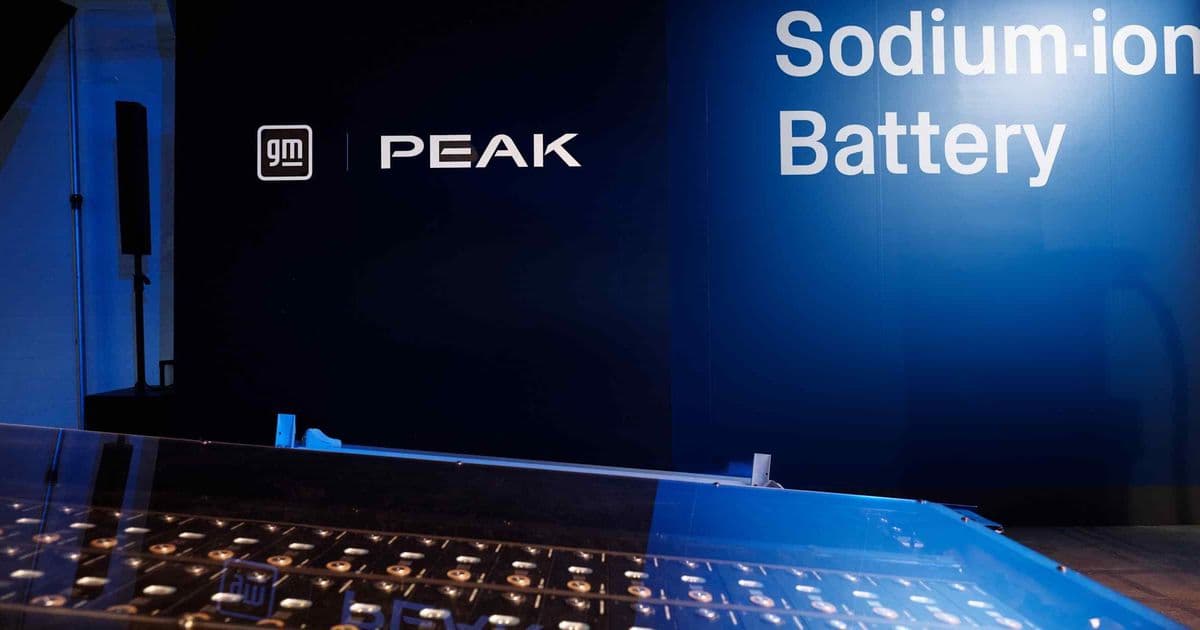
General Motors will manufacture sodium-ion cells for grid-storage startup Peak Energy and has taken an undisclosed equity stake, a move that pushes the automaker beyond cars and into the contest over who controls America's next-generation battery supply chain.
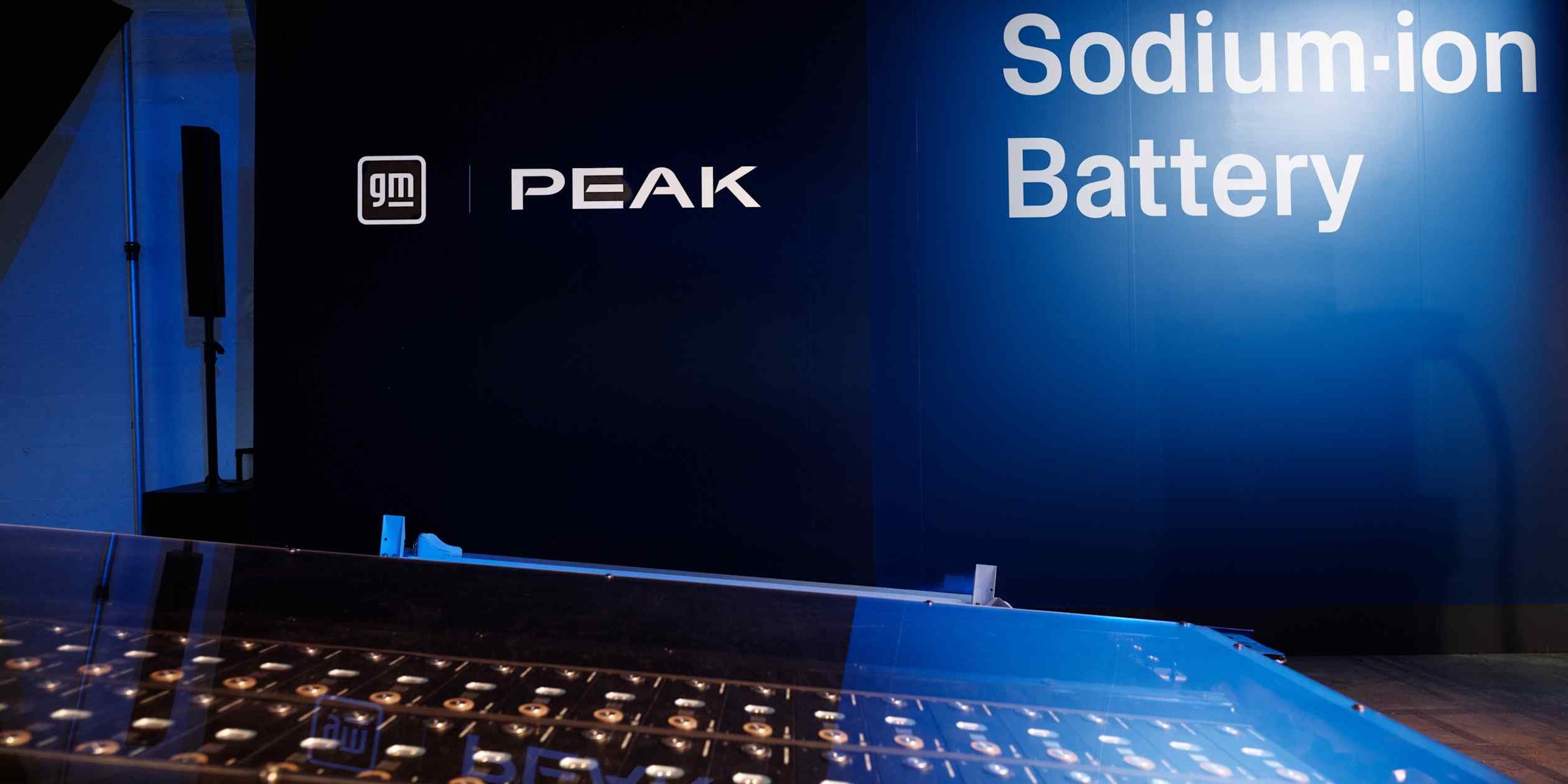
General Motors said Tuesday it will produce battery cells for Peak Energy, a Colorado-based maker of sodium-ion storage systems, under a strategic partnership that also includes an undisclosed equity investment from the automaker. The arrangement, announced from Washington, ties one of the largest U.S. manufacturers to a chemistry that almost entirely sidesteps the materials China dominates.
The headline detail is the role reversal. GM is not buying batteries here. It is making the cells, lending its manufacturing scale to a startup that designs and integrates the storage systems. That structure tells you something about where the value is migrating. Cell production is capital-heavy and unglamorous, but it is also the chokepoint everyone is fighting over, and GM already has the factories, the process engineers, and the supplier relationships to run lines at volume.
Why sodium, and why now
Sodium-ion batteries trade energy density for supply-chain independence. They store less power per kilogram than the lithium iron phosphate or nickel-rich cells that go into electric vehicles, which makes them a poor fit for cars where weight and range matter. For stationary grid storage, where a battery sits in a steel cabinet next to a substation and never moves, that weight penalty barely registers. What matters there is cost per kilowatt-hour, cycle life, and whether you can actually get the raw materials.
That last point is the whole strategic logic. A sodium-ion cell uses sodium instead of lithium, and it can be built without cobalt, nickel, or graphite. Sodium is one of the most abundant elements on the planet and is processed in many countries. Lithium refining, by contrast, is concentrated in China, which controls the majority of global processing capacity along with the bulk of cathode and anode material output. Every grid battery built on lithium chemistry is, at some point in its supply chain, dependent on Chinese facilities.
For a U.S. utility planning to install gigawatt-hours of storage, that dependence is now a procurement risk as much as a geopolitical one. Tariffs on Chinese battery imports, export controls on graphite, and the threat of either being expanded have turned supply origin into a line item. A domestically produced sodium-ion cell, even one that is heavier and slightly more expensive per unit of energy today, starts to look attractive when the alternative carries political and tariff exposure that is hard to price.
What GM gets out of it
GM has spent years and billions building battery capacity through its Ultium joint ventures with LG Energy Solution, capacity sized for an EV demand curve that has flattened harder than the industry projected. EV sales growth has slowed across the U.S. market, leaving automakers with cell-manufacturing investments that need volume to pay off. Grid storage is the obvious place to put idle or underused capacity to work.
Stationary storage is also a market on a steep climb. U.S. battery storage additions have been setting records, driven by solar pairing, grid reliability needs, and the surge in electricity demand from data centers. GM gets to participate in that growth without having to win the consumer-facing storage business itself. It supplies the cells; Peak Energy carries the customer relationships, the system integration, and the software. The equity stake means GM also captures upside if Peak Energy's systems business scales.
The move fits a broader pattern of automakers and electronics firms repositioning battery assets toward data-center and grid applications as EV demand cools. Panasonic has signaled plans to grow its data-center battery business substantially, and several Asian cell makers are redirecting output toward stationary markets as automotive orders soften.
The competitive picture
Sodium-ion is no longer a laboratory curiosity. China's CATL, the world's largest battery maker, has commercialized sodium-ion cells and is moving them into production at scale, which is precisely the outcome a U.S. supply chain is meant to counter. If sodium-ion becomes the default chemistry for grid storage, and CATL gets there first at low cost, the dependence problem simply migrates from lithium to the next generation.
That is the context for the GM and Peak Energy deal, and for the wave of onshoring announcements around it. Hanwha Qcells recently started up a fully domestic solar supply chain in the U.S., and a string of renewable manufacturers are building or relocating capacity to qualify for federal incentives and avoid tariff exposure. The common thread is an attempt to stand up entire domestic value chains, from raw material to finished system, rather than swapping one import dependency for another.
The execution risk is real. Domestic sodium-ion at competitive cost requires not just cell assembly but domestic cathode and electrolyte production, and that ecosystem is thin in the United States today. GM's manufacturing muscle solves the assembly piece. Whether the upstream materials follow, and at what price, will determine if this partnership becomes a template or a one-off.
For now, the signal is what matters. A company synonymous with the American automobile is putting capital and factory capacity behind a battery chemistry chosen specifically because it routes around China. That is a bet on where industrial policy, tariff regimes, and grid demand are all heading at once, and it is a bet GM is making with the part of its balance sheet, idle cell capacity, that needed somewhere to go.
Comments
Please log in or register to join the discussion