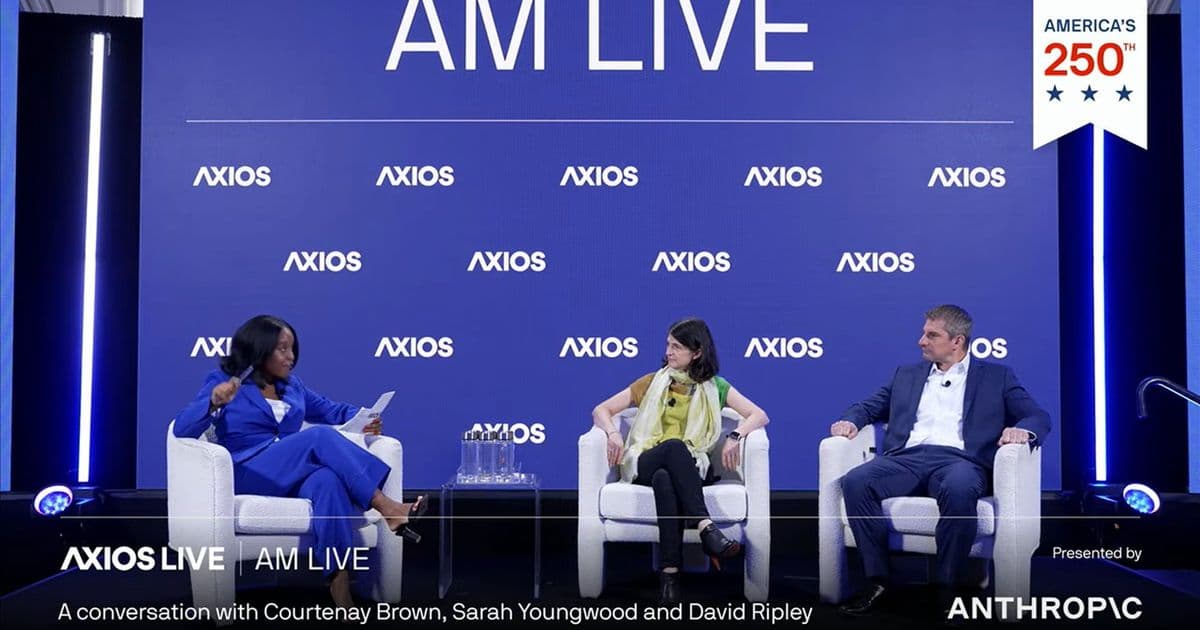
At an Axios AM Live event in Washington, Nasdaq CFO Sarah Youngwood and Kraken CEO David Ripley described an industry pivot that few predicted a few years ago: the same institutions that once treated digital assets as a liability are now building infrastructure around them. The conversation captured a broader migration of crypto from the financial fringe into the core plumbing of regulated markets.
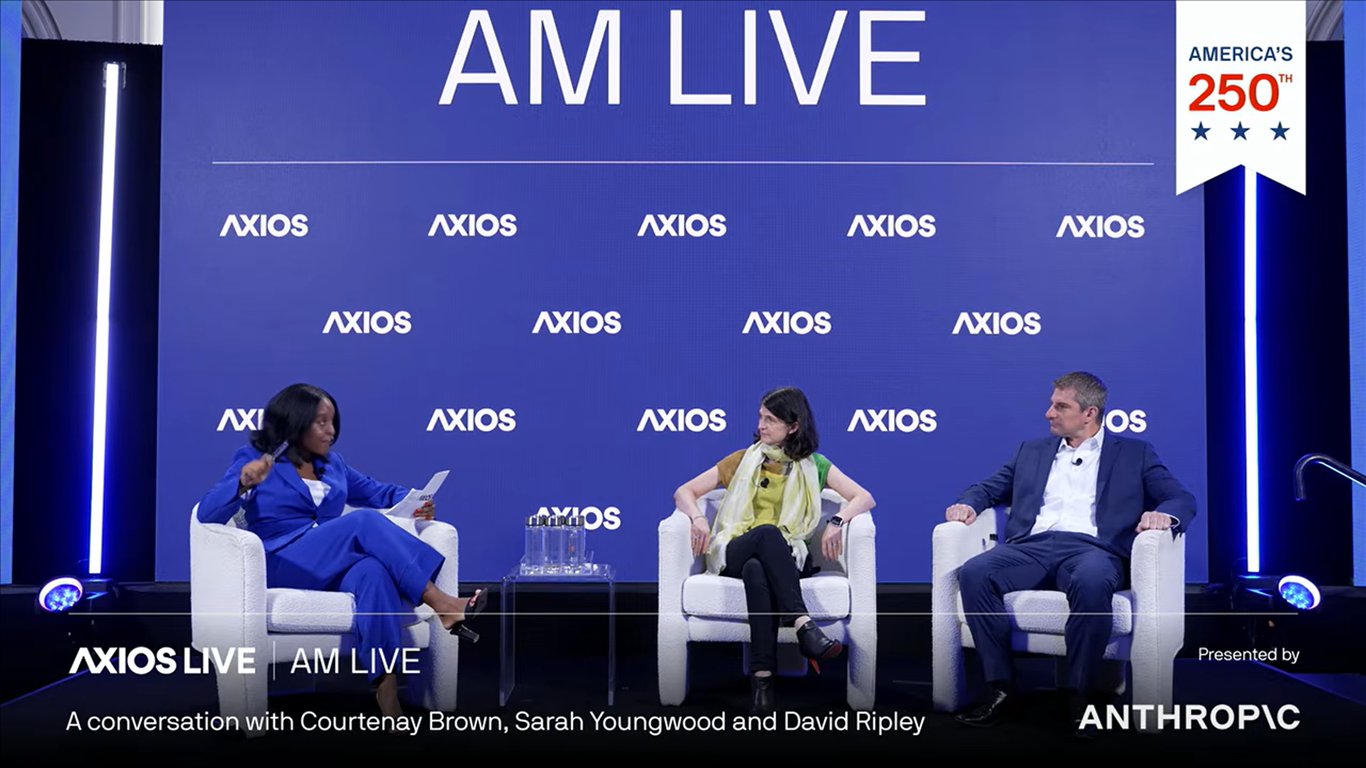
The optics alone told the story. On a stage in Washington, D.C., a Nasdaq executive and the chief executive of one of the largest U.S. crypto exchanges sat side by side, discussing not whether digital assets belong in mainstream finance, but how quickly the integration is happening. Five years ago, that pairing would have read as a contradiction. Nasdaq spent much of the last decade keeping a careful distance from crypto's volatility and regulatory uncertainty, while exchanges like Kraken operated in a parallel system that traditional finance viewed with suspicion. The Axios AM Live discussion, moderated by senior economics reporter Courtenay Brown, marked how far that posture has shifted.
What Happened
Nasdaq CFO Sarah Youngwood and Kraken CEO David Ripley used the event to frame crypto not as a speculative sideshow but as an asset class that established market operators now feel obligated to service. The subtext was clear. Institutional demand has reached a point where staying on the sidelines carries its own competitive risk. For an exchange operator like Nasdaq, whose business depends on listing, trading, and data services, ignoring a multi-trillion-dollar asset category is no longer a defensible strategy.
The bitcoin market alone has at times exceeded $2 trillion in total value, and the broader digital asset market has moved in a range that puts it on par with significant slices of traditional equity and commodity markets. When pools of capital that large form, the firms that route order flow, custody assets, and sell market data follow. That is the commercial logic driving the reversal, and it explains why a CFO whose job is to protect Nasdaq's balance sheet now speaks about crypto in operational terms rather than cautionary ones.
Market Context
The shift did not happen in isolation. Several forces converged to make Wall Street's embrace less a leap of faith than a calculated response to changing conditions.
The first was the arrival of spot bitcoin exchange-traded funds in early 2024, which gave traditional asset managers a regulated wrapper to offer clients exposure without touching the underlying tokens directly. Those products pulled in tens of billions of dollars in assets within their first year, with BlackRock's entry serving as a signal to the rest of the industry that the largest money managers had decided the category was investable. Once the biggest names committed, the reputational risk of association faded, and the competitive risk of absence grew.
The second force was regulatory. The enforcement-heavy approach that defined the prior period created uncertainty that kept many institutions cautious. A more defined rulebook, even an imperfect one, lowered the barrier for compliance departments to approve crypto-adjacent products. Exchanges like Kraken, which spent years navigating that environment, gained from clearer rules that let them pursue partnerships and listings rather than fighting defensive legal battles.
The third was infrastructure maturity. Custody, settlement, and surveillance technology improved to the point where a firm like Nasdaq could plausibly extend its market-integrity tools to digital assets. Nasdaq has marketed its surveillance technology to crypto venues for years, a quieter form of involvement that predated the public embrace. That existing technical relationship made the deeper commercial move a smaller step than it appeared from the outside.
What It Means
The strategic implication runs in both directions. For traditional venues, crypto represents a new revenue line at a time when growth in legacy equity trading is mature and margins are competitive. Listing services, market data, index products, and surveillance technology all become addressable opportunities in a market that barely existed in institutional form a decade ago. For an operator whose core franchise is the business of running markets, a new asset class is simply more market to run.
For crypto-native firms like Kraken, the embrace cuts the other way. Legitimacy from established institutions accelerates access to banking relationships, institutional clients, and the regulatory standing that comes with operating alongside recognized names. The tradeoff is that the industry's outsider identity, once a selling point, gives way to the compliance obligations and competitive pressures of mainstream finance. Kraken has signaled intentions around public-market ambitions and expanded product lines, moves that only make sense in a world where the firm expects to be measured against traditional financial companies rather than against other exchanges.
There is a structural reading here that goes beyond either company. When the operator of a major stock exchange and the head of a crypto exchange share a stage and a worldview, the boundary between the two systems is dissolving. The question shifts from whether digital assets integrate into regulated finance to which firms capture the economics of that integration. Incumbents bring distribution, regulatory relationships, and trust. Native firms bring technical expertise, liquidity in digital markets, and a head start on the products customers actually want. The competitive contest over the next several years will be fought over who controls the connective tissue between the two worlds: custody, settlement rails, tokenization platforms, and the data that prices it all.
Tokenization sits at the center of that contest. Both traditional and crypto firms increasingly point to the idea of putting conventional assets, from money market funds to private credit, onto blockchain infrastructure. If that vision plays out, the distinction between a crypto exchange and a securities exchange erodes further, because both would be trading tokenized representations of value on similar underlying technology. Nasdaq's interest in the space and Kraken's expansion beyond pure crypto trading both point toward that converging future.
The caution that defined Wall Street's earlier stance has not vanished entirely. Volatility remains a real feature of digital assets, and the regulatory framework is still being written. But the calculus that kept institutions away has flipped. The risk that once came from involvement now comes from absence. When the cost of staying out exceeds the cost of getting in, even the most conservative financial institutions move, and the Washington stage where a Nasdaq executive and a Kraken executive found common ground was a visible marker of that arithmetic playing out across the industry.
Comments
Please log in or register to join the discussion