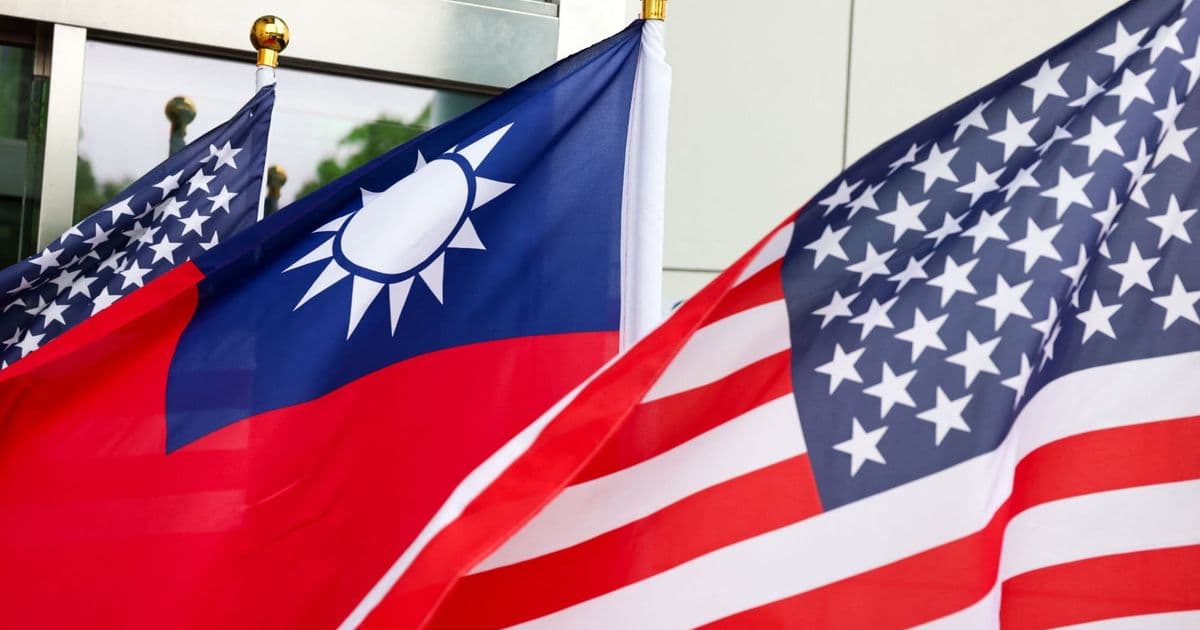
Taipei is considering export controls that would criminalize AI chip and server smuggling to any Chinese buyer, extending restrictions beyond Huawei and SMIC and aligning Taiwan's rules with Washington's processing-power thresholds for the first time.
Taiwan is weighing export controls that would block AI chip sales to every customer in China, a sharp expansion from the current system that only restricts blacklisted companies such as Huawei. According to a Bloomberg report citing people familiar with the matter, the change would let Taipei prosecute chip and server smuggling as a criminal offense for the first time, closing a gap that has so far forced prosecutors to improvise cases out of unrelated statutes.
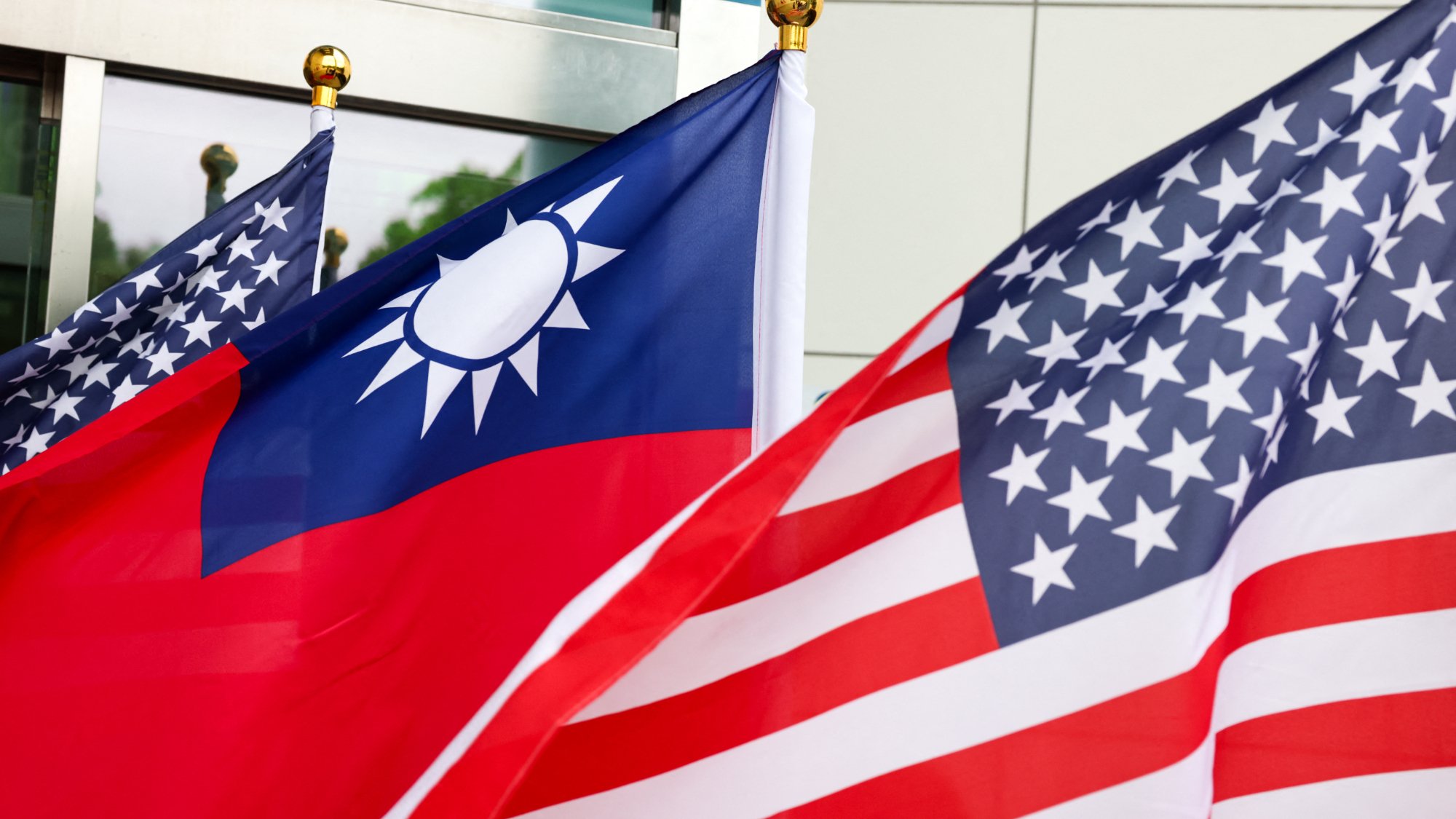
The measure is under discussion as part of ongoing trade negotiations with the United States. It would likely cover chips above a defined processing-power threshold, mirroring the way Washington structures its own restrictions. That alignment matters because it would, for the first time, give Taiwan a quantitative legal boundary rather than a company-specific blacklist.
What Taiwan Can and Cannot Do Today
Taiwan does not currently classify unauthorized AI chip exports to China as a crime. Authorities can warn potential sellers that a transaction might violate U.S. rules, but the only path through local courts runs through existing statutes that were never written with semiconductors in mind.
The limits of that approach became clear in May, when prosecutors in Keelung made the island's first known detentions of alleged chip smugglers. Three people were held over roughly 50 Nvidia-equipped servers, but the charges centered on document forgery rather than any export-control offense. That crackdown was part of the same compliance pressure that prompted Nvidia to publicly press Supermicro on tightening its channel controls.
Taipei already requires a license for shipments to Huawei and SMIC after blacklisting both in June 2024, but that requirement does nothing for the much larger pool of ordinary Chinese buyers. A smuggler routing hardware through an unlisted intermediary faces no dedicated export-control charge at all.
The Technical Threshold Behind the Rules
The U.S. controls accelerators using Total Processing Performance, the figure in its ECCN 3A090 classification that combines raw compute with the numerical precision an operation runs at. A chip that delivers high throughput at low precision can push its TPP score well past the line even if its peak FLOPS at higher precision looks modest, which is why the metric is built around precision-weighted performance rather than a single headline number.
Parts below 21,000 TPP and 6,500 GB/s of DRAM bandwidth became eligible for case-by-case China licenses in January. That cutoff sits roughly at Nvidia's H200 and AMD's MI325X. Anything above the ceiling stays barred outright. A Taiwanese rule built on the same kind of threshold would draw its boundary through the same silicon the SAFE Chips Act targets, restricting which hardware assembled on the island could legally head to mainland buyers.
Why the Server Layer Is the Real Target
The strategic logic becomes obvious once you look at where Taiwan actually sits in the supply chain. The island builds most of the world's AI servers. Foxconn alone holds roughly 40% of the global market, with Quanta, Wistron, Wiwynn, and Inventec absorbing much of the remainder. These same firms integrate Nvidia and AMD accelerators into the rack-scale systems that ship to data centers across the planet.
TSMC is already barred from manufacturing advanced chips for Chinese customers, but that restriction stops at the foundry. It does nothing to prevent fully assembled servers containing those chips from being diverted to China further downstream. A finished rack that legitimately ships to a buyer in one jurisdiction can be re-routed, re-invoiced, and physically moved across borders with far less scrutiny than a wafer ever faces.
Legislation that defines a numerical threshold would target the movement of assembled systems directly. Instead of leaving prosecutors to reconstruct cases from forgery or other violations after the hardware has already left, the law would create a clear, chargeable offense at the point a controlled system is exported. That shifts enforcement from reactive to structural, and it puts the integrators, not just the foundry, inside the regulatory perimeter.
The Political Calculation
Taipei has been reluctant until now to mirror U.S. curbs in full. Any new restrictions are likely to draw a response from Beijing, which claims Taiwan as its territory and condemned the 2025 Huawei and SMIC blacklisting. The economic stakes also cut both ways, since the Chinese market remains a meaningful destination for Taiwan's electronics sector even with advanced accelerators excluded.
Bloomberg reported that Taiwan has agreed to "directionally follow" the United States but has not decided how far it will go. The specifics remain unsettled, with details still to be finalized before senior officials on both sides sign off. For now the proposal signals intent more than a finished policy, but the direction is unambiguous: Taiwan is moving from a narrow blacklist toward a threshold-based regime that would treat the world's primary AI server supply chain as something to police at the criminal level.
Comments
Please log in or register to join the discussion