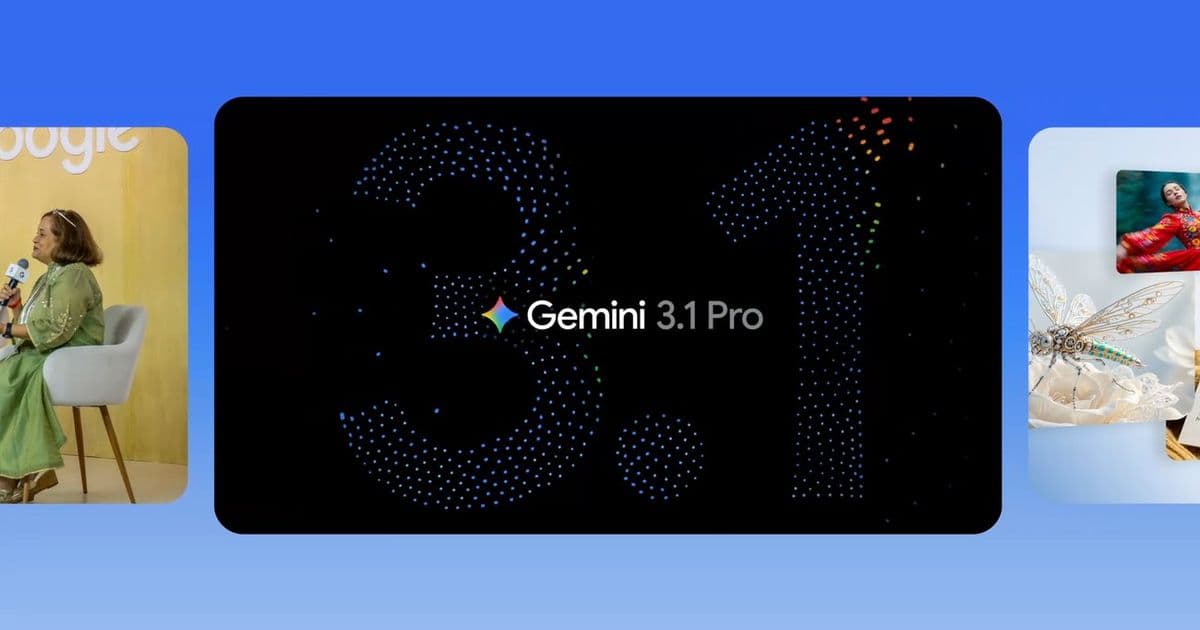
Google unveiled major AI advancements in February, including Gemini 3.1 Pro, Nano Banana 2, Lyria 3 music tools, and Olympic performance analytics, while announcing global partnerships at the AI Impact Summit in India.
February marked a significant month for Google's AI ecosystem, with the tech giant unveiling a comprehensive suite of advancements spanning consumer applications, developer tools, and enterprise solutions. From the slopes of Olympic venues to research laboratories worldwide, Google demonstrated how its AI investments are translating into tangible benefits across diverse domains.
Global Impact Through Strategic Partnerships
The month kicked off with the AI Impact Summit in India, where Google showcased its commitment to making AI accessible and beneficial globally. CEO Sundar Pichai delivered opening remarks that emphasized AI's transformative potential while calling for responsible development and collaborative approaches to ensure equitable benefits.
The summit served as a launchpad for several strategic initiatives. Google announced new Impact Challenges designed to advance scientific research and spark innovation within government institutions. These challenges aim to address complex societal problems by leveraging AI capabilities in areas like healthcare delivery, educational access, and environmental sustainability.
In India specifically, Google revealed new national partnerships focused on AI development and deployment. These collaborations will accelerate scalable AI solutions in science and education, addressing the unique challenges faced by one of the world's most populous nations. The company also committed to major infrastructure investments and expanded AI skills training programs, ensuring that the benefits of AI advancement reach beyond technological elites.
Consumer-Facing AI Enhancements
Google's consumer product lineup received substantial upgrades in February, with the release of Nano Banana 2 representing a significant leap in image generation capabilities. This new model combines the high-quality output of Pro image capabilities with the speed of Flash image processing, delivering faster results across products like the Gemini app and Google Search.
The enhanced performance means users can now generate high-quality images with remarkable speed, making creative workflows more efficient than ever. Developers gained access to Nano Banana 2 with an impressive price-performance ratio, enabling sophisticated visual creation at scale without prohibitive costs.
Revolutionizing Music Creation
Perhaps the most creative announcement came with the release of Lyria 3, Google's most advanced music generation tool to date. Available within the Gemini app, Lyria 3 allows users to create custom 30-second musical tracks by simply describing an idea or uploading a photo or video. The system generates not only the audio but also custom cover art, providing a complete creative package.
To help users maximize this new capability, Google shared six practical tips for prompting Lyria 3 effectively. These guidelines cover everything from describing desired moods and genres to specifying instrumentation and tempo, helping both novice and experienced creators achieve their musical vision.
Additionally, Google announced that ProducerAI is joining Google Labs, offering users a music creation partner that can help refine lyrics, melodies, and transform imaginative concepts into dynamic, comprehensive songs. This tool represents a significant step toward democratizing music production, making sophisticated audio creation accessible to creators without traditional music training.
Unified Creative Workflows
Google introduced Flow, a new workspace that brings together image and video generation capabilities in a single, cohesive environment. This unified approach allows creators to generate high-fidelity images and instantly use them as building blocks for video generation, all within one platform.
The updated Flow interface includes enhanced search, filtering, and asset management features, making it easier than ever to organize and manipulate creative elements. This consolidation of tools addresses a common pain point for content creators who previously had to juggle multiple applications and platforms to complete complex multimedia projects.
Enterprise-Grade AI Advancements
For developers and enterprises, Google released Gemini 3.1 Pro, described as the company's most advanced baseline model for complex problem-solving. This model demonstrates more than double the reasoning performance of its predecessor, making it particularly valuable for tasks that require deep analytical capabilities.
Gemini 3.1 Pro excels at scenarios where simple answers aren't sufficient. Whether users need clear visual explanations of complex topics, data synthesis into unified views, or assistance with creative projects, this model provides the sophisticated reasoning capabilities required for high-stakes applications.
The model is available across multiple platforms, ensuring accessibility for different use cases and organizational sizes. Developers can integrate it via APIs, while enterprises can deploy it through Google's cloud infrastructure, and consumers can access it through various Google products.
Specialized Scientific Computing
Recognizing the unique demands of scientific and engineering applications, Google released a major upgrade to Gemini 3 Deep Think. This specialized model was developed in collaboration with world-class scientists and researchers to address the complexities inherent in technical domains.
Unlike general-purpose AI models, Deep Think excels where data is messy and solutions aren't clear-cut. It moves beyond abstract theory to deliver practical, actionable results for technical challenges. This capability is particularly valuable in fields like materials science, pharmaceutical research, and complex systems engineering, where traditional AI models often struggle with ambiguity and incomplete information.
The new Deep Think is now available in the Gemini app for Google AI Ultra subscribers, with researchers, engineers, and enterprises able to express interest in early access through the Gemini API. This targeted rollout ensures that the model reaches users who can most benefit from its specialized capabilities while allowing Google to gather valuable feedback for further refinement.
Digital Resilience in the AI Era
At the 62nd Munich Security Conference, Google President of Global Affairs Kent Walker addressed the evolving landscape of digital security in an AI-driven world. Walker emphasized that new technologies create new frontiers for strategic competition, and traditional security approaches are increasingly inadequate.
Walker called for a collaborative approach to security, outlining how partners could work together to build resilience without sacrificing control over their data. This framework recognizes that in an interconnected world, security cannot be achieved in isolation but requires coordinated efforts across organizations, industries, and nations.
AI in Sports Performance
Perhaps one of the most tangible demonstrations of AI's practical benefits came through Google's collaboration with Team USA and U.S. Ski & Snowboard. Ahead of the Olympic Winter Games, Google Cloud and Google DeepMind built an AI video analysis tool to help elite athletes analyze their performance.
Using Google DeepMind's research into spatial intelligence, the platform maps an athlete's motion directly from 2D video images, even through bulky winter gear. The tool processes this data in minutes, providing near real-time feedback that athletes and coaches can use to make adjustments and improve performance.
This application showcases how AI can provide competitive advantages in high-stakes environments, where milliseconds and millimeters often determine success. The technology democratizes access to sophisticated motion analysis that was previously available only to athletes with access to expensive laboratory equipment.
Consumer Marketing Success
Google's marketing efforts also saw success with a new Gemini advertisement that aired during football's biggest weekend. The "New Home" spot, featuring a mother and son using Gemini to envision their new living space, was named by the Kellogg School as the best in-game ad in its annual ranking.
This recognition validates Google's approach to showcasing AI's practical benefits in relatable, everyday scenarios. The advertisement highlighted just a few of the many ways people are using Gemini to enhance their lives, from home design to creative projects.
Looking Forward
February's announcements demonstrate Google's comprehensive approach to AI development, spanning consumer applications, enterprise solutions, scientific research, and even sports performance. The company's strategy emphasizes both technological advancement and practical deployment, ensuring that AI benefits are accessible across different user segments and use cases.
As AI continues to evolve, Google's February releases suggest a future where intelligent systems seamlessly integrate into various aspects of work and life, augmenting human capabilities rather than replacing them. From helping Olympic athletes perfect their techniques to enabling anyone to create custom music, Google's AI ecosystem is becoming increasingly sophisticated and accessible.
The coming months will likely see these technologies mature further, with enhanced capabilities and new applications emerging as developers and users push the boundaries of what's possible with AI assistance.
Comments
Please log in or register to join the discussion