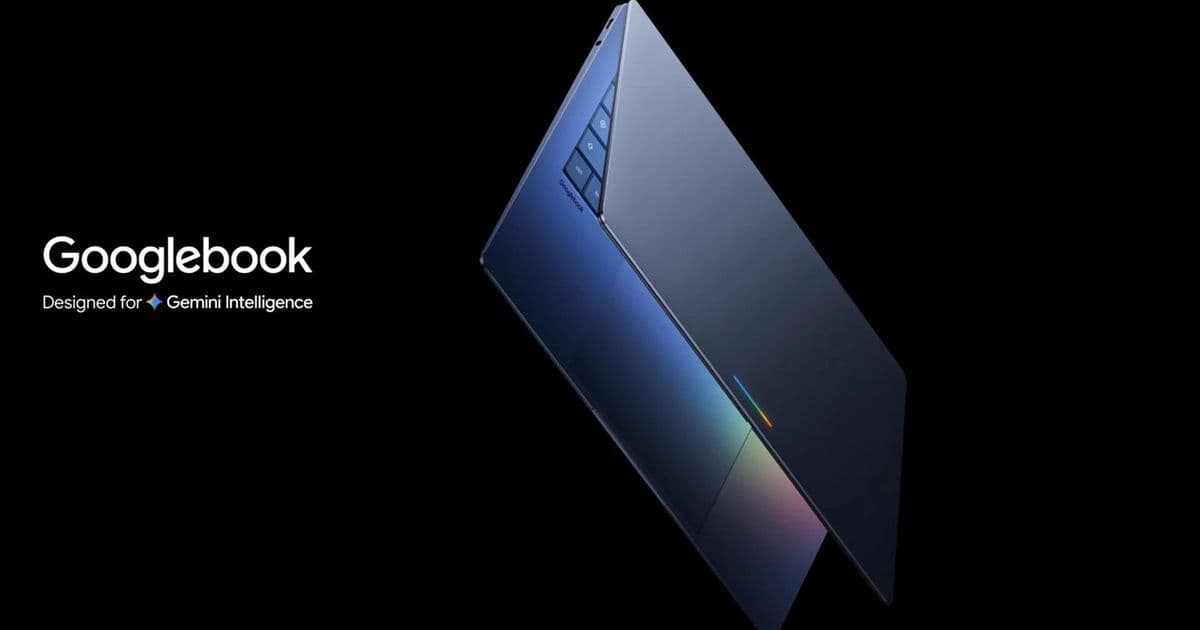
Google's upcoming AI-first laptop platform confirms partnerships with Intel, Qualcomm, and MediaTek, potentially bridging ARM and x86 architectures in a new era of personal computing with deep Gemini integration.
Google's newly announced Googlebook laptop platform represents a significant departure from traditional computing paradigms, with chipmakers Intel, Qualcomm, and MediaTek all confirming their involvement in what could become a new standard for AI-first personal devices.
The announcements came via social media channels, with Intel confirming its collaboration on X, while Qualcomm made its own statement on Instagram. Both companies described the upcoming laptops as "powerful" and "premium" devices "designed for Intelligence," signaling a fundamental shift in how Google approaches the PC market.
Technical Architecture Breakdown
At the Android Show: I/O Edition, Google revealed its new operating system that combines elements of Android and ChromeOS with deep Gemini AI integration. While the initial assumption was that this platform would be limited to ARM-based System on Chips (SoCs), Intel's involvement opens the possibility of x86 compatibility.
"The Googlebook is an entirely new category of premium AI-first laptops that deeply integrate Gemini into the core experience rather than treating AI as an add-on," explained Google VP John Maletis in an interview with Chrome Unboxed. This approach requires significant hardware optimization, particularly in the neural processing units (NPUs) that will handle AI workloads locally.
The multi-processor strategy suggests Google is targeting different market segments:
- Qualcomm chips: Likely Snapdragon X Elite series with integrated NPUs capable of 45+ TOPS (Tera Operations Per Second)
- Intel processors: Possibly Meteor Lake or next-gen Arrow Lake with dedicated AI accelerators
- MediaTek solutions: Likely Kompanio series with integrated AI capabilities
Supply Chain Implications
The partnership with three major chip manufacturers creates an unprecedented supply chain flexibility for Google. By supporting both ARM and x86 architectures, Google can:
- Mitigate supply chain risks by diversifying its hardware partners
- Target different price points with varying processor options
- Leverage competitive advantages from each manufacturer
- Potentially reduce dependency on any single chip supplier
This approach mirrors Google's strategy with Android, where multiple manufacturers create devices with varying capabilities and price points. The difference with Googlebook appears to be the strict hardware standards Google is implementing across memory, storage, keyboards, and overall build quality.
Performance and Integration Features
According to Maletis, the first wave of Googlebook laptops will focus heavily on premium hardware while bringing back the iconic Glow Bar LED lighting seen on older Chromebook Pixel devices. More importantly, these devices will run native Android applications without emulation, promising significantly better performance compared to Android app compatibility layers on traditional ChromeOS.
The integration with Gemini AI includes features like the new Magic Pointer interface, which likely leverages on-device AI for enhanced user interaction. This represents a fundamental shift from cloud-dependent AI processing to more responsive on-device intelligence.
Market Context
The Googlebook partnership comes just one month after Intel and Google announced a separate multi-year agreement focused on next-generation AI cloud infrastructure. Under this deal, Google Cloud will deploy Intel Xeon processors alongside custom IPUs (Infrastructure Processing Units) for large-scale AI workloads.
This dual relationship suggests a comprehensive strategy from Google, extending its AI capabilities from cloud infrastructure down to consumer devices. For Intel, this represents an opportunity to regain relevance in the PC market after years of competition with ARM-based solutions.
The inclusion of MediaTek is particularly interesting, as it positions Googlebook in potentially more price-competitive segments while maintaining AI capabilities. MediaTek has made significant strides in its AI processing capabilities with its latest chip generations.
Competitive Landscape
Google's entry into the AI laptop space puts it in direct competition with Microsoft's Copilot+ PCs, which emphasize AI features with specific hardware requirements. However, Google's approach differs by deeply integrating its Gemini AI across the entire OS rather than adding AI features as an afterthought.
The multi-processor strategy also gives Google an advantage over competitors tied to specific architectures. By supporting both ARM and x86, Google can address a broader market while maintaining consistent user experience across different hardware platforms.
As the first Googlebook devices are expected to launch in fall 2024, the industry will be watching closely to see how this new platform performs in real-world scenarios and whether it can establish a new standard for AI-first computing.
For more information on Google's AI initiatives, visit the official Google AI page. For technical details on ChromeOS and Android integration, check the Google Developers documentation.
Comments
Please log in or register to join the discussion