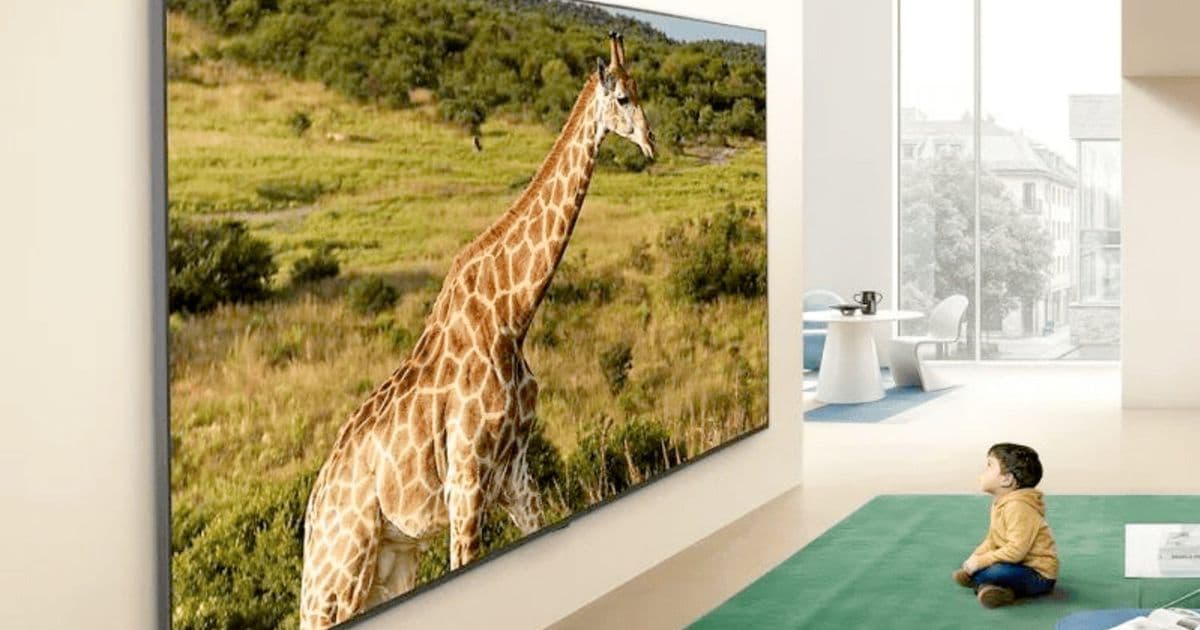
LG expands its 2026 Mini LED lineup with the QNED84B series, offering a 100‑inch model for $3,999. The range trades off some dimming zones and refresh‑rate headroom for a far more approachable price than the flagship QNED90 line, while keeping most of the premium colour and AI features.
LG’s 100‑inch Mini LED TV finally hits a realistic price point
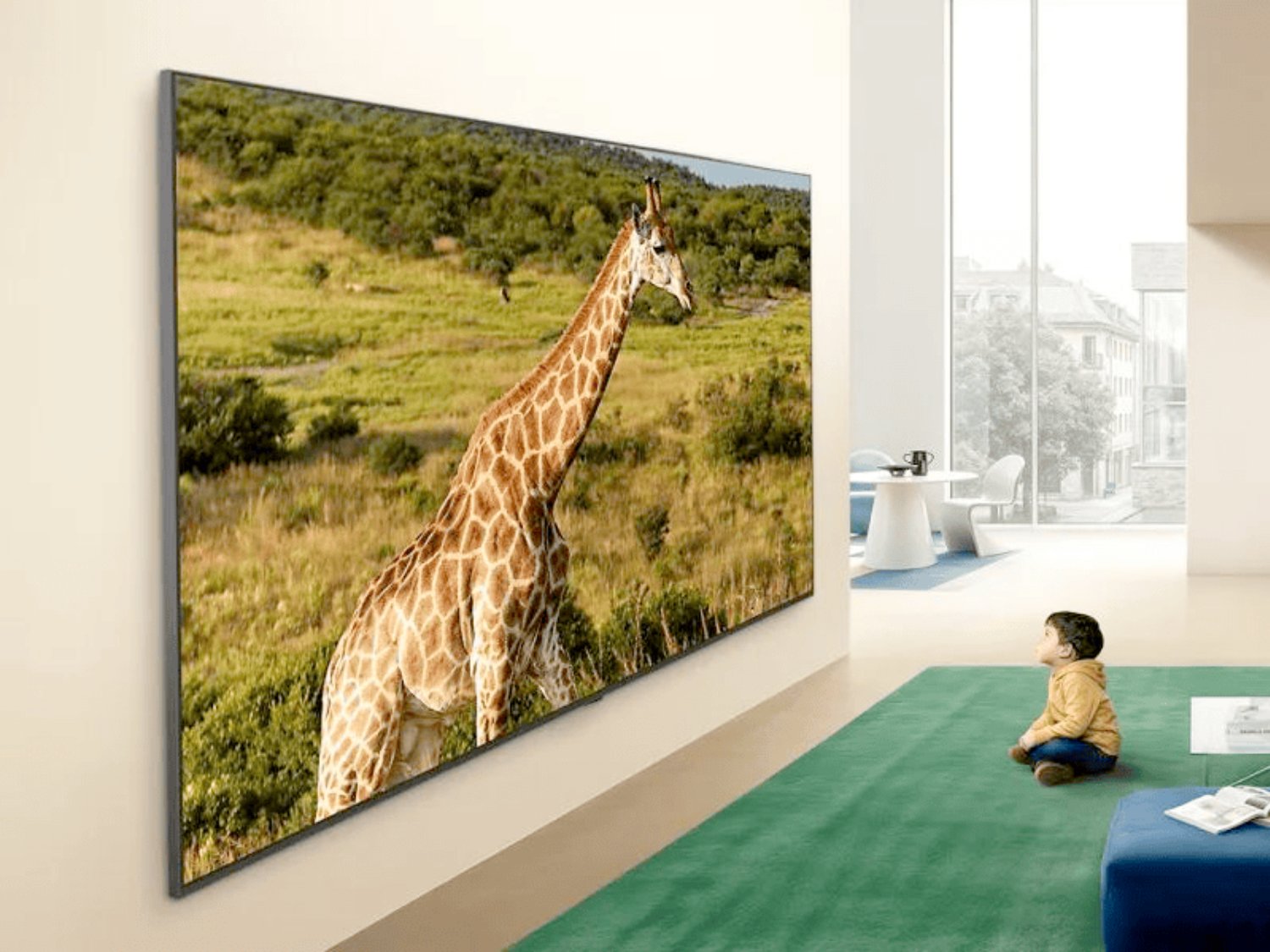
LG’s US catalogue now lists a five‑model Mini LED family – the QNED84B series – that runs from 55 inches up to a massive 100 inch panel. The series slots beneath the QNED90 line in LG’s 2026 LCD hierarchy, but its price tags are dramatically lower. The 55‑inch entry starts at $730, and the 100‑inch flagship is listed at $3,999. All units ship today through LG’s own store and major retailers such as Best Buy.
What’s new in the QNED84B line?
- Size range – 55, 65, 75, 85 and 100 inches, all 4K resolution.
- Back‑light tech – Precision Dimming Pro, a step down from the Ultra engine used in the QNED90 series. The Pro system provides fewer local‑dimming zones, which can lead to more noticeable blooming in high‑contrast scenes.
- Colour performance – Dynamic QNED Color Pro with Intertek‑certified 100 % colour volume, identical to the higher‑end QNED92B.
- HDR support – Dolby Vision, HDR10 Pro, HLG and Filmmaker Mode, all driven by the Alpha 8 AI Processor Gen 3.
- Audio – 2.2‑channel speakers with Dolby Atmos; AI Sound Pro creates a virtual surround effect.
- Gaming features – Variable Refresh Rate up to 144 Hz, a 288 Hz Motion Booster mode (lower resolution), and ALLM. The QNED92B can push 165 Hz VRR and a 330 Hz booster, but for 4K/120 Hz console play the difference is negligible.
- Smart platform – webOS 26 with Google Gemini and Microsoft Copilot integration, plus a Sports Portal and Gaming Portal for cloud streaming.
- Connectivity – No HDMI 2.2 or Dolby Vision 2 support across the 2026 lineup.
How it compares to the QNED90 series and rivals
| Feature | QNED84B (this series) | QNED90 (flagship) | Typical competitor (e.g., Samsung QN90B) |
|---|---|---|---|
| Back‑light | Precision Dimming Pro (fewer zones) | Precision Dimming Ultra (more zones) | Neo QLED Mini‑LED, similar zone count |
| Peak brightness | Not disclosed (likely 800–1 000 cd/m²) | Officially up to 1 500 cd/m² | 1 200 cd/m² typical |
| Refresh rate | 144 Hz VRR, 288 Hz Motion Booster | 165 Hz VRR, 330 Hz Motion Booster | 120 Hz native, 240 Hz motion boost |
| AI upscaling | AI Super Upscaling (4K) | Same engine, higher processing power | Samsung AI upscaling, comparable |
| Price (100‑inch) | $3 999 | $6 500+ | $7 000+ |
The most obvious trade‑off is the reduced dimming precision. Without the Ultra engine, the QNED84B can exhibit haloing around bright objects on dark backgrounds – a classic Mini LED artefact. However, the colour volume and HDR stack remain on par with the QNED92B, meaning most HDR content still looks vibrant.
In terms of gaming, the 144 Hz VRR ceiling is already above the 120 Hz ceiling of current consoles, and the 288 Hz Motion Booster offers smoother motion for PC titles that run at 1080p or 1440p. The lack of HDMI 2.2 means you won’t get the full 48 Gbps bandwidth of the newer spec, but for most users the existing HDMI 2.1 ports (48 Gbps) are sufficient for 4K/120 Hz.
When you line the QNED84B up against Samsung’s QN90B, the LG wins on colour volume thanks to its Dynamic QNED Color Pro, while Samsung typically edges ahead on peak brightness. Pricing is where LG pulls ahead dramatically – a $4 000 100‑inch panel is a fraction of the cost of comparable Samsung or Sony Mini LED models.
Who should consider the QNED84B?
- Home‑theater enthusiasts who want a massive 100‑inch screen without paying premium flagship prices. The colour accuracy and HDR support are sufficient for most streaming services and Blu‑ray discs.
- Casual gamers who play on consoles or at 1080p/1440p on PC. The 144 Hz VRR and Motion Booster give fluid motion, and the lack of ultra‑high refresh rates won’t be a bottleneck.
- Living‑room multitaskers who value the integrated AI features – upscaling, dynamic tone mapping, and the webOS 26 ecosystem – over raw peak brightness.
- Budget‑conscious buyers who still want a 100‑inch TV. At $4 000 the unit undercuts most competitors by at least $2 000.
If you need the absolute best local‑dimming performance for dark‑room cinema, the QNED90 or a high‑end OLED remains the safer bet. But for most bright‑room living‑room setups, the QNED84B delivers a compelling mix of size, colour fidelity, and price.
Final thoughts
LG’s QNED84B series shows that Mini LED can be scaled down in cost without stripping away the core selling points: high colour volume, AI‑driven processing, and a solid smart‑TV platform. The 100‑inch model at $3 999 proves that manufacturers are finally willing to bring flagship‑size panels into a price bracket that many households can consider.
For anyone looking to upgrade a large‑screen living space this year, the QNED84B offers the most balanced proposition on the market – a huge screen, respectable HDR performance, and a price that feels realistic rather than aspirational.
Sources: LG press release, Best Buy product listings
Comments
Please log in or register to join the discussion