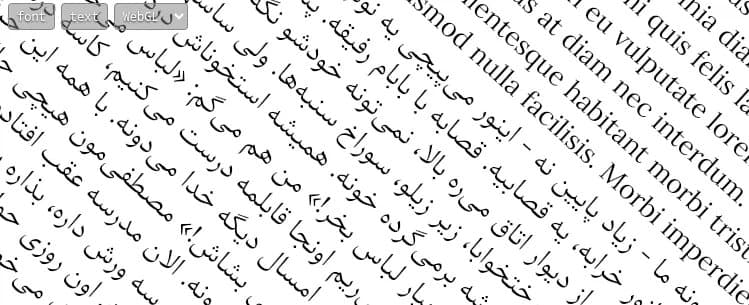
HarfBuzz 14.2 brings significant improvements to its experimental GPU-accelerated text shaping library, including a new color-glyph paint renderer and expanded hb-gpu utility options.
HarfBuzz, the widely-used open-source text shaping engine, has released version 14.2 with substantial enhancements to its experimental GPU-accelerated library. This update builds upon the foundation laid in HarfBuzz 14.0, which introduced GPU-based text rasterization supporting GLSL, HLSL, WGSL, and Apple's Metal MSL shaders.
GPU Library Improvements
The GPU library in HarfBuzz 14.2 sees several key additions. Most notably, a new color-glyph paint renderer has been implemented, expanding the engine's capabilities for handling complex text rendering scenarios. This feature is particularly valuable for modern UI frameworks and applications that require rich text display with color variations within individual glyphs.
The hb-gpu utility, which demonstrates HarfBuzz's GPU support, has been expanded with various new options. These additions provide developers with more granular control over GPU-accelerated text shaping operations, making it easier to test and benchmark different configurations.
Vector and Raster Library Updates
Beyond the GPU-focused improvements, HarfBuzz 14.2 also enhances its vector and raster libraries. The vector library now includes a new PDF output back-end, which opens up additional possibilities for applications that need to generate PDF documents with complex text layouts. This addition complements HarfBuzz's existing capabilities and makes it an even more versatile tool for document processing pipelines.
Path to Stability
HarfBuzz developers have indicated that these experimental libraries are approaching graduation to stable status. As the codebase and APIs continue to stabilize, the project anticipates reaching API and ABI stability in the near future. This progression is significant for the broader open-source ecosystem, as it will provide a reliable foundation for applications and libraries that depend on GPU-accelerated text shaping.
Performance Implications
While specific benchmarks weren't provided in the release notes, the move toward GPU acceleration represents a significant architectural shift for HarfBuzz. Text shaping is a computationally intensive process, particularly for complex scripts and languages. By leveraging GPU capabilities, HarfBuzz aims to reduce CPU overhead and improve rendering performance, especially in scenarios involving large amounts of text or real-time text manipulation.
Development and Community
The HarfBuzz project continues to demonstrate active development and community engagement. The rapid iteration between versions 14.0 and 14.2 shows a focused effort on refining the GPU-accelerated features. Developers interested in contributing or tracking progress can follow the project's development on GitHub.
Use Cases and Applications
These improvements position HarfBuzz as an increasingly attractive option for a wide range of applications. Web browsers, desktop publishing software, game engines, and UI frameworks can all benefit from the enhanced text shaping capabilities. The support for multiple shader languages (GLSL, HLSL, WGSL, and Metal MSL) ensures broad compatibility across different platforms and hardware configurations.
Looking Ahead
As HarfBuzz continues to mature its GPU-accelerated libraries, the text rendering landscape in open-source software stands to benefit significantly. The combination of performance improvements, expanded feature sets, and cross-platform compatibility makes HarfBuzz a compelling choice for developers working on text-heavy applications.
The progression from experimental to stable status for these GPU features will be worth watching, as it could influence how text rendering is approached in various software projects moving forward.
Comments
Please log in or register to join the discussion