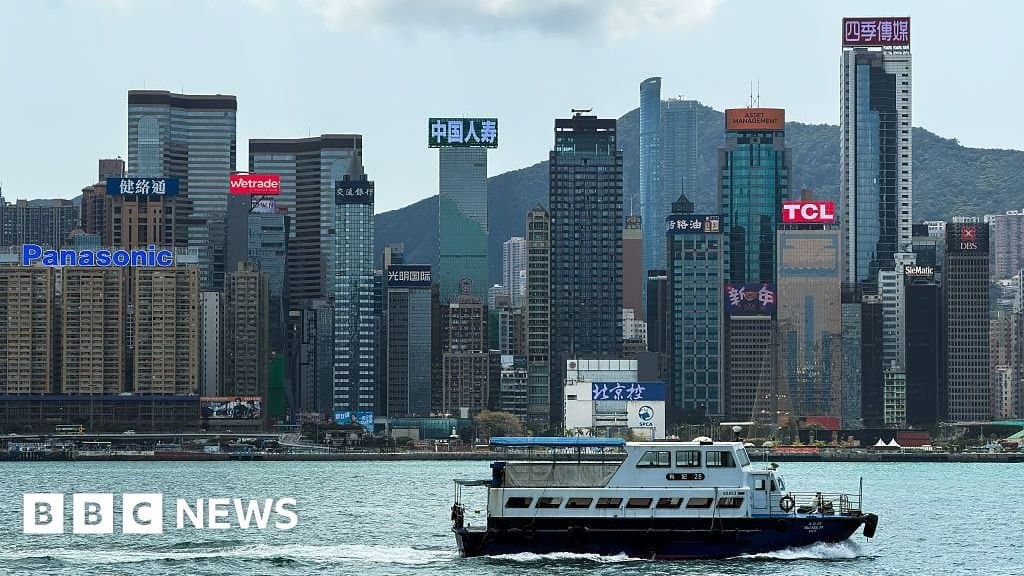
Despite declining international investor interest, Hong Kong's stock exchange is experiencing a significant increase in mainland Chinese company listings, with PwC reporting 76 new listings in 2025 compared to 30 in 2024, suggesting a strategic pivot by Chinese firms.
Despite Hong Kong's declining appeal to international investors, the city's stock exchange is experiencing a surprising resurgence in mainland Chinese company listings, according to a new report from PwC. The accounting firm found that 76 mainland Chinese companies listed on the Hong Kong Stock Exchange in 2025, more than double the 30 that went public there in 2024.
This trend represents a notable shift in the dynamics of Hong Kong's financial markets. While the city has traditionally served as a gateway for Chinese companies seeking international capital, recent years have seen many firms opt for listings in New York, London, or Singapore instead. The renewed interest from mainland Chinese companies comes as global investors have grown increasingly wary of Hong Kong's political climate and its integration with mainland China's regulatory framework.
The data suggests that Chinese companies may be finding new strategic value in Hong Kong listings, even as the city's international cachet diminishes. This could reflect a combination of factors, including Beijing's push for greater financial integration with Hong Kong, the city's proximity and cultural familiarity for mainland firms, and potentially more favorable regulatory treatment compared to other international markets.
Hong Kong's stock exchange has long been a barometer for the relationship between mainland China and the global financial community. The current pattern of increased Chinese listings amid declining international interest may signal a fundamental restructuring of the city's role in global finance. Rather than serving as a bridge between East and West, Hong Kong may be evolving into a more regionally-focused financial hub with strong ties to mainland China but reduced international appeal.
This development raises questions about the long-term trajectory of Hong Kong's financial sector. While the increased activity from mainland Chinese companies could provide a short-term boost to the exchange's performance, the underlying trend of waning international interest remains a concern for the city's status as a global financial center. The challenge for Hong Kong will be to balance its relationships with both mainland China and the international community while maintaining its competitive edge in the global financial landscape.
The contrast between growing Chinese listings and declining international participation highlights the complex geopolitical and economic forces reshaping Hong Kong's financial ecosystem. As the city navigates these changes, its ability to adapt and find new sources of growth will be crucial to its future as a major financial hub.
The situation also reflects broader trends in global finance, where political considerations and regulatory environments are increasingly influencing where companies choose to list their shares. For mainland Chinese companies, the decision to list in Hong Kong despite its reduced international appeal may represent a calculated trade-off between regulatory familiarity, geographic proximity, and access to capital from both mainland China and the global market.
As Hong Kong continues to evolve in response to these dynamics, the financial community will be watching closely to see whether the current trend of increased Chinese listings can offset the challenges posed by declining international interest, and what this means for the city's long-term position in the global financial system.
Comments
Please log in or register to join the discussion