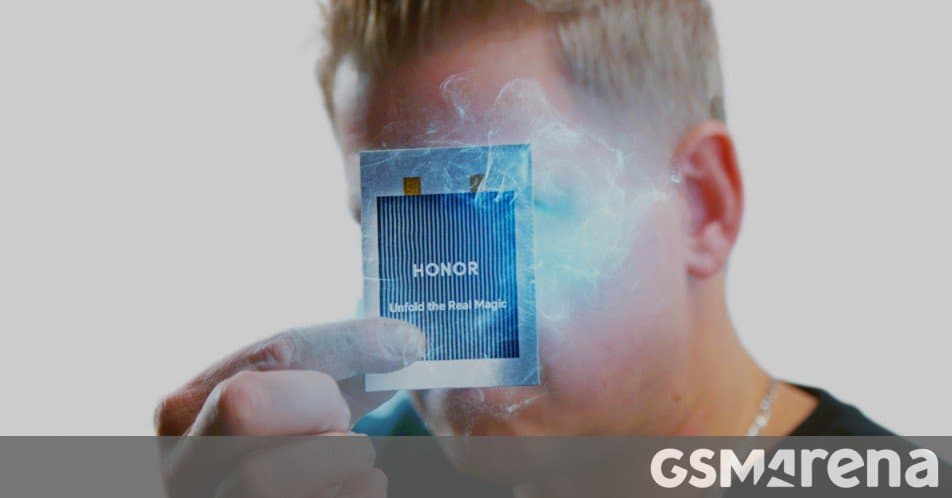
Honor unveils its Silicon-Carbon Blade Battery with 32% silicon content and 900Wh/L energy density, designed specifically for future foldables requiring 7,000mAh+ capacity.
Honor has unveiled its next-generation battery technology at MWC 2026, showcasing the Silicon-Carbon Blade Battery that promises to revolutionize power delivery in foldable smartphones. The new battery technology achieves an energy density exceeding 900Wh/L by increasing silicon content to 32%, representing a significant leap forward from the 25% silicon content used in the Honor Magic V6's battery.
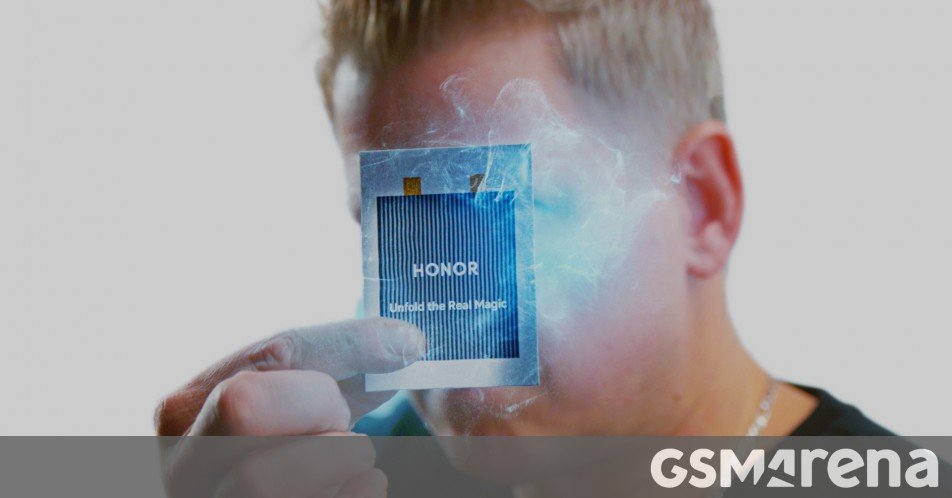
The Blade Battery's name isn't just marketing speak - Honor demonstrated its durability and rigidity by having professional card thrower Rick Smith Jr. slice through fruits and vegetables with the battery itself. Smith, who holds multiple Guinness World Records for card throwing, proved the battery's structural integrity while simultaneously showcasing its "blade-like" characteristics.
The Evolution from Magic V6 to Blade Battery
The Honor Magic V6, one of the first major announcements at this year's MWC, already pushed boundaries with its impressive specifications. The foldable device measures just 4.0mm when unfolded and 8.8mm when folded, while packing a substantial 6,660mAh battery. This achievement was made possible through Honor's partnership with ATL (Amperex Technology Limited) and the implementation of fifth-generation Silicon-Carbon (Si-C) material technology.
The Magic V6's battery represents the current state of the art, utilizing 25% silicon content - the highest in the industry according to Honor. Silicon-based anodes offer significantly higher theoretical capacity compared to traditional graphite anodes, making them ideal for devices where space is at a premium, such as foldables.
Technical Breakthroughs in Silicon-Carbon Technology
The Blade Battery takes this technology several steps further. By increasing silicon content from 25% to 32%, Honor has achieved a remarkable energy density of over 900Wh/L. This represents a substantial improvement in volumetric energy density, which is crucial for foldable devices where internal space is extremely limited.
Silicon's advantage lies in its theoretical capacity of approximately 4,200 mAh/g compared to graphite's 372 mAh/g. However, silicon anodes face significant challenges, primarily due to the massive volume expansion (up to 300%) that occurs during lithiation. This expansion can cause mechanical stress and degradation over time.
Honor's fifth-generation Silicon-Carbon technology appears to have addressed these challenges through advanced material engineering and manufacturing processes. The company hasn't disclosed specific technical details about how they've managed the volume expansion issue, but the Blade Battery's demonstrated durability suggests effective solutions have been implemented.
Designed for the Next Generation of Foldables
The Blade Battery is specifically engineered for future foldable devices that will require battery capacities of 7,000mAh and beyond. This increased capacity will be essential as foldables continue to evolve with larger displays, more powerful processors, and additional features that demand more power.
For context, the current generation of flagship smartphones typically features batteries ranging from 4,500mAh to 5,000mAh. The move to 7,000mAh+ in foldables represents a 40-55% increase in capacity, which will be crucial for supporting all-day usage of increasingly power-hungry foldable devices.
Industry Implications and Competition
Honor's battery innovation comes at a time when the foldable smartphone market is experiencing rapid growth. Competitors like Samsung, Huawei, and Xiaomi are all investing heavily in foldable technology, making battery innovation a key differentiator.
Samsung's recent foldables, such as the Galaxy Z Fold 5 and Z Flip 5, feature batteries in the 4,400mAh to 4,565mAh range. Honor's Blade Battery technology could potentially enable Samsung and other manufacturers to significantly increase battery capacity without compromising the thin, lightweight designs that are crucial for foldable appeal.
Practical Applications and User Benefits
The increased battery capacity enabled by Blade Battery technology will translate to tangible benefits for users. Foldable devices, with their larger displays and more complex hinge mechanisms, typically consume more power than traditional smartphones. A 7,000mAh+ battery could provide 1.5-2x the usage time compared to current foldable devices.
Additionally, the improved energy density means manufacturers can either increase battery capacity within the same form factor or reduce the overall device thickness while maintaining current battery life. Both approaches have merit - some users prioritize slim designs, while others value maximum battery life.
Manufacturing and Commercialization Timeline
While Honor has demonstrated the Blade Battery technology, the company hasn't provided specific details about when devices featuring this technology will reach the market. The transition from demonstration to mass production typically takes 12-18 months for new battery technologies, suggesting we might see Blade Battery-equipped devices in late 2026 or early 2027.
The manufacturing process for Silicon-Carbon batteries is more complex than traditional lithium-ion batteries, requiring specialized equipment and quality control measures. Honor's partnership with ATL suggests they have the manufacturing capability to scale production, but the company will need to ensure consistent quality and reliability at scale.
Environmental and Sustainability Considerations
Silicon-Carbon batteries offer potential environmental benefits compared to traditional lithium-ion batteries. Silicon is more abundant and has a lower environmental impact in terms of mining and processing compared to some materials used in conventional batteries.
However, the increased energy density also means these batteries can store more energy, which could lead to longer device lifespans and reduced electronic waste. If foldable devices can maintain acceptable battery life for 3-4 years instead of 2-3 years, it could significantly reduce the environmental impact of the mobile device industry.
Looking Ahead: The Future of Mobile Power
Honor's Blade Battery represents more than just an incremental improvement - it's a glimpse into the future of mobile device power delivery. As devices become more powerful and feature-rich, battery technology must evolve to keep pace.
The 32% silicon content and 900Wh/L energy density achieved by the Blade Battery set a new benchmark for the industry. Other manufacturers will likely respond with their own innovations, potentially leading to a new era of mobile device capabilities.
For foldable devices specifically, this technology could be transformative. The combination of increased battery capacity, improved energy density, and maintained or reduced device thickness could finally address one of the key limitations that has held back foldable adoption - battery life concerns.
As the mobile technology landscape continues to evolve, innovations like Honor's Blade Battery will play a crucial role in enabling the next generation of devices and experiences. The demonstration of this technology at MWC 2026 signals that the industry is ready to move beyond the limitations of current battery technology and embrace a future where power constraints no longer dictate device design and capabilities.
The mobile industry will be watching closely to see how quickly Honor can bring Blade Battery technology to market and how competitors respond to this significant advancement in battery technology.
Comments
Please log in or register to join the discussion