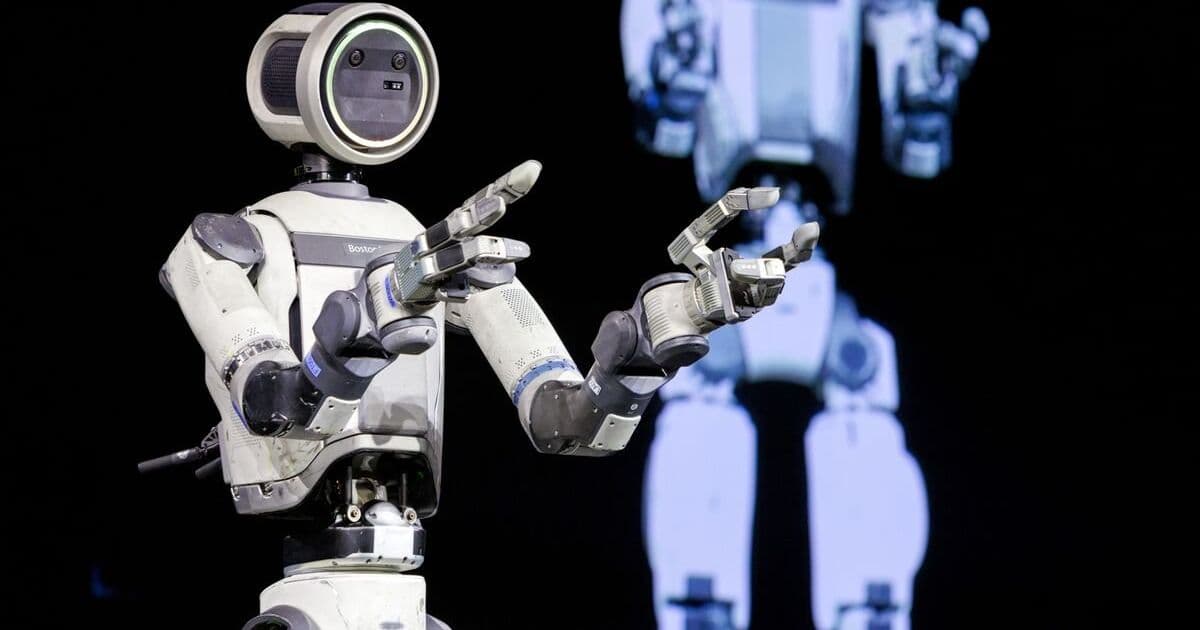
Hyundai aims to deploy its Atlas humanoid robot in automotive assembly by 2028, marking a major step in commercializing advanced robotics after investing billions in Boston Dynamics since 2021.
Hyundai Motor Co. is accelerating its robotics ambitions with plans to deploy the Atlas humanoid robot in automotive assembly operations by 2028, according to recent reports. The South Korean automaker has invested billions of dollars in robotics since acquiring Boston Dynamics in 2021, positioning itself as a major player in the emerging humanoid robot market.
The Atlas robot represents Hyundai's latest push into advanced automation technology. The company showcased its robotics capabilities at CES 2022, where Executive Chair Euisun Chung took the stage accompanied by "Spot" - Boston Dynamics' quadruped robot that has gained widespread attention for its agility and versatility. This public demonstration signaled Hyundai's commitment to integrating cutting-edge robotics into its manufacturing processes.
Humanoid robots like Atlas are designed to perform tasks that require human-like dexterity and mobility, making them particularly suited for complex assembly operations in automotive manufacturing. Unlike traditional industrial robots that are fixed in place and designed for specific repetitive tasks, humanoid robots can navigate factory floors, manipulate objects with precision, and adapt to varied work environments.
The timeline for Atlas deployment in 2028 suggests Hyundai is taking a measured approach to commercialization. Developing reliable, safe humanoid robots for industrial use requires overcoming significant technical challenges, including balance control, object manipulation, and human-robot interaction safety protocols. The four-year timeline allows for extensive testing and refinement before full-scale deployment.
Hyundai's investment in Boston Dynamics has already yielded practical applications beyond the Atlas project. The company has been deploying Spot robots in various industrial settings, including factory inspections and remote monitoring tasks. These deployments serve as stepping stones toward more complex humanoid applications.
The automotive industry has been gradually increasing automation in manufacturing, but humanoid robots represent a potential paradigm shift. Traditional robotic arms and fixed automation systems excel at repetitive tasks but struggle with the variability and dexterity required for many assembly operations. Humanoid robots could bridge this gap, potentially reducing labor costs while maintaining or improving quality standards.
However, the path to widespread adoption faces several hurdles. The cost of advanced humanoid robots remains substantial, and questions persist about their reliability compared to purpose-built industrial equipment. Additionally, integrating humanoid robots into existing manufacturing workflows requires significant retooling and process redesign.
Hyundai's approach appears to be part of a broader strategy to diversify beyond traditional automotive manufacturing. The company has been investing in various technology sectors, including electric vehicles, autonomous driving, and now advanced robotics. This diversification could help Hyundai maintain competitiveness as the automotive industry undergoes rapid transformation.
The 2028 target date for Atlas deployment also aligns with broader industry trends toward increased automation and the potential labor shortages that manufacturers anticipate in the coming years. As baby boomers retire and younger workers show different preferences for manufacturing jobs, companies like Hyundai are looking to robotics to fill critical workforce gaps.
Industry analysts note that Hyundai's robotics investments could provide a competitive advantage if successful. The ability to deploy advanced humanoid robots in manufacturing could reduce production costs, improve quality control, and enable more flexible manufacturing processes. However, the technology must prove itself reliable and cost-effective compared to existing automation solutions.
The development of Atlas also highlights the growing convergence between automotive and robotics industries. As vehicles become more technologically sophisticated, the skills and technologies required for their production increasingly overlap with those needed for advanced robotics. Hyundai's dual focus on both sectors could create synergies that benefit both areas of the business.
Looking ahead, the success of Hyundai's Atlas project could influence the broader adoption of humanoid robots in manufacturing. If Atlas proves capable of performing complex assembly tasks reliably and cost-effectively, other manufacturers may follow suit, potentially accelerating the transformation of industrial automation. The 2028 timeline provides a concrete milestone for tracking progress in this rapidly evolving field.
For now, Hyundai continues to refine its robotics capabilities while building toward its 2028 deployment goal. The company's substantial investment in Boston Dynamics and ongoing development of projects like Atlas demonstrate a long-term commitment to advancing humanoid robotics technology for practical industrial applications.
Comments
Please log in or register to join the discussion