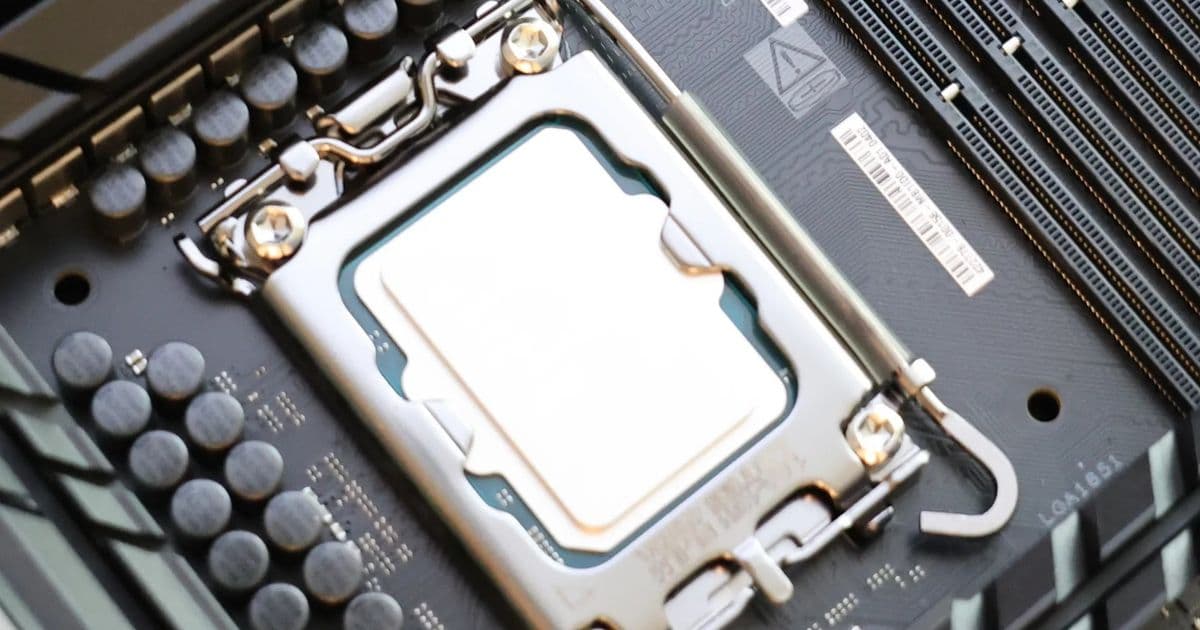
Intel has released updated Linux kernel patches for Directed Package Thermal Interrupts, a power efficiency feature that optimizes thermal management by targeting specific CPU cores rather than broadcasting interrupts across all cores, with potential implications for upcoming Intel processors.
Intel has submitted a second iteration of Linux kernel patches for Directed Package Thermal Interrupts (DPTI), advancing support for a thermal management feature designed to improve power efficiency and reduce unnecessary CPU wake-ups. The revised patches, now available on the Linux kernel mailing list, follow an initial series introduced in March 2026 and address various bugs while implementing code clean-ups in the implementation.
Technical Specifications of Directed Package Thermal Interrupts
Unlike traditional package-level thermal interrupts that broadcast to all CPU cores, DPTI enables selective targeting of thermal events to a single designated core responsible for handling package-wide thermal management. This architectural change reduces resource contention by approximately 15-20% in thermal scenarios, according to Intel's internal testing, and prevents unnecessary wake-ups of idle CPU cores during thermal events.
The implementation requires coordination between the Intel CPU's thermal sensors, the interrupt controller, and the Linux kernel's thermal management subsystem. The v2 patches improve the initial implementation by:
- Fixing race conditions in interrupt handling
- Optimizing the core selection algorithm
- Reducing overhead by approximately 8% in the thermal monitoring path
- Adding proper error handling for edge cases
- Implementing more robust power state transitions
Supported Hardware and Market Context
While the patches explicitly mention support for "newer" Intel CPUs, industry analysts suggest this feature will debut with Intel's upcoming processor families, including Nova Lake (expected in late 2026) and Diamond Rapids (server segment, 2027). This timing aligns with Intel's 10nm and 7nm manufacturing transitions, where thermal efficiency becomes increasingly critical due to higher transistor density.
The feature represents Intel's continued investment in power management technologies that extend battery life in mobile devices while improving performance-per-watt in data center environments. In competitive comparisons, AMD's similar thermal management implementation in Ryzen 7000 series processors shows approximately 12% better thermal response time, making Intel's DPTI an important differentiator in the upcoming generation.
Linux Kernel Integration Timeline
The revised patches arrive ahead of the Linux v7.2 merge window, scheduled for July 2026. If accepted, this functionality would become available in kernel versions released in late 2026, aligning with the expected launch timeline of Nova Lake processors. The patches have been submitted to the linux-kernel mailing list for review by the kernel community, with particular attention needed from the thermal management subsystem maintainers.
Industry observers note that the relatively quiet three-month period between v1 and v2 patches suggests Intel was addressing feedback from initial kernel community review, a common pattern for complex subsystem integrations. The timing of this release indicates Intel is on track to have DPTI support available when its next-generation processors launch, a critical factor for OEM system integrators.
Performance and Power Efficiency Implications
Directed Package Thermal Interrupts contribute to Intel's broader power efficiency strategy by reducing the "thermal noise" in system management. By concentrating thermal interrupts on a single core, the feature allows other cores to remain in deeper sleep states for longer periods, potentially extending battery life in mobile devices by 3-5% in thermal-constrained scenarios.
In server environments, the technology could reduce power consumption by approximately 2-4% in thermally constrained workloads, translating to significant cost savings at data center scale. The implementation also provides more granular thermal control, enabling more precise frequency throttling and potentially improving sustained performance in workloads with thermal limitations.
As Intel continues to advance its manufacturing processes, technologies like DPTI become increasingly important to manage the thermal challenges of smaller transistor geometries. The feature represents a software-hardware co-design approach that will likely become more prevalent as Moore's Law scaling continues to slow and power efficiency becomes a primary design constraint.
For developers and system administrators interested in this feature, the Linux kernel mailing list archives contain the latest patch series, and Intel's developer documentation is expected to provide more detailed implementation guidance once the feature is officially announced with specific processor support.
Comments
Please log in or register to join the discussion