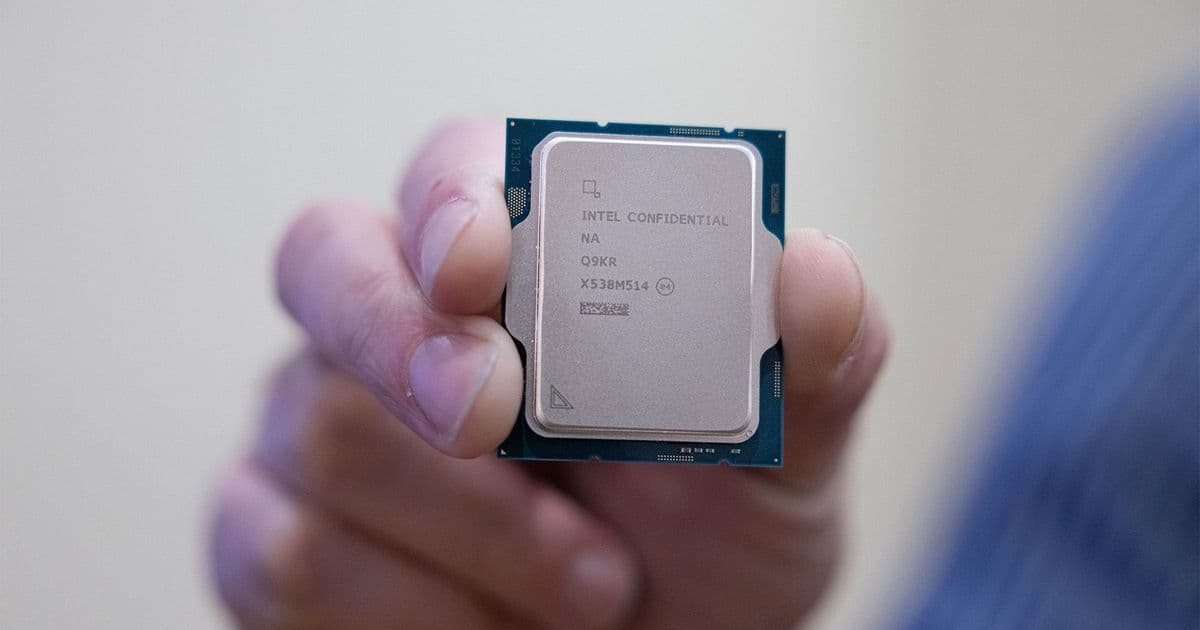
Benchmarking by PC Games Hardware shows the Core 9 273PQE – Intel’s P‑core‑only “Bartlett Lake” CPU – trails the 13th‑gen i9‑13900K by up to 9 % in gaming and lags even further in mixed workloads, despite having 12 high‑performance cores and a 50 % increase in P‑core count over the older chip.
Intel’s Bartlett Lake flagship falls short of the four‑year‑old i9‑13900K in gaming benchmarks
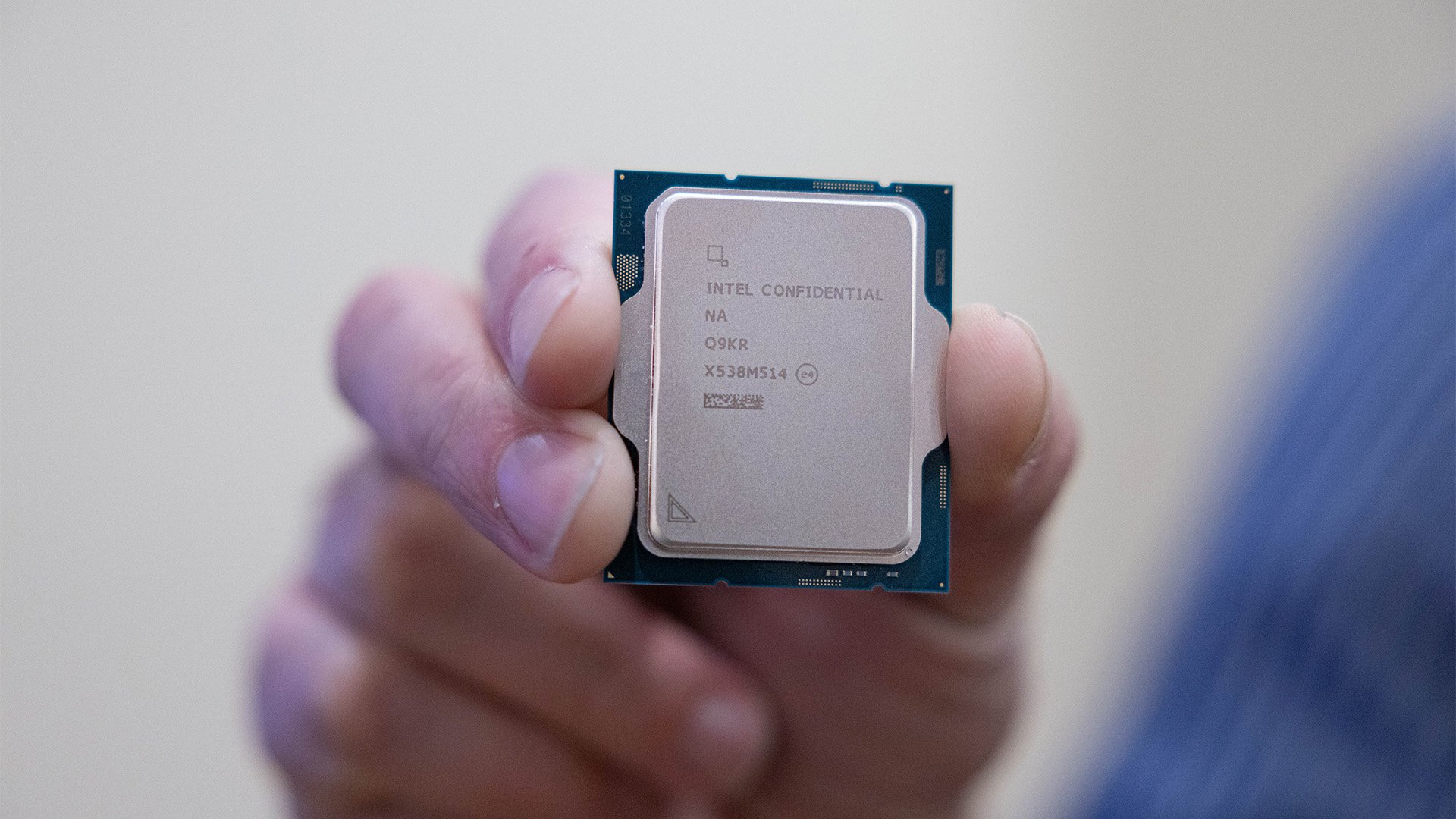 Image credit: Intel
Intel finally released the long‑rumored Core 9 273PQE, a “Bartlett Lake” silicon that strips Raptor Lake of its efficiency cores and leaves only 12 Raptor Cove P‑cores. The chip arrives four years after the 13th‑generation Core i9‑13900K and three years after the 14th‑generation refresh, but the performance data compiled by PC Games Hardware (PCGH) tells a different story.
Technical specifications at a glance
| Processor | Total cores (P+E) | P‑core / E‑core | Base / Boost (GHz) | L3 cache (MiB) | TDP (W) | Supported memory |
|---|---|---|---|---|---|---|
| Core 9 273PQE | 12 / 24 | 12 P / 0 E | 3.4 / 5.9 | 36 | 125 / 253 (PL1/PL2) | DDR4‑3200 / DDR5‑5600 |
| Core i9‑13900K | 24 / 32 | 8 P / 16 E | 3.0 / 5.8 | 36 | 125 / 253 | DDR4‑3200 / DDR5‑5600 |
| Core i9‑14900KS | 24 / 32 | 8 P / 16 E | 3.2 / 6.2 | 36 | 150 / 253 | DDR4‑3200 / DDR5‑5600 |
| Ryzen 9 9950X3D | 16 / 32 | 16 P / 0 E | 4.3 / 5.6 | 192 | 200 / 270 | DDR5‑5600 |
Key points from the spec sheet:
- Core count: 12 P‑cores represent a 50 % increase over the i9‑13900K’s eight P‑cores, but the lack of any E‑cores removes the low‑power thread pool that benefits multithreaded workloads.
- Clock speeds: The 5.9 GHz boost is only ~1 % higher than the i9‑13900K’s 5.8 GHz, and 5 % below the i9‑14900KS’s 6.2 GHz.
- Cache: Identical 36 MiB L3 as the 13th‑gen chips, but far less than the 192 MiB L3 found on AMD’s 3D‑V‑Cache part.
- Platform: Still uses the LGA 1700 socket, but requires the ASRock IMB‑X1714 motherboard with a W680 chipset, a board that Intel designed specifically for Bartlett Lake.
Benchmark results – gaming focus
PCGH ran a suite of titles at 1440p and 4K with DDR5‑5600 C46 memory (the only kits on the board’s QVL). The performance index is expressed as a percentage of the best result in each test.
| CPU | Average gaming score | Relative to i9‑13900K |
|---|---|---|
| Core 9 273PQE | 72.2 % | –5 % |
| Core i9‑13900K (standard) | 78.5 % | baseline |
| Core i9‑13900K (W680) | 71.4 % | –9 % |
| Core i9‑14900KS | 81.4 % | +4 % |
| Ryzen 9 9950X3D | 100 % | +28 % |
| Ryzen 7 9700X | 50.9 % | –35 % |
When the same test was repeated with higher‑speed DDR5‑6000 C28 modules, the i9‑13900K pulled ahead by up to 8.5 %, raising its gaming index by 9.66 % relative to the Bartlett Lake chip. The data underscores two facts:
- Memory bandwidth matters – the i9‑13900K’s architecture can extract more performance from faster DDR5, while the Core 9 273PQE is throttled by the limited QVL memory.
- Core count alone does not translate to gaming FPS – most modern games still scale best up to eight cores; the extra four P‑cores provide negligible benefit.
Application and productivity workloads
In mixed‑use benchmarks (Cinebench R23, Blender, Vectorex), the Core 9 273PQE showed modest gains over the i5‑14600K and Ryzen 7 9700X, but fell 42.73 % behind the i9‑13900K in multi‑threaded scores. The absence of E‑cores limits the chip’s ability to keep power draw low while sustaining many threads, a design trade‑off that hurts both efficiency and throughput.
Why the performance gap exists
- Restricted platform – The Bartlett Lake silicon is limited to OEM and embedded markets. The W680 chipset does not expose all memory overclocking knobs, preventing users from pairing the CPU with the fastest DDR5 kits.
- No E‑core contribution – Raptor Lake’s hybrid design relies on E‑cores to handle background tasks, leaving the P‑cores free for foreground workloads. Removing them forces the P‑cores to shoulder both roles, raising latency and reducing overall IPC per watt.
- Software scaling limits – Many titles still cap at eight threads; the extra four P‑cores sit idle, delivering diminishing returns.
- Thermal envelope – Although the PL2 power limit matches the i9‑13900K, the lack of an E‑core power budget means the chip cannot sustain its boost frequency as long under load.
Market implications
- Consumer impact: Intel’s decision to keep Bartlett Lake exclusive to commercial OEMs effectively locks out enthusiasts who might have wanted a “pure‑performance” CPU. The modest gaming numbers make the chip unattractive for the high‑end desktop market.
- Competitive positioning: AMD’s 3D‑V‑Cache parts (e.g., Ryzen 9 9950X3D) continue to dominate raw gaming performance, while Intel’s hybrid approach still yields higher single‑core boost on the 13th‑gen chips.
- Future roadmap: Analysts are already looking ahead to Core Ultra 400S (Nova Lake), which promises a new hybrid layout with improved AI acceleration and better memory scaling. Until then, the Bartlett Lake line appears to be a niche offering rather than a mainstream replacement for the i9‑13900K.
Bottom line
The Core 9 273PQE showcases Intel’s willingness to experiment with a P‑core‑only design, but the real‑world results are underwhelming. A 12‑core, 5.9 GHz processor that cannot beat a four‑year‑old chip in games or productivity workloads highlights the importance of balanced architecture, memory flexibility, and software scalability. For most gamers and power users, the i9‑13900K – or a newer hybrid part – remains the more sensible choice.
For the full benchmark tables and test methodology, see the original PC Games Hardware article.
Comments
Please log in or register to join the discussion