Intel wants to undercut budget laptops by raiding the smartphone parts bin. Project Firefly pairs the new Wildcat Lake chips with phone-grade memory and Chinese smartphone factories to hit aggressive price points, with a metal-chassis reference design that already looks better than its target cost suggests.
Intel has filled in the details behind Project Firefly, the company's plan to build very cheap laptops by tapping the manufacturing muscle of the smartphone industry. We first covered the initiative in mid-May, but a new presentation from Nish Neelalojanan, Senior Director of Client Products at Intel, lays out how the pieces fit together. The short version: take the new Wildcat Lake processors, source memory and components through the mature smartphone supply chain, and hand laptop makers a near-complete reference design so they can ship quickly and cheaply. The target is clear, with Intel openly positioning these machines against the Apple MacBook Neo, which currently runs $589 on Amazon.
What's new
The silicon at the center of Firefly is Wildcat Lake, with the Intel Core 5 320 cited as a representative chip. The layout is modest and deliberately so: two performance cores and four efficiency cores. That six-core split is built for responsiveness in everyday tasks rather than sustained heavy workloads. Open a browser, jump between documents, run a video call, and the two P-cores handle the burst while the four E-cores keep background work off the critical path. This is the same big.LITTLE philosophy Intel has used since Alder Lake, just scaled down to a price-sensitive bracket.
The integrated graphics are where the cost-cutting shows most plainly. The iGPU carries just two Xe3 cores, which is small by any measure. Neelalojanan's argument is that architecture matters more than raw unit count for the workloads these laptops will actually face. The Xe3 generation includes the fixed-function media engine needed for hardware-accelerated decode, so streaming services play back smoothly across platforms without leaning on the CPU. You are not gaming on two Xe3 cores, but you are also not buying this machine to game. For 1080p video, light photo edits, and a stack of browser tabs, a modern media block does the heavy lifting that core count alone would not.
{{IMAGE:2}}
Neelalojanan is candid that a cheap processor on its own does not produce a good entry-level laptop. The bottleneck is everything around the chip: the chassis, the cooling, the cabling, the assembly. This is the problem Firefly is actually trying to solve. Intel has been working directly with smartphone factories in China to build reference laptops, pre-selecting the components so manufacturers can assemble a finished product with far less engineering overhead. Instead of each vendor sourcing and validating parts independently, they inherit a validated bill of materials and a known-good design.
The memory strategy is the most interesting wrinkle. Wildcat Lake can be paired with memory chips originally intended for smartphones. Phone memory is produced at enormous volume and tight cost, and routing it into laptops lets Intel ride that scale rather than competing for conventional laptop DRAM. It is a supply-chain arbitrage as much as an engineering decision.
{{IMAGE:3}}
How it compares
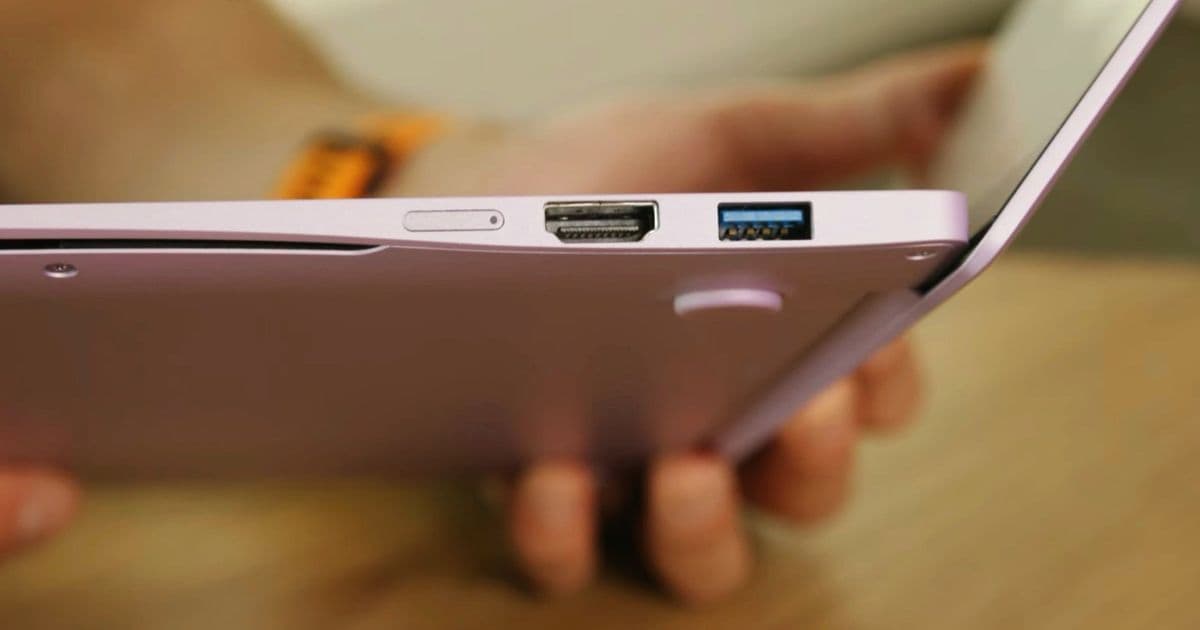
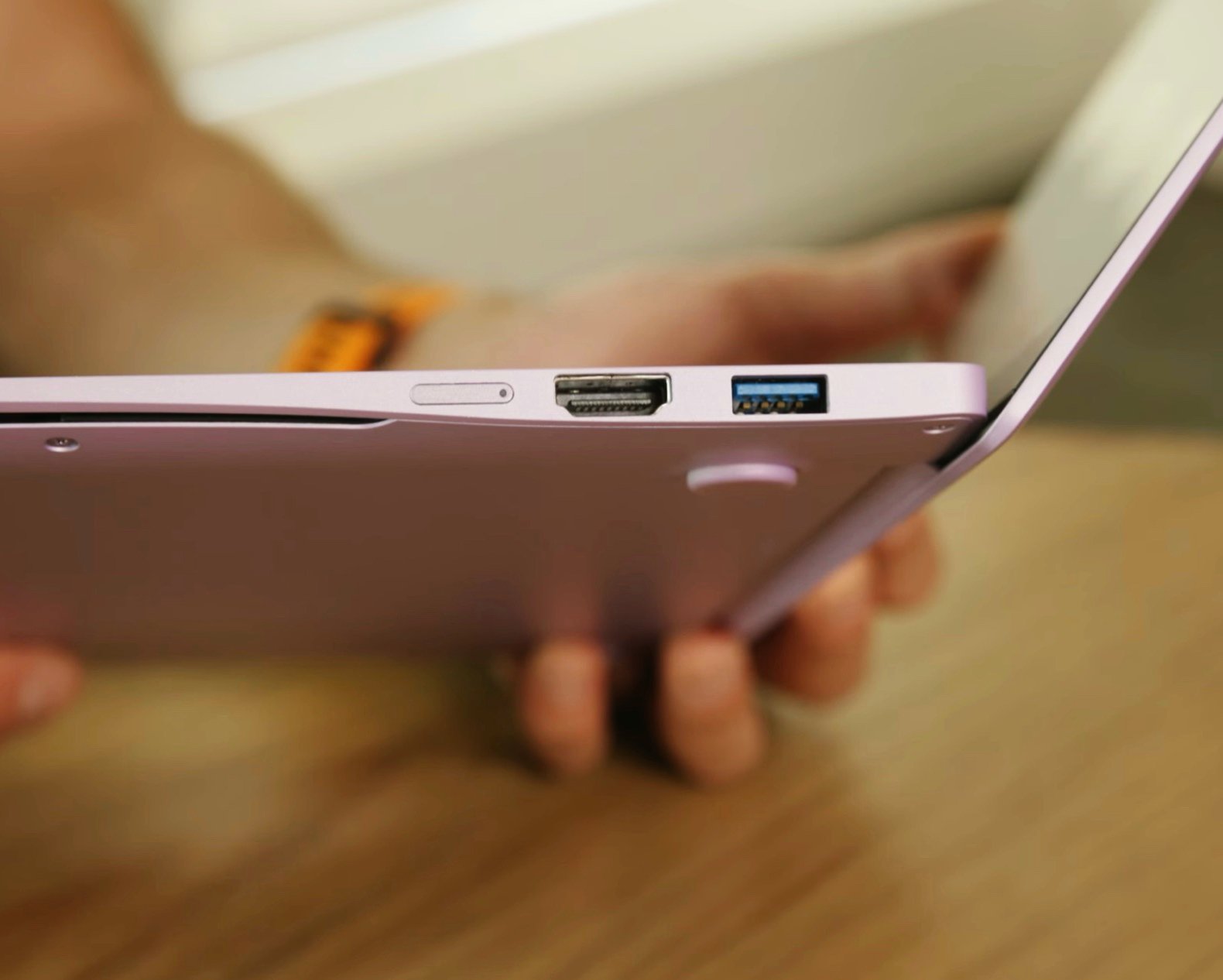
The reference design Intel showed around the 19:30 mark of its video does not look like a typical budget machine. At 12.9 millimeters thick, it is genuinely slim, and it ships in a colorful metal chassis rather than the flexing plastic that usually defines this price tier. The port selection is practical and more generous than many premium ultrabooks: two USB-C, a USB-A, and HDMI. That combination means no dongle for an external display and no adapter for older peripherals, which is exactly what a value-focused buyer wants.
To reach the price target, Intel reworked parts most reviewers never think about. There is a new cooling system built around a particularly thin copper heatpipe, sized to the low thermal output of a two-plus-four core chip. Intel even developed a new, cheaper cable to connect the ports to the mainboard. These are unglamorous savings, but on a machine where every dollar of bill-of-materials counts, shaving cost from cables and heatpipes is how you hit an aggressive number without gutting the visible build quality.
{{IMAGE:4}}
Against the MacBook Neo, the pitch is straightforward. Apple's machine sets the bar for fit and finish at the entry level, and Firefly laptops are aiming to match the metal-chassis feel while undercutting on price through the smartphone supply chain. The performance comparison will be less favorable. Apple's silicon and unified memory outclass a six-core Wildcat Lake part with two GPU cores in raw throughput. But the Firefly proposition is not about winning benchmarks. It is about delivering a laptop that feels solid, streams cleanly, and handles daily computing for meaningfully less money.
Who it's for
These laptops are for buyers who want a thin, metal, well-connected machine for browsing, streaming, office work, and video calls, and who do not want to pay a premium for performance they will never use. Students, second-machine buyers, and anyone replacing an aging budget notebook are the obvious audience. If your workload involves heavy multitasking, content creation, or any gaming, look elsewhere; the two-core iGPU and four-thread efficiency cluster will run out of headroom fast.
{{IMAGE:5}}
The broader story is what Firefly signals about how budget laptops get made. By borrowing memory, manufacturing capacity, and supply-chain discipline from phones, Intel is trying to reset the cost floor for a decent Windows laptop. Whether vendors actually pass those savings to buyers, and how the phone-memory approach holds up in real-world testing, will determine if Firefly is a genuine value shift or just a slick reference design. The footage came via VideoCardz, drawn from Intel's own technology presentation on YouTube, and the first retail machines built on the platform will tell us which it is.
Comments
Please log in or register to join the discussion