Intel launches Core Series 3 'Wildcat Lake' mobile processors for budget laptops and mini PCs, offering AI acceleration and Thunderbolt 4 support while maintaining affordable pricing.
Intel has officially launched its new Core Series 3 "Wildcat Lake" mobile processors, designed specifically for budget-friendly laptops, mini PCs, and all-in-one desktops. The new chips are now available, with devices powered by these processors expected to begin shipping over the coming weeks and months.
Unlike Intel's higher-end Core Ultra "Panther Lake" processors, the Wildcat Lake chips are positioned as budget alternatives that still incorporate some modern technologies while keeping costs down. These processors feature fewer CPU and GPU cores, reduced AI performance capabilities, and several other limitations compared to Intel's premium offerings.
Positioning Confusion and Market Strategy
One aspect that stands out is the somewhat confusing market positioning of these new chips. Initial reports suggested Wildcat Lake would replace Intel's Alder Lake-N and Twin Lake processors, which are designed for truly budget-conscious devices. However, Intel's official press release clarifies that these new chips are actually intended to replace the Intel Core 100U series entry-level "Raptor Lake" family released in 2024.
The 100U series hasn't received as much attention as Intel's higher-end or lower-end chips, but it occupies an important middle ground in the company's processor lineup. What makes this year's refresh particularly interesting is that it represents a mixed bag of improvements and compromises.
AI Performance and Power Efficiency
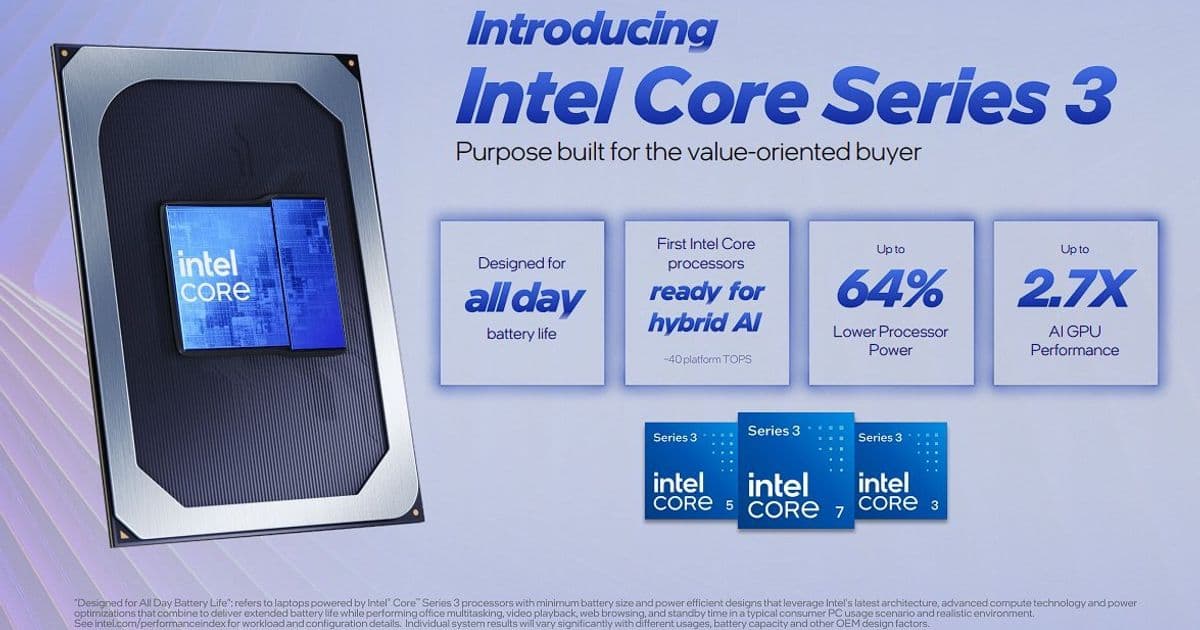
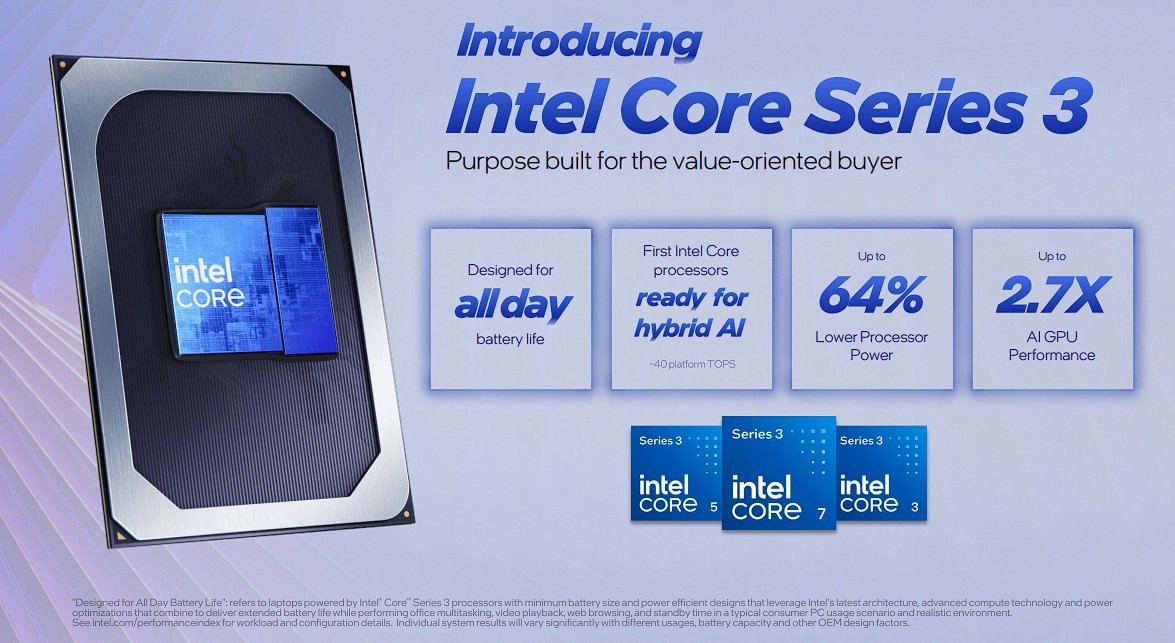
A significant highlight of the new Wildcat Lake processors is the introduction of an NPU (Neural Processing Unit) to Intel's non-Ultra chips for the first time. According to Intel, when compared with an Intel Core 7 150U processor, the new Core 7 360 chip offers "up to 2.1x faster creation and productivity, up to 64% lower processor power, and up to 2.7x AI GPU performance."
This AI acceleration represents a meaningful upgrade for budget devices, bringing capabilities that were previously reserved for higher-end processors to more affordable systems. The inclusion of an NPU enables better performance for AI-powered applications, improved battery life through more efficient processing, and enhanced capabilities for tasks like photo and video editing, content creation, and machine learning workloads.
Technical Specifications and Limitations
The new processor lineup consists of six models, each with distinct specifications:
| Model | CPU Configuration | P-Core Max Freq | GPU Cores | GPU Max Freq | GPU TOPS | NPU TOPS |
|---|---|---|---|---|---|---|
| Core 7 360 | 6 (2 x P + 4 x LP-E) | 4.8 GHz | 2 | 2.6 GHz | 21 | 17 |
| Core 7 350 | 6 (2 x P + 4 x LP-E) | 4.8 GHz | 2 | 2.6 GHz | 21 | 17 |
| Core 5 330 | 6 (2 x P + 4 x LP-E) | 4.6 GHz | 2 | 2.5 GHz | 20 | 16 |
| Core 5 320 | 6 (2 x P + 4 x LP-E) | 4.6 GHz | 2 | 2.5 GHz | 20 | 16 |
| Core 5 315 | 6 (2 x P + 4 x LP-E) | 4.4 GHz | 2 | 2.3 GHz | 18 | 15 |
| Core 3 304 | 5 (1 x P + 4 x LP-E) | 4.3 GHz | 1 | 2.3 GHz | 2.3 | 15 |
All models share common characteristics including 6MB of cache, support for up to 48GB of LPDDR5/X-7467 single-channel memory or up to 64GB of DDR5-6400 single-channel memory, and support for UFS 3.0 or PCIe Gen 4 storage.
However, the chips also come with several limitations. They have fewer PCIe lanes compared to higher-end processors, limiting support for high-speed add-ons. They only support single-channel memory, which can impact performance in memory-intensive applications. Additionally, they lack support for Intel vPro technologies, which are important for business and enterprise deployments.
Connectivity and Power Features
Despite these limitations, the Wildcat Lake processors bring some notable features to the budget segment. Each chip supports up to two Thunderbolt 4 ports, a feature not available on Alder Lake-N or Twin Lake processors. This provides better connectivity options for external displays, storage devices, and other peripherals.
The chips also include integrated support for WiFi 7 and Bluetooth 6, ensuring modern wireless connectivity standards. Power efficiency is addressed through a processor base power of 15 watts, with support for maximum turbo power up to 35 watts, allowing for both energy-efficient operation and performance bursts when needed.
Market Availability and Device Partners
Intel expects more than 70 systems powered by the new Wildcat Lake chips to hit the market in the coming months. Device manufacturers on board include major players such as Acer, Asus, Dell, HP, Lenovo, MSI, and Samsung, indicating broad industry support for the new processor family.
This wide range of partners suggests that consumers will have numerous options when choosing devices with these new processors, from traditional laptops to mini PCs and all-in-one desktops. The availability across multiple manufacturers should help drive adoption and provide competitive pricing in the budget laptop segment.
Impact on the Budget Laptop Market
The introduction of Wildcat Lake processors represents Intel's continued effort to address the budget laptop market while incorporating modern technologies like AI acceleration and improved connectivity. By bringing features like NPUs and Thunderbolt 4 support to more affordable devices, Intel is helping to democratize access to capabilities that were previously limited to premium systems.
For consumers, this means better performance and features in budget-friendly devices. For manufacturers, it provides a platform that balances cost with modern capabilities, potentially enabling them to create more competitive products in the increasingly crowded budget laptop segment.
The success of these processors will likely depend on how well device manufacturers can balance the cost savings from using these chips with the need to provide adequate memory, storage, and other components to create compelling overall systems. As devices begin shipping, it will be interesting to see how the market responds to this new generation of budget-friendly processors with AI capabilities.
Comments
Please log in or register to join the discussion