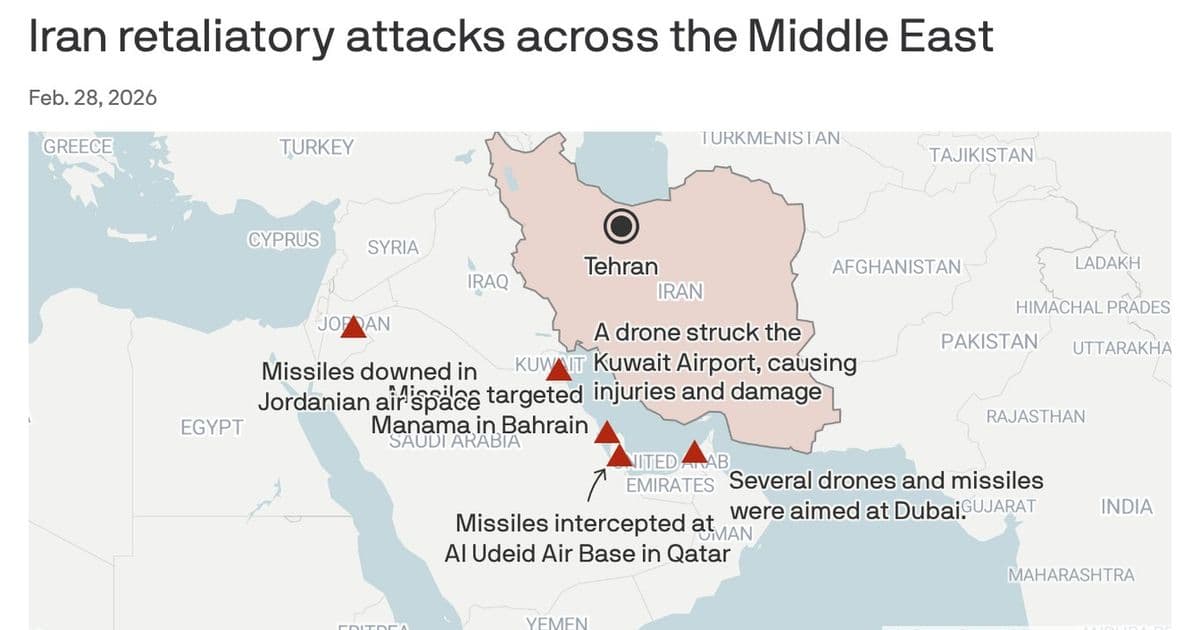
Iran launched retaliatory strikes against U.S. and Israeli targets following recent military actions, escalating regional tensions and threatening broader conflict in the Middle East.
Iran has launched retaliatory strikes against U.S. and Israeli targets following recent military actions, escalating regional tensions and threatening broader conflict in the Middle East.
Background of the Escalation
The latest round of hostilities began after coordinated U.S.-Israeli military operations targeted Iranian positions in Syria and Iraq. These strikes, which occurred over the past 48 hours, reportedly destroyed several missile storage facilities and command centers allegedly used by Iranian forces and their proxies in the region.
Iran's Response
In retaliation, Iranian forces launched a series of missile and drone attacks targeting:
- U.S. military installations in Iraq
- Israeli defense positions in the Golan Heights
- Strategic infrastructure in eastern Syria
The Iranian Revolutionary Guard Corps (IRGC) claimed responsibility for the attacks, stating they were "a direct response to the Zionist-American aggression against our regional interests."
Regional Impact
The retaliatory strikes have triggered immediate fallout across the Middle East:
Economic Consequences
- Oil prices surged by 8% in overnight trading
- Regional stock markets experienced significant volatility
- Shipping routes through the Strait of Hormuz face potential disruption
Diplomatic Fallout
- Saudi Arabia and other Gulf states have called for emergency meetings of the Arab League
- Turkey has urged restraint from all parties involved
- European Union officials are working to establish emergency diplomatic channels
International Response
The international community has reacted with growing concern:
- The United States has deployed additional naval assets to the region
- Israel has placed its military on high alert and activated reserve units
- Russia and China have called for immediate de-escalation
Strategic Implications
Military analysts suggest this escalation represents a significant shift in the regional power dynamic. The direct confrontation between Iranian forces and U.S.-Israeli interests marks a departure from the proxy warfare that has characterized the region for years.
What Happens Next
Several scenarios are being considered by regional experts:
- Continued Escalation: Further military exchanges could lead to a broader regional conflict
- Diplomatic Intervention: International mediation may prevent further hostilities
- Proxy Warfare Resumption: Both sides might return to supporting regional proxies rather than direct confrontation
Economic Impact
The immediate economic consequences are already being felt:
- Energy markets face potential supply disruptions
- Regional tourism has declined sharply
- Foreign investment in the region has been temporarily suspended
Humanitarian Concerns
The escalation raises serious humanitarian concerns, particularly for civilian populations in conflict zones. Aid organizations are preparing for potential refugee flows and increased humanitarian needs.
Looking Forward
The coming days will be critical in determining whether this represents a temporary escalation or the beginning of a more sustained conflict. International diplomatic efforts are intensifying to prevent further deterioration of the situation.
The situation remains fluid, with all parties maintaining high alert status and the potential for further military action remaining significant.
Comments
Please log in or register to join the discussion