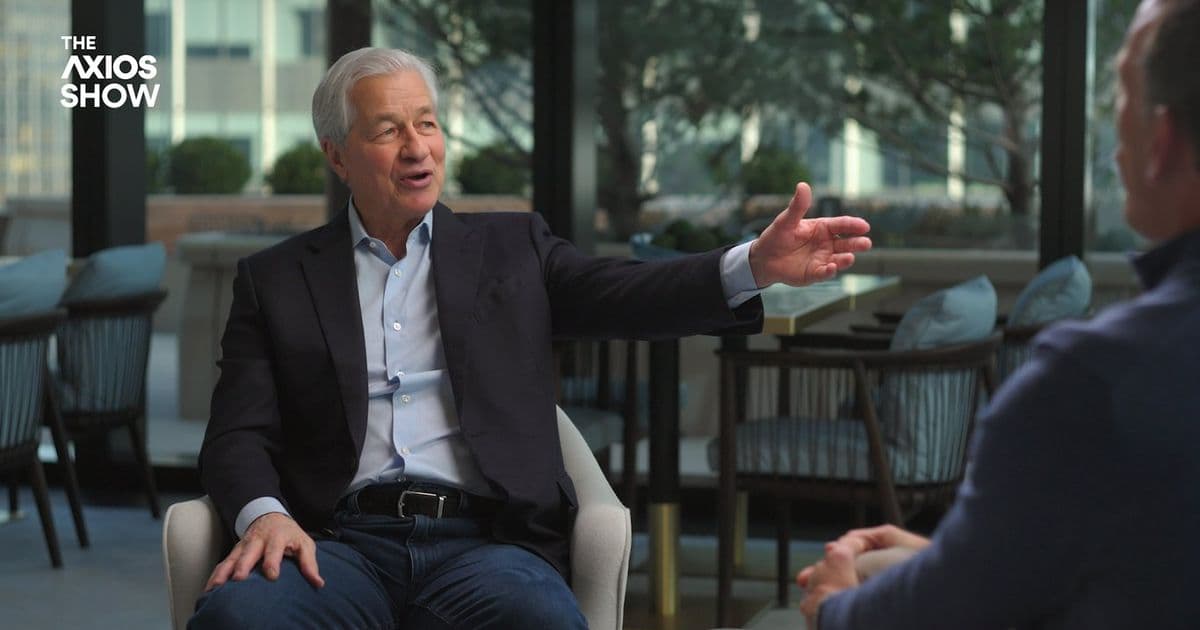
JPMorgan Chase CEO Jamie Dimon told Axios that military action against Iran is 'overdue,' citing nuclear proliferation concerns and regional destabilization. The banking executive's comments come amid escalating tensions in the Middle East and growing debate over U.S. foreign policy.
In a controversial interview with Axios, JPMorgan Chase CEO Jamie Dimon stated that military action against Iran is "overdue," arguing that diplomatic efforts have failed to curb the nation's nuclear ambitions and regional influence. Dimon's comments, delivered during "The Axios Show," have sparked immediate debate across political and business circles about the role of corporate leaders in foreign policy discussions.
Dimon, who has previously been considered for Treasury Secretary positions, argued that Iran's continued support for proxy groups throughout the Middle East and its advancing nuclear program necessitate decisive action. "We've tried diplomacy for years," Dimon stated, "and the results speak for themselves. Iran continues to destabilize the region and pursue nuclear capabilities that threaten global security."
The banking executive's position aligns with hawkish elements within the U.S. foreign policy establishment but represents a departure from the more cautious approach typically advocated by major financial institutions, which often prioritize market stability and economic considerations over military intervention.
Market Reactions and Economic Implications
Financial markets responded with volatility following Dimon's comments, with oil futures spiking 3.2% amid concerns about potential supply disruptions in the Strait of Hormuz. The S&P 500 experienced a brief dip before recovering, while defense sector stocks showed modest gains.
Analysts note that Dimon's position carries particular weight given JPMorgan Chase's status as the largest bank in the United States by assets ($3.4 trillion as of Q4 2024). The bank's extensive international operations and relationships with sovereign wealth funds throughout the Middle East make Dimon's foreign policy stance particularly noteworthy.
"When the CEO of America's largest bank advocates for military action, it sends ripples through both financial markets and diplomatic channels," said Dr. Sarah Chen, professor of international economics at Georgetown University. "It's unusual for a banking executive to take such a definitive stance on military matters, especially given the potential economic consequences of regional conflict."
Diplomatic Backlash
The State Department has distanced itself from Dimon's comments, with spokesperson Matthew Miller emphasizing that "the United States continues to pursue a diplomatic solution to concerns about Iran's nuclear program." European allies, particularly Germany and France, expressed concern about the potential for escalation.
Iranian Foreign Ministry spokesperson Nasser Kanaani dismissed Dimon's remarks as "the opinion of a banker with no expertise in international relations or Middle Eastern affairs." The Iranian government has consistently maintained that its nuclear program is for peaceful purposes and has accused Western powers of hypocrisy regarding nuclear proliferation.
Historical Context
Dimon's position represents a significant shift from his previous statements on foreign policy. In 2018, he cautioned against withdrawing from the Iran nuclear deal, warning that "tearing up agreements without clear alternatives could destabilize the region and harm American interests."
His current stance appears to reflect growing frustration among some business leaders with what they perceive as Iran's intransigence on nuclear negotiations and its support for groups designated as terrorist organizations by the United States.
Corporate Leadership in Foreign Policy
The interview has reignited debates about the appropriate role of corporate executives in shaping foreign policy discourse. While business leaders have historically engaged in policy discussions, particularly on economic matters, Dimon's comments on military action represent a more direct intervention into national security debates.
"We're seeing an increasing willingness among corporate leaders to weigh in on traditionally governmental domains," noted political scientist Dr. Robert Thompson. "Whether this represents a healthy diversification of perspectives or an inappropriate expansion of corporate influence remains a matter of debate."
What's Next
The Biden administration has not indicated any change in its current approach to Iran, which combines targeted sanctions with diplomatic engagement. However, Dimon's comments may influence the foreign policy debate as the 2024 presidential election approaches, particularly among Republican candidates who have advocated for a tougher stance on Iran.
JPMorgan Chase has not issued an official statement clarifying or expanding upon Dimon's remarks, though sources within the bank indicate that the CEO's comments reflect his personal views rather than official company policy.
As tensions continue to simmer in the Middle East, Dimon's intervention into the foreign policy debate underscores the complex intersections between business interests, national security, and international relations in an increasingly interconnected world.
Comments
Please log in or register to join the discussion