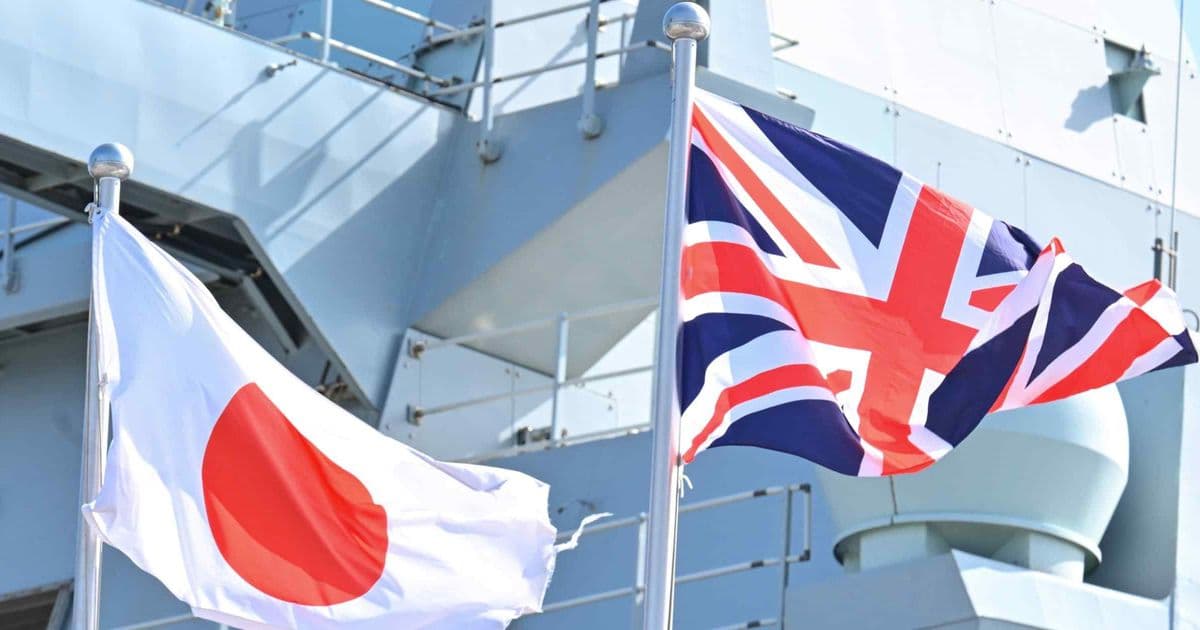
Tokyo and London are preparing a shared fund to bankroll startups building technologies that straddle commercial and military use, a move that signals how defense procurement and venture capital are converging as governments race to keep frontier innovation inside allied borders.
Japan and the United Kingdom plan to set up a joint fund to support startups developing dual-use technologies across artificial intelligence, quantum computing, drones and space, according to a Nikkei report. The arrangement deepens an already expanding defense and technology relationship between the two countries and reflects a broader shift in how Western-aligned governments are trying to finance the companies that will shape the next generation of military and civilian capability.
The term dual-use describes technology with both commercial and defense applications. A drone autonomy stack can deliver packages or guide a loitering munition. A quantum sensor can map underground geology or detect a submarine. Machine learning models trained on satellite imagery can optimize crop yields or identify troop movements. For decades, defense ministries treated these as separate procurement tracks. The Japan-UK fund treats them as the same problem, which is where the money matters.
Why two governments are pooling capital
The structural issue both countries face is that frontier technology now originates in startups rather than prime contractors. The companies building useful AI inference, edge computing for autonomous systems, and quantum hardware are small, capital-hungry, and often pre-revenue. Traditional defense procurement, built around multi-year contracts with established primes like BAE Systems or Mitsubishi Heavy Industries, moves too slowly to fund a startup through the valley of death between prototype and production.
Venture capital fills that gap in the United States, where firms such as Andreessen Horowitz and Founders Fund have poured billions into defense tech, and where Anduril has grown into a multibillion-dollar valuation by selling autonomous systems to the Pentagon. Neither Japan nor the UK has a domestic venture market of comparable depth for hard tech, and both worry that promising startups will either fail for lack of capital or be acquired by foreign buyers, including Chinese-linked investors. A government-backed fund is an attempt to substitute state capital where private capital is thin and to keep strategic intellectual property onshore.
The market context
This fund does not exist in isolation. The UK has been pushing dual-use investment through its National Security Strategic Investment Fund and the recently expanded defense innovation budget tied to its commitment to lift defense spending. Japan has loosened its postwar restrictions on military exports and stood up the Acquisition, Technology and Logistics Agency to court startups, alongside an economic security framework that channels funding toward technologies it deems critical.
The two countries are also bound together by the Global Combat Air Programme, the next-generation fighter jet effort with Italy that has faced cost questions and schedule pressure. A shared startup fund extends that industrial partnership downward, from a single flagship platform to the underlying technology base. For the UK, it offers access to Japanese strength in materials, robotics and precision manufacturing. For Japan, it offers a tie to a country with a more developed defense startup culture and looser procurement norms.
The strategic logic runs through supply chains as much as battlefields. Both governments have watched export-control disputes with China escalate, and both have an interest in building parallel technology ecosystems that do not depend on Chinese components or capital. Pooling money to fund allied startups is, in part, a hedge against that dependency.
What it means
For founders in AI, quantum and autonomous systems, a binational fund widens the addressable market. A British quantum sensing startup gains a credible path into Japanese defense and industrial buyers, and vice versa, without each company having to navigate two separate procurement bureaucracies from scratch. That cross-border demand signal can change a startup's fundraising math, because investors price in larger and more durable government revenue.
The harder question is execution. Government-anchored funds carry the risk of slow deployment, political steering toward national champions, and conflicts between two states with different priorities on what counts as sensitive technology. The article's own context points to live tensions, including Japanese businesses seeking transparency in dual-use export controls and unease about entrusting sensitive data to foreign firms like Palantir. A joint fund forces both governments to agree on classification, ownership and exit rules for companies whose technology is by definition sensitive on both sides.
The broader pattern is clear. Defense budgets across the G7 are rising, procurement is shifting toward software-defined and autonomous systems, and the capital that funds frontier technology is becoming an instrument of statecraft. The Japan-UK fund is a small piece of that realignment, but it shows where the trend is heading: alliances are no longer just about treaties and joint exercises, they increasingly run through cap tables.
Comments
Please log in or register to join the discussion