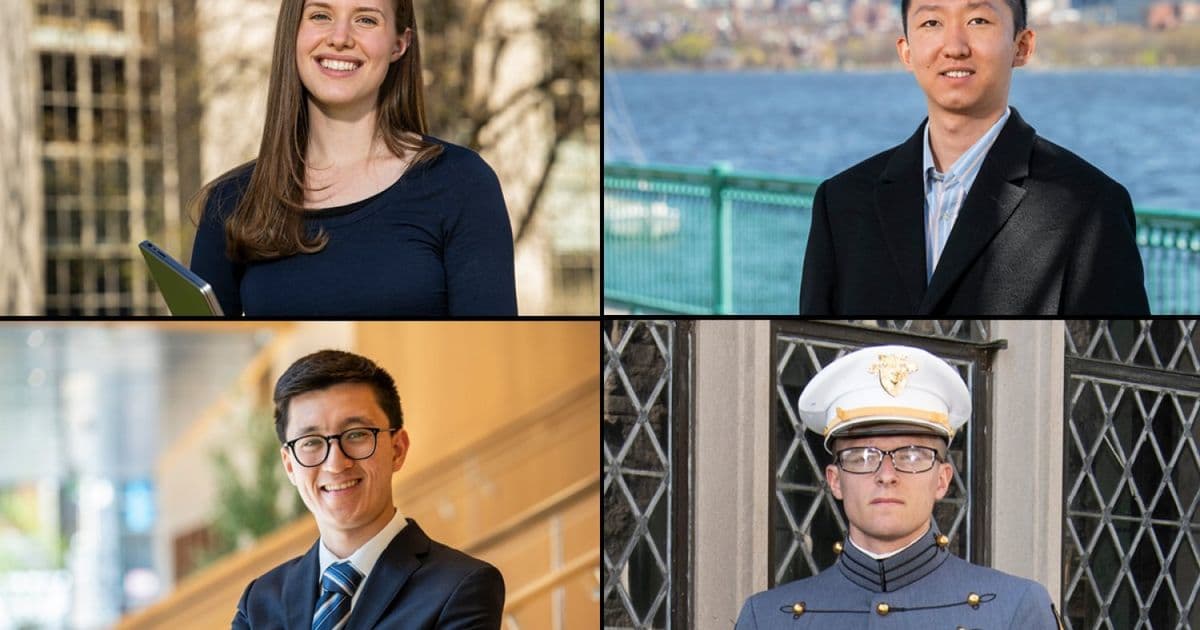
Four MIT students and incoming students secured 2026 Hertz Foundation Fellowships, and three of them are building the next generation of bio-inspired robots, machines that reason like people, and autonomous drone swarms. Their projects show where applied robotics research is actually heading.
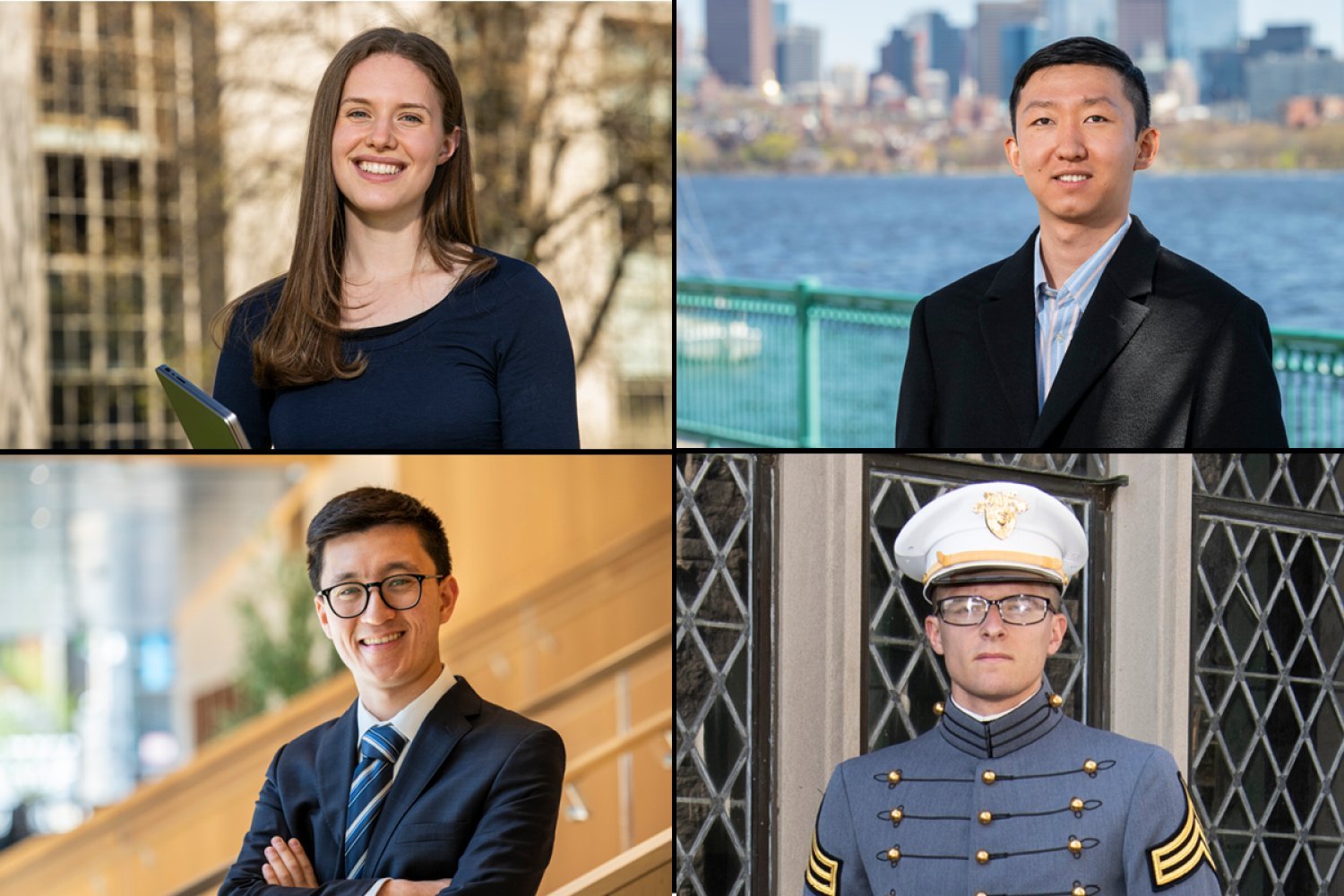
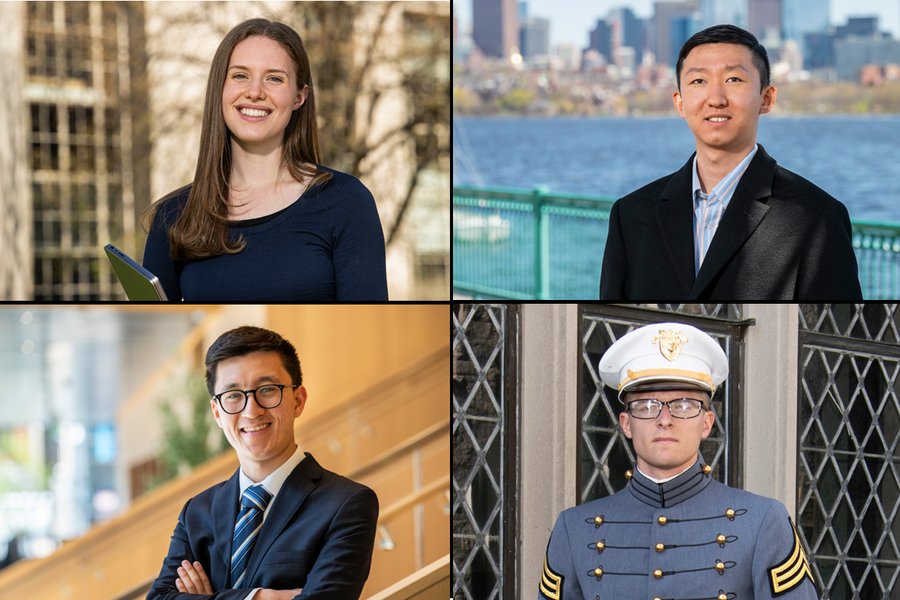
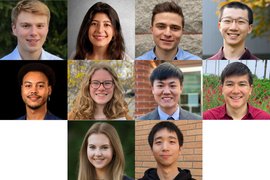
The Hertz Foundation named four MIT-affiliated researchers among its 2026 class of fellows, and the technical substance behind their selection says a lot about where autonomous systems and AI-driven robotics are converging. Annika Marschner, Alvin Q. Meng, Zachary S. Siegel, and Matthew Wanta join a cohort of 19 fellows selected nationwide. Three of the four are working directly on problems that the robotics and autonomy community has been chasing for years: faster bio-inspired actuation, robots that generalize from limited data, and multi-agent aerial coordination.
The fellowship itself is unusual in structure. It provides five years of funding, a stipend plus tuition equivalent, which decouples the recipient from the usual pressure to align research with whatever grant happens to be funding a lab that semester. For early-career researchers in hardware-heavy fields like robotics, that autonomy matters. Building physical systems is slow and expensive, and the freedom to pursue a hard hardware problem without abandoning it after one funding cycle is exactly the kind of runway these projects need.
Bio-inspired hardware and the actuation problem
Annika Marschner, who majored in mechanical engineering and begins her PhD at MIT this fall, has spent her undergraduate years on a problem that sits at the center of legged and bio-inspired robotics: how to make robotic limbs move quickly and precisely at the same time. Her thesis focused on improving the speed and dexterity of dynamic motions in bio-inspired robotic limbs, work connected to MIT's Biomimetic Robotics Lab, the group behind the MIT Cheetah platforms.
This is a harder trade-off than it looks. Biological limbs achieve a combination of speed, compliance, and control that conventional robot actuators struggle to match. A high-torque motor can move fast, but stiff actuation makes delicate, controlled motion difficult, and the energy demands of dynamic movement scale quickly. The research challenge is mechanical as much as algorithmic: the actuator design, the transmission, and the control system have to be co-designed rather than treated as separate layers. Marschner's background spans exactly that range, from designing a custom benchtop incubator and an extrusion-based desktop bioprinter for MIT's Raman Lab to a light-based filamented bioprinting system at ETH Zürich's Tissue Engineering and Biofabrication Lab.
Her stated graduate direction is assistive medical technology and surgical robotics, which is where the bio-inspired hardware work gets practical. Surgical robots demand dexterity and controlled force in confined spaces, and assistive devices have to be both responsive and safe around human tissue. The same control and actuation questions that make a robotic leg move well also determine whether a surgical manipulator can hold a steady position under load. Connecting bio-inspired actuation research to clinical hardware is a credible bridge, and it is one of the more active areas in applied robotics right now.
Machines that reason like people
Zachary S. Siegel, a PhD student in MIT's Computer Science and Artificial Intelligence Laboratory, works at the intersection of robotics, cognitive science, and AI. His advisors read like a map of the field's most influential thinking on structured reasoning: Leslie P. Kaelbling, Tomás Lozano-Pérez, and Joshua B. Tenenbaum. The throughline in his work is combining robot planning with Bayesian inference to build systems that learn from limited data and generalize to genuinely new situations.
This matters because of where current robot learning hits a wall. End-to-end learned policies are powerful but data-hungry, and they tend to fail when conditions drift outside the training distribution. A robot trained on thousands of demonstrations of one task often cannot recombine those skills to solve a slightly different task it has never seen. Siegel's interest in combinatorial generalization targets exactly this gap: the human ability to compose known skills in novel ways to solve unseen problems without additional demonstrations.
His undergraduate thesis at Princeton, advised by Tom Griffiths and Jacob Andreas, investigated how people infer the goals of others in open-ended environments. He showed that Bayesian inference accurately models human goal prediction by comparing partial observations against a learned library of possible plans weighted by their prior likelihood. Translated into robotics, that framework offers an alternative to brute-force learning: instead of training a monolithic policy, you give the system a structured library of plans and a principled way to weigh which one fits the evidence. The practical payoff, if it works at the scale of real robots, is systems that adapt to new tasks with far less data and far more predictable behavior. That predictability is part of what makes the structured approach attractive for deployment, where you want to reason about why a robot chose an action rather than just observe that it did.
Autonomous search and drone swarms
Matthew Wanta, an incoming doctoral student in operations research and a 2026 West Point graduate, brings the autonomy work closest to field deployment. His research centers on machine learning for autonomous systems, integrating probabilistic modeling and computer vision into cooperative drone search and swarm control frameworks.
Two strands of his work show the range. Working with the DEVCOM Armaments Center, he developed computer vision models for detecting energetic defects in artillery munitions, a nonintrusive quality-control application where the model has to catch subtle physical defects reliably enough to trust in manufacturing. Separately, with U.S. Special Operations Command and Army C5ISR organizations, he built simulation architectures for probabilistic target localization and multi-agent coordination in autonomous aerial search.
Multi-agent aerial search is a genuinely hard coordination problem. Each drone carries noisy, partial sensor information, and the swarm has to maintain a shared probabilistic estimate of where a target might be while deciding, collectively, where to look next. The probabilistic modeling Wanta works with is the mechanism that lets a fleet of imperfect sensors converge on a usable answer faster than any single platform could. Building these systems in simulation first is standard practice, because the coordination logic has to be validated across thousands of scenarios before it touches real hardware, and the gap between a clean simulator and messy physical flight is where most autonomy projects struggle.
A chemistry foundation alongside the autonomy work
The fourth MIT recipient, Alvin Q. Meng, works in a different domain but is worth naming. A doctoral student in inorganic chemistry under Professor Daniel L.M. Suess, Meng studies iron-sulfur clusters and the fundamental interactions underlying chemical structure and reactivity. His undergraduate work at the University of Virginia involved synthesizing and characterizing dihapto-coordinated tungsten complexes, including unusual binuclear species linked by a carbon-carbon bond between two metal-bound rings. It is foundational chemistry rather than robotics, but it reflects the same pattern across this cohort: deep, specific technical problems pursued with the kind of long horizon the fellowship is designed to support.
Why the cohort matters
Reading the three autonomy-focused projects together, a clear picture emerges of where applied robotics research is concentrating its effort. Marschner is working the hardware layer, the actuators and control systems that determine what a robot can physically do. Siegel is working the reasoning layer, the question of how a machine decides what to do with limited information. Wanta is working the coordination layer, how multiple autonomous agents act together under uncertainty. Those three layers, hardware, reasoning, and coordination, are precisely the stack that any deployed autonomous system has to get right.
None of these problems is close to solved, and the honest framing is that each fellow is taking on a piece of a much larger open question. Bio-inspired actuation still trails biology by a wide margin. Structured reasoning approaches have not yet matched the raw capability of large learned models on many tasks. Multi-agent coordination remains brittle outside controlled conditions. What the Hertz Fellowship buys these researchers is time to work on the hard version of each problem rather than the demo-friendly version, and that distinction is where durable progress in autonomous systems tends to come from.
The Hertz Foundation has named more than 1,300 fellows since 1963, and its alumni have contributed to work ranging from medical therapies to the James Webb Space Telescope. For the 2026 MIT cohort, the more immediate question is narrower and more interesting: whether structured reasoning, bio-inspired hardware, and probabilistic multi-agent coordination can each move from promising research into systems that hold up in the real world. The funding gives them five years to find out.
Comments
Please log in or register to join the discussion