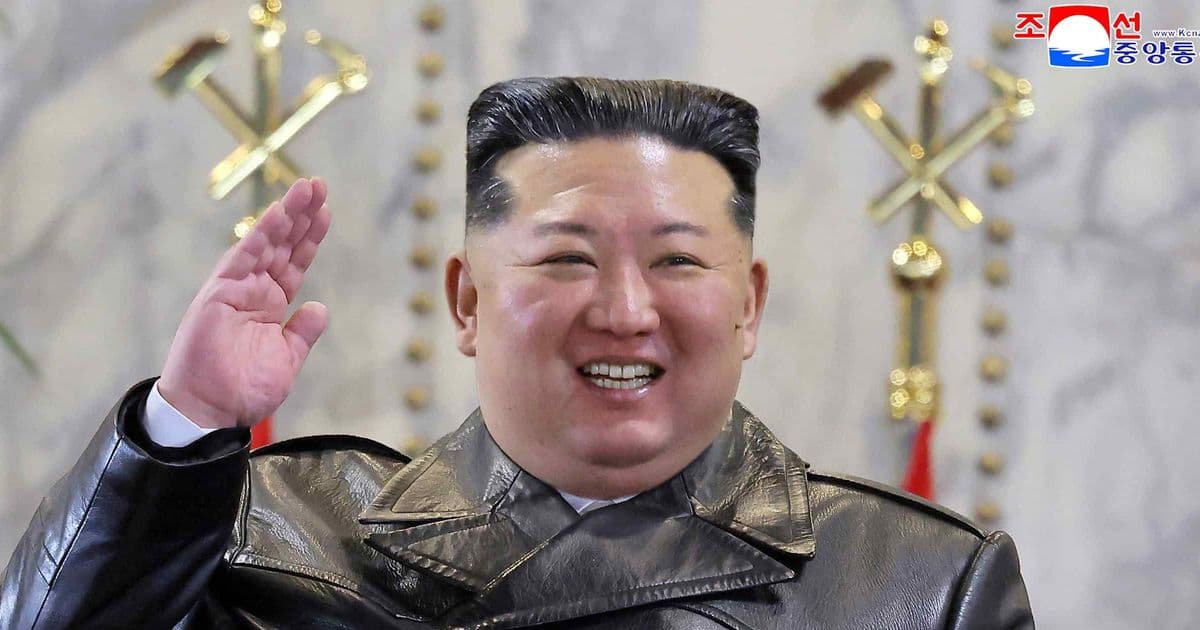
North Korea's leader Kim Jong Un reiterated his country's stance of disinterest in engagement with the U.S. and South Korea as it held a quintennial gathering of ruling party delegates, while hinting at some room for engagement with the former.
North Korea's leader Kim Jong Un on Thursday reiterated his country's stance of disinterest in engagement with the U.S. and South Korea as it held a quintennial gathering of ruling party delegates, while hinting at some room for engagement with the former.
During the Workers' Party of Korea congress, Kim doubled down on nuclear weapons as the "basic security" for North Korea, while simultaneously suggesting potential diplomatic openings with Washington. The mixed messaging reflects North Korea's complex strategic calculations amid ongoing tensions with the United States and its allies in the region.
Kim's speech emphasized North Korea's continued commitment to its nuclear program, framing it as essential for national security against what he characterized as American "tyranny." This rhetoric aligns with North Korea's long-standing position that its nuclear arsenal serves as a deterrent against perceived threats from the United States and South Korea.
However, the North Korean leader also included language that could be interpreted as leaving the door open for future negotiations. This nuanced approach suggests that while North Korea remains committed to its nuclear program, it may still be willing to engage in dialogue under certain conditions.
The timing of this congress is significant, coming as the United States and South Korea continue to strengthen their military cooperation and as regional security dynamics evolve. North Korea's position reflects its attempt to balance its security priorities with potential diplomatic opportunities.
For the technology sector, particularly companies involved in defense, cybersecurity, and intelligence gathering, North Korea's continued nuclear development and its complex relationship with the United States represent ongoing challenges and opportunities. The situation underscores the importance of advanced surveillance and monitoring technologies, as well as the need for robust cybersecurity measures to protect against potential North Korean cyber threats.
As regional tensions persist, the international community will be closely watching for any concrete steps North Korea might take toward engagement, balanced against its continued emphasis on nuclear capabilities as the foundation of its security strategy.
Comments
Please log in or register to join the discussion