Linux 7.0 development and Intel Panther Lake Linux testing dominated Phoronix's February traffic, with readers flocking to performance benchmarks, kernel updates, and hardware reviews covering everything from Loongson CPUs to AMD SEV-SNP virtualization.
During February, Linux 7.0 merge window developments and Intel Panther Lake Linux testing captured the most reader attention on Phoronix, with 289 original open-source/Linux-related news articles and 20 featured hardware reviews published throughout the month.
Linux 7.0 Development Takes Center Stage
The Linux kernel community officially confirmed Linux 7.0 as the successor to Linux 6.19, with Linus Torvalds citing his tradition of bumping the major version number after x.19 releases. The merge window opened with Linux 7.0-rc1, bringing numerous new features including experimental zones protocol support for Wayland after 2+ years of development and 620+ comments.
However, not all changes made it into the 7.0 cycle. Linus Torvalds rejected MMC changes, calling them "complete garbage" and "untested crap" due to lack of proper testing through linux-next. The kernel development team also formally concluded the "Rust experiment," signaling acceptance that Rust for the Linux kernel is here to stay.
Intel Panther Lake Dominates Hardware Coverage
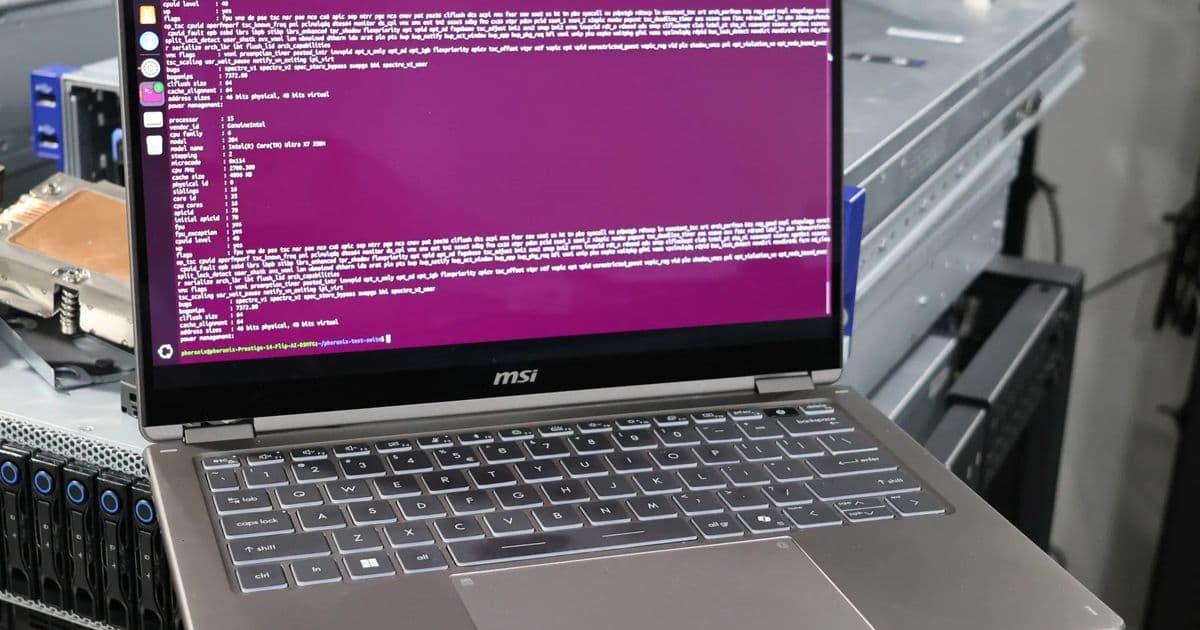
Intel's Core Ultra Series 3 "Panther Lake" processors proved to be the hardware story of the month. The MSI Prestige 14 Flip AI+ Evo laptop powered by the Core Ultra X7 358H arrived last Thursday, sparking extensive Linux benchmarking coverage.
Performance testing revealed Panther Lake showing strong CPU performance and power efficiency compared to a wide range of laptops on an up-to-date Linux software stack across around 300 benchmarks. The Arc B390 graphics with 12 Xe cores delivered impressive results, with open-source Intel Compute Runtime showing competitive performance against AMD Ryzen AI competition.
A comprehensive 18-year Intel laptop CPU comparison demonstrated Panther Lake achieving speeds up to 95x faster than the 2008 Penryn architecture, with a 21.5x improvement on average across 150+ benchmarks. Additional testing pushed Panther Lake CPU performance further by increasing the power budget.
Windows 11 vs. Ubuntu Linux performance comparisons for the Core Ultra X7 358H highlighted the current state of Linux support, while developers worked to address performance regressions discovered during early Linux 7.0 kernel testing.
Other Notable Hardware and Software Developments
Loongson 3B6000 benchmarks provided insight into China's LoongArch CPU, comparing the 12-core/24-thread processor against AMD Zen 5, Intel Arrow Lake, and Raspberry Pi 5 under Linux. The results offered perspective on how this MIPS64-derived architecture performs against current market leaders.
AMD SEV-SNP virtualization performance evaluation showed the typical 2-10% overhead when enabling hardware-backed security protections for confidential computing on modern EPYC servers. Testing covered both Ubuntu 24.04 LTS and Ubuntu 26.04 development snapshots.
Google Cloud's N4A series powered by Axion ARM64 processors was benchmarked against Intel Xeon N4 and AMD EPYC N4D series instances, following dramatic generational gains observed when comparing to prior-generation ARM64 VMs.
Software Ecosystem Updates
Mesa 26.0 released with significantly improved Radeon ray-tracing capabilities and numerous Vulkan driver improvements. The open-source OpenGL/Gallium3D and Vulkan drivers continue advancing across Linux systems.
Ubuntu 26.04 entered feature freeze as development progresses toward the "Resolute Raccoon" release. Meanwhile, sudo-rs broke historical norms by enabling password feedback by default, showing asterisks when typing passwords for improved UX.
Gentoo Linux began migrating from GitHub to Codeberg, motivated by concerns over Microsoft's Copilot training on GitHub repositories. The main Gentoo project is now active on Codeberg and honoring pull requests.
Community and Industry News
Linus Torvalds confirmed Linux 7.0 as the next kernel version, while Toyota surprised the industry by developing a console-grade open-source game engine called Fluorite using Flutter and Dart.
GNU Hurd reached significant milestones with x86_64 support, SMP capabilities, and approximately 75% of Debian packages building successfully. The project's status update from FOSDEM 2026 showed renewed optimism thanks to recent driver progress.
AI-assisted debugging uncovered a "50-80x improvement" for Linux's IO_uring, with Jens Axboe and Claude AI collaborating to resolve slowdowns in AHCI/SCSI code.
Debian leadership addressed challenges around developers quietly drifting away from volunteer commitments without proper communication to the project.
Intel announced new Linux developer hiring initiatives, including roles focused on enhancing Linux graphics driver stacks and Linux gaming support through Valve's Proton (Steam Play).
The X.Org Server project renamed its main development branch from "master" to "main" on Valentine's Day, cleaning up the codebase by selectively dropping questionable patches in the process.
These developments reflect the ongoing evolution of Linux hardware support, kernel development, and the broader open-source ecosystem as we move through 2026.
Comments
Please log in or register to join the discussion