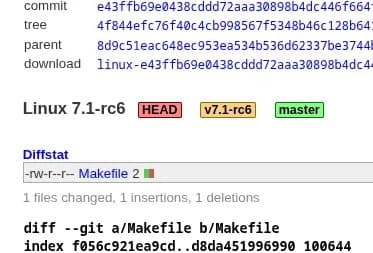
The sixth release candidate for Linux 7.1 arrives with significant contributions from AI coding agents, continuing a trend of larger-than-expected development cycles.
The Linux 7.1-rc6 kernel has been released, marking another milestone in the development cycle leading up to the anticipated stable release in mid-June. This release candidate comes on the heels of what Linus Torvalds described as another "larger-than-I'd-wish-for size" week, continuing a pattern of substantial code churn in recent kernel development.
AI/LLM Coding Agents Driving Development
One of the most notable aspects of this development cycle has been the increasing role of AI and LLM coding agents in kernel development. As noted in the announcement, Linux networking has seen significantly larger pull requests due to AI/LLM coding agent contributions. This represents a significant shift in how kernel development is being approached, with automated systems now contributing substantial portions of code.
The integration of AI assistance has brought both benefits and challenges. On one hand, these coding agents can help address large backlogs of maintenance tasks and implement routine fixes more quickly. On the other hand, they've contributed to the "larger-than-I'd-wish-for" size that Torvalds has mentioned in recent weeks, suggesting that the automated contributions are generating more code than the development team initially anticipated.
Key Changes in Linux 7.1-rc6
While the full changelog is extensive, several notable changes stand out in this release candidate:
- USB Device Quirks: Additional device-specific fixes and compatibility improvements for USB hardware
- Documentation Updates: Notably, the kernel now hides documentation on the "clearcpuid" parameter, suggesting this is an internal interface not meant for general use
- Gaming Controller Support: Added support for the ASUS ROG RAIKIRI II and Nova 2 Lite Controllers
- Driver Updates: As Torvalds noted, the bulk of changes are spread across numerous driver categories including GPU, networking, USB, serial, sound, and SCSI
- Core Networking: Significant updates to core networking functionality
- Selftest Improvements: Enhanced testing infrastructure
- Architecture Fixes: Primarily for x86, mips, and arm64 (especially KVM-related)
- Filesystem Fixes: Improvements for SMB and NFS filesystems
- Memory Management: Various fixes in the mm subsystem
- Liveupdate Support: Additional functionality for live kernel updates
Development Cycle Observations
Torvalds' comments reveal some interesting patterns in the current development cycle:
Size Concerns: Despite rc6 being smaller than rc5, Torvalds still expresses concern about the size of the changes, noting that "larger-than-I'd-wish-for" might be becoming the new normal
Distributed Changes: Unlike previous cycles where changes might be concentrated in specific areas, the current cycle shows changes spread across numerous subsystems
Normalcy Amidst Growth: Despite the larger-than-expected size, Torvalds notes that "things look pretty normal except for the larger-than-I'd-wish-for size (which I guess technically is 'normal' these days too)"
What to Expect from Linux 7.1
Linux 7.1 is shaping up to be a significant release with improvements across multiple subsystems. For users and system administrators, the key areas to watch for include:
- Networking Performance: The substantial networking changes could impact performance and compatibility
- Hardware Support: New device support, particularly in the USB and gaming controller spaces
- Stability: Despite the larger size, Torvalds doesn't indicate any particularly concerning issues
- Security: As always, the kernel includes numerous security fixes and improvements
For those interested in tracking the full development cycle, the Linux 7.1 features page provides a comprehensive overview of all the changes coming with this stable release.
The increasing role of AI in kernel development represents both an opportunity and a challenge for the Linux community. As these coding agents become more sophisticated, we can expect to see them handle increasingly complex tasks, potentially accelerating development while introducing new considerations for code quality and review processes.
{{IMAGE:2}}
For system administrators and enthusiasts planning upgrades, Linux 7.1 promises to bring meaningful improvements across the board, particularly in networking and hardware support. While the development cycle has been larger than in previous releases, Torvalds' assessment suggests that the release is still on track for a mid-June debut, assuming no unexpected issues emerge in the final weeks of development.
Comments
Please log in or register to join the discussion