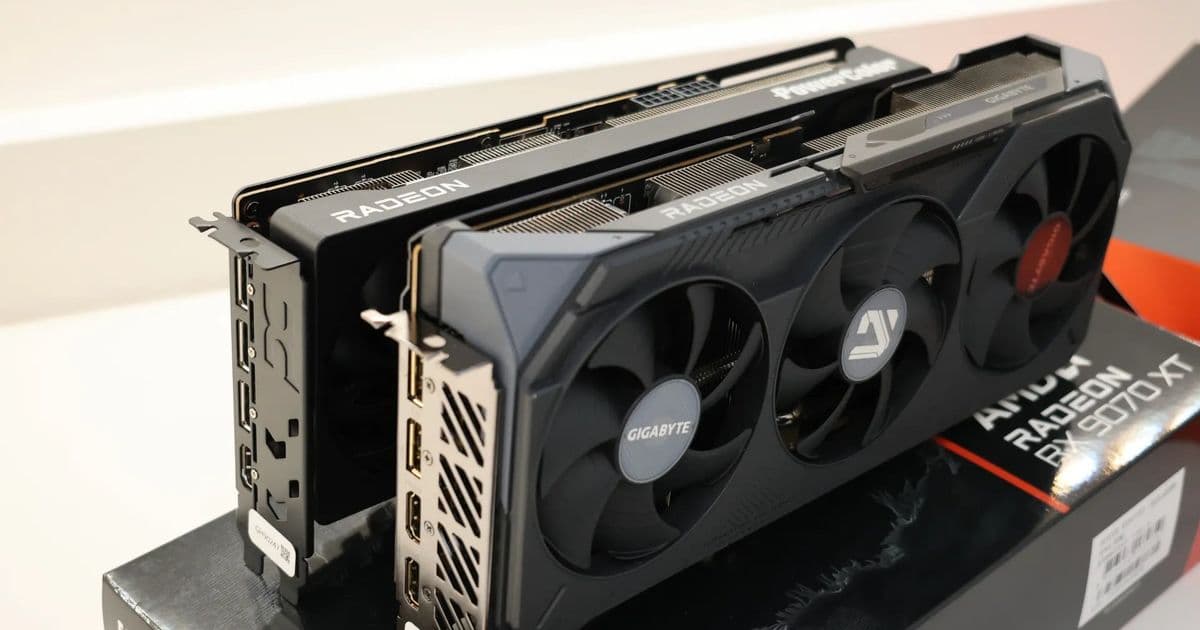
The first release candidate for Mesa 26.0 lands with a focus on Radeon Vulkan ray-tracing performance, extensive Intel and NVK driver updates, and a long list of new Vulkan extensions across all open-source GPU drivers.
The Mesa 26.0 development cycle has reached a critical milestone with the release of 26.0-rc1, marking the code branch for this quarter's feature release and initiating the feature freeze ahead of a stable release in February. For Linux gamers and developers, this is shaping up to be one of the most significant Mesa releases in recent memory, primarily due to the substantial work poured into the Radeon Vulkan driver, RADV.

The standout improvements in this release cycle are centered on Vulkan ray-tracing for AMD GPUs. A significant batch of patches, contributed by a coalition including Valve, AMD, and the broader community, has been merged. This isn't just about enabling the feature; it's about optimizing its performance. For homelab builders and Linux gaming enthusiasts running AMD Radeon GPUs, this translates to more efficient ray-tracing workloads in titles that support it, potentially closing the performance gap with proprietary drivers. Alongside the ray-tracing push, general RADV performance optimizations and support for new Vulkan extensions ensure the driver remains current and competitive.
While RADV captures the headlines, the release is a comprehensive update across the entire Mesa stack. The Intel ANV (Vulkan) and Iris (OpenGL) drivers continue to receive a steady stream of improvements, crucial for the growing number of Intel Arc and integrated GPU users on Linux. The open-source NVIDIA driver, NVK, also sees progress, further solidifying the ecosystem for users of Team Green's hardware who prefer open-source drivers.
Beyond the major vendors, the update touches a wide array of smaller drivers, each with targeted enhancements:
- Qualcomm Adreno: Support for Adreno Gen 8 graphics is now ready for Snapdragon X2 laptops, expanding Linux compatibility on ARM-based systems.
- PowerVR: The Vulkan driver receives updates, including support for
VK_KHR_incremental_presentandVK_KHR_xcb_surface/VK_KHR_xlib_surfacefor better window system integration. - Venus: The Venus Vulkan driver for virtio-gpu now supports mesh shaders, a key feature for modern rendering pipelines in virtualized environments.
- RadeonSI Gallium3D: The OpenGL driver for AMD GPUs now defaults to the ACO compiler back-end, which is generally faster and more efficient than the older LLVM compiler, leading to better gaming performance out of the box.
- PanVK (Mali): The Vulkan driver for Arm Mali GPUs sees caching improvements and gains support for a host of new extensions, including
VK_KHR_robustness2,VK_EXT_image_drm_format_modifier, and sparse residency features for more advanced memory management. - HoneyKrisp (Apple Silicon): The Vulkan driver for Apple's M-series chips gets support for present-related extensions (
VK_KHR_present_id,VK_KHR_present_wait2) andVK_KHR_pipeline_binary. - Turnip (Adreno Vulkan) & lavapipe (CPU Vulkan): Both receive the
VK_KHR_robustness2extension, enhancing shader safety and stability.
Extension Support Expansion
A key part of any Mesa release is the addition of new Vulkan extensions, which allow developers to access new hardware features. Mesa 26.0-rc1 is particularly dense in this area. Here’s a breakdown of notable extensions being exposed across different drivers:
| Extension | Driver(s) | Purpose |
|---|---|---|
VK_KHR_maintenance10 |
ANV, NVK, RADV | General driver maintenance and bug fixes. |
VK_EXT_shader_uniform_buffer_unsized_array |
ANV, HK, NVK, RADV | Allows shaders to use unsized uniform buffer arrays. |
VK_VALVE_video_encode_rgb_conversion |
RADV | Enables RGB to YUV conversion for video encoding on AMD GPUs. |
VK_EXT_custom_resolve |
RADV | Provides more control over multisample resolve operations. |
VK_KHR_robustness2 |
panvk, HoneyKrisp, hasvk, NVK, Turnip, lavapipe | Improves buffer bounds checking and robust buffer access. |
VK_KHR_dynamic_rendering |
PowerVR | Allows rendering without a traditional render pass object. |
VK_EXT_discard_rectangles |
NVK | Enables defining regions of the framebuffer to be discarded. |
VK_KHR_surface_maintenance1 |
Promoted Everywhere | Allows querying surface properties and managing swapchain presentation. |
VK_KHR_swapchain_maintenance1 |
Promoted Everywhere | Provides more control over swapchain creation and management. |
This extensive list demonstrates the collaborative effort to bring feature parity across the open-source landscape, ensuring that applications and games relying on these extensions will work correctly regardless of the GPU vendor.
What This Means for Builders and Users
For anyone building a Linux system—be it a high-end gaming rig, a workstation for content creation, or a homelab server with GPU passthrough—Mesa 26.0 represents a significant quality-of-life update. The defaulting of RadeonSI to ACO is a particularly welcome change for AMD users, as it removes a manual configuration step and guarantees better performance from the start.
The ray-tracing improvements for RADV are a direct result of the growing investment from Valve, which benefits the entire Steam Deck ecosystem and Linux gaming at large. As more games adopt ray-tracing, having a performant, open-source driver path is critical.
For developers, the new extensions open doors for more advanced rendering techniques and optimizations. The support for mesh shaders in Venus is a prime example, enabling more efficient geometry processing in virtualized graphics environments.
The Road to Stable
Mesa 26.0-rc1 is just the beginning. The development team will continue to release weekly release candidates, squashing bugs and polishing the code until the official stable release is ready in February. Users can track the progress and test the new features by building from source or waiting for their distribution to package the update.
The full release announcement and patch details can be found on the Mesa-dev mailing list. For those interested in the nitty-gritty of the changes, the Mesa project page on GitLab is the place to watch.
Comments
Please log in or register to join the discussion