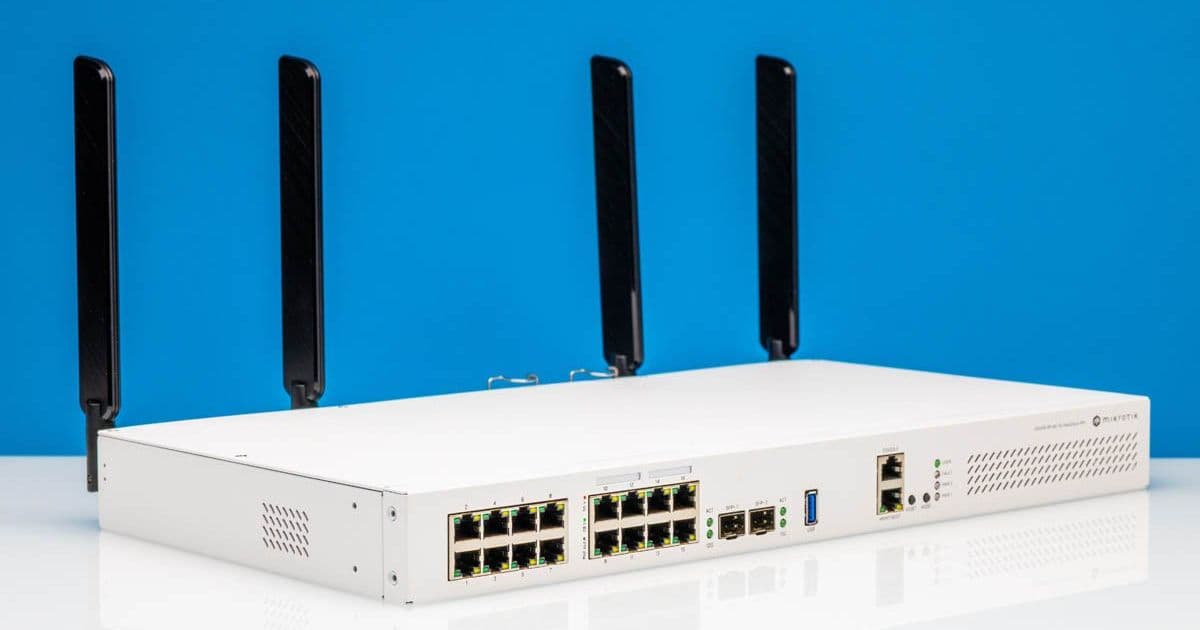
MikroTik's CRS418-8P-8G-2S+5axQ2axQ-RM combines 16x 1GbE ports, 2x 10Gb SFP+, PoE+, and dual-band WiFi 6 in a 1U rackmount switch, making it a compelling all-in-one solution for homelabs and small deployments.
The MikroTik CRS418-8P-8G-2S+5axQ2axQ-RM represents an interesting evolution in the networking space, combining multiple functions into a single 1U rackmount device. At its core, this is a 16-port 1GbE switch with two SFP+ 10G ports, but what sets it apart is the integration of a Qualcomm Arm CPU, PoE+ capabilities, and dual-band WiFi 6 with 4×4 MIMO.
This device sits alongside MikroTik's standard CRS418-8P-8G-2S+RM, which we've previously reviewed. The key differentiator is the addition of wireless capabilities, making it potentially more attractive for deployments where you want not just switching and routing, but also built-in wireless access point functionality.
External Hardware Overview
The CRS418-8P-8G-2S+5axQ2axQ-RM maintains the familiar MikroTik aesthetic with its white metal rackmount chassis. The form factor is nearly identical to the non-WiFi model, with one notable exception: the antennas on the rear.
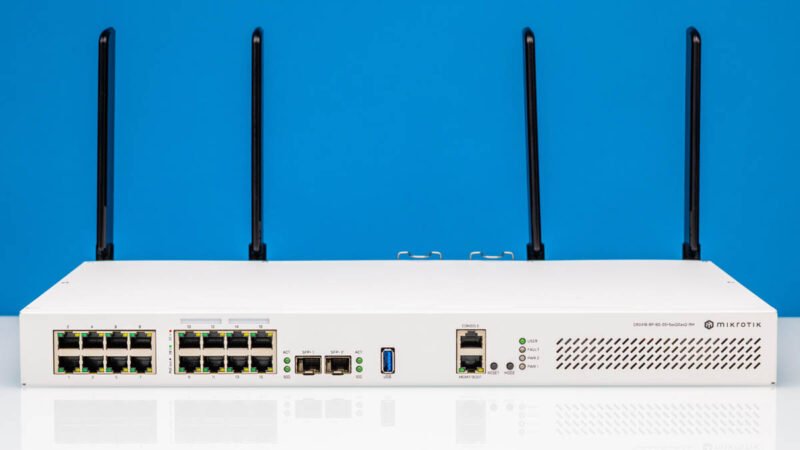
On the left front, we have sixteen 1GbE ports. While some readers might prefer 2.5GbE ports given the increasing prevalence of faster client devices, the 1GbE configuration makes sense for common PoE devices like cameras, where 100M is still sufficient and 2.5GbE would add needless expense.
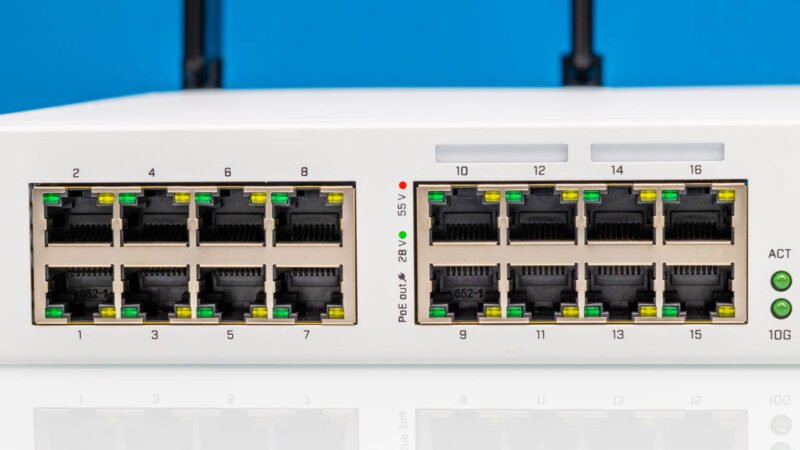 The first eight ports are standard 1GbE connections:
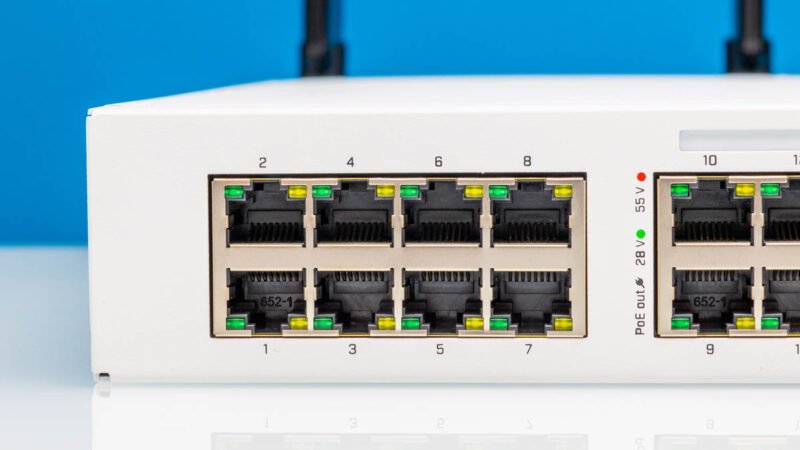 The next eight are PoE+ ports with a total power budget of 150W between them. This configuration matches the non-WiFi model exactly.
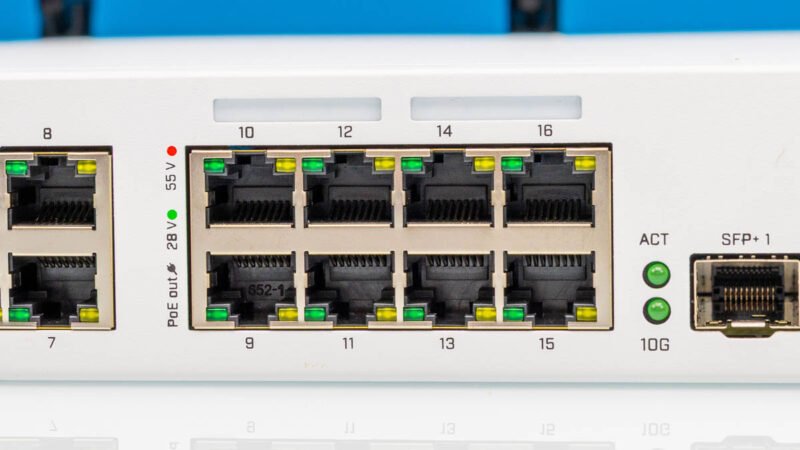 We tested PoE+ power output using both the Fluke LinkIQ-Duo and the MicroScanner PoE, and both showed results consistent with a properly functioning PoE+ switch.
Next, we get two SFP+ ports that are 10Gbps ports. As shown in the block diagram, these are integrated with the 1GbE ports on the same switch fabric, which differs from some other switch designs where 10GbE ports are connected through a management processor.
The device also includes a USB port for configuration and storage, along with two additional Ethernet ports - one for console access and one for management.
The most obvious external difference on this model versus the non-WiFi version is on the rear. Instead of just having fan vents, this model features four RP-SMA antenna connectors protruding from the back. MikroTik includes four antennas in the box, and they screw into these connectors.
These antennas are positioned to provide reasonable wireless coverage even from a rackmount position. MikroTik also includes dedicated holes in the back for pigtails, so if you need even better wireless coverage, you can place antennas outside the case or run longer cables to position them optimally. This addresses one of the common issues with rackmount devices: they are not typically known for great wireless coverage.
On either side of the chassis, there are vents for cooling. On the rear, we get fans and power inputs.
The device features two AC inputs for dual internal power supplies. MikroTik has wire retention clips to keep the power cables secure. There are four fan vents in the rear as well, with a configuration identical to the non-WiFi model.
As you might imagine, the switch comes with rackmount ears. The addition of antennas on the back does not interfere with standard rack installation since they are positioned to clear the rear rails.
Internal Architecture and Performance
Inside, the CRS418-8P-8G-2S+5axQ2axQ-RM features MikroTik's typical architecture with a Marvell Prestera switch chip handling the switching fabric, complemented by a Qualcomm Arm CPU for routing and management functions. This combination allows the device to handle routing duties for reasonable (but not super-fast) connections while maintaining low latency for switching operations.
The dual-band WiFi 6 implementation with 4×4 MIMO provides respectable wireless performance for a rackmount device. While it won't match dedicated high-end access points, it offers a convenient all-in-one solution for smaller deployments or homelabs where space and power efficiency are considerations.
Power Consumption and Thermal Performance
The addition of WiFi hardware does increase power consumption compared to the non-WiFi model, though the difference is not dramatic. The dual power supplies provide redundancy, and the cooling system appears adequate for maintaining stable operation under load.
Use Cases and Recommendations
This device is particularly well-suited for:
- Homelabs requiring PoE+ for multiple devices
- Small office deployments needing integrated switching, routing, and wireless
- Environments where space is at a premium and an all-in-one solution is preferred
- Setups requiring both 1GbE and 10GbE connectivity
For users who don't need wireless capabilities, the standard CRS418-8P-8G-2S+RM remains a compelling option at a lower price point. However, for many deployments, the integrated WiFi 6 functionality justifies the additional cost and power consumption.
The MikroTik CRS418-8P-8G-2S+5axQ2axQ-RM represents a thoughtful evolution of the all-in-one networking concept, successfully integrating switching, routing, PoE+, and wireless capabilities into a single 1U device. While it may not be the absolute best choice for any single function compared to dedicated hardware, its versatility and compact form factor make it an attractive option for many use cases.
Comments
Please log in or register to join the discussion