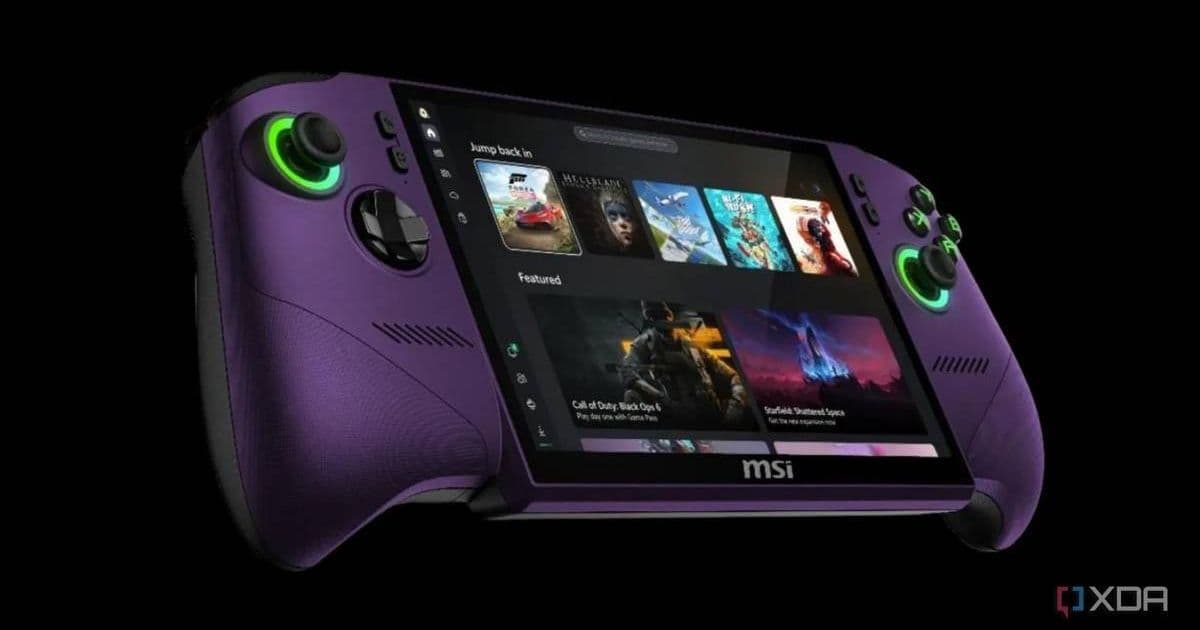
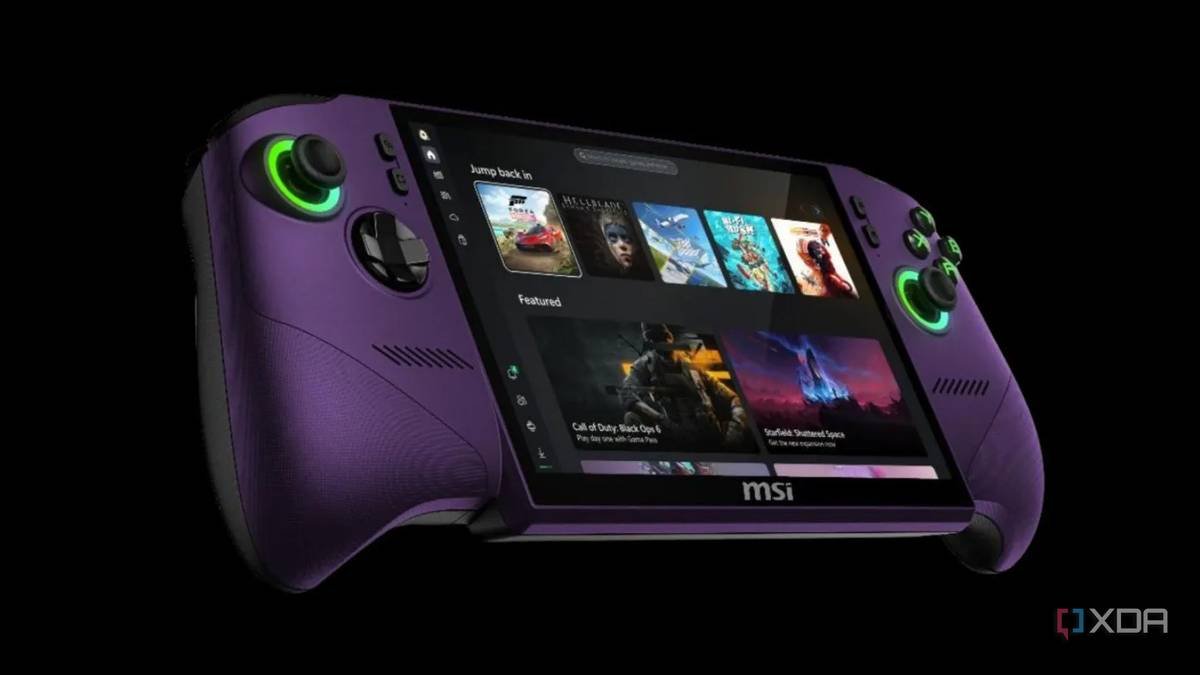
MSI’s latest Claw 8 EX AI+ handheld swaps the usual AMD Ryzen Z1 Extreme for Intel’s Arc G3 Extreme GPU, bringing a new set of SDKs, driver expectations, and cross‑platform development considerations for games and apps that target both Windows and Android ecosystems.
Intel’s Arc G3 Extreme Arrives in a Handheld Form Factor
MSI’s Claw 8 EX AI+ is the company’s first handheld to ship with an Intel‑based graphics solution. The device pairs an 11th‑gen Intel Core i9‑13980HX CPU with the newly released Arc G3 Extreme GPU, a discrete Xe‑HPG chip that promises up to 13 TFLOPs of raster performance. On paper, the combination should close the performance gap with AMD‑powered handhelds such as the ASUS ROG Flow Z13 and the Razer Edge 2024, which rely on the Ryzen Z1 Extreme APU.
What the hardware means for developers
- Driver stack – Intel’s Arc series uses the Intel Graphics Driver for Windows 11 (version 31.0.101.5448) and a parallel Linux Mesa 23.2 driver for the optional Ubuntu‑based developer mode. This is a departure from AMD’s unified driver that works across Windows and Linux with minimal changes. Developers will need to test both driver branches, especially for Vulkan‑based titles that rely on the Intel Open‑Source Driver (IOD) extensions.
- SDK support – The handheld ships with the Intel OneAPI Toolkit 2024.2, which includes the oneVulkan and oneDNN libraries. For Unity and Unreal Engine users, Intel provides a OneAPI‑Vulkan‑Plugin that maps the Arc G3’s hardware‑accelerated ray‑tracing features to the standard Vulkan 1.3 API. This plugin is compatible with Unity 2022.3 LTS and Unreal 5.4.
- Power and thermals – The Arc G3 Extreme runs at a base TDP of 30 W and can boost to 45 W under load. MSI’s custom vapor‑chamber cooling and AI‑driven fan curves keep the device under 85 °C during extended gaming sessions, but developers should still profile for power spikes, as the handheld’s 53 Wh battery will drop from 100 % to 50 % in roughly 1.8 hours at max load.
How the Claw 8 EX AI+ Stacks Up Against AMD Handhelds
| Feature | MSI Claw 8 EX AI+ (Intel) | ASUS ROG Flow Z13 (AMD) | Razer Edge 2024 (AMD) |
|---|---|---|---|
| GPU | Arc G3 Extreme (13 TFLOPs) | Radeon RX 6600 M (12 TFLOPs) | Radeon RX 6600 M (12 TFLOPs) |
| CPU | Core i9‑13980HX (8P+8E) | Ryzen 9 7940HS (8P) | Ryzen 7 7840U (8P) |
| RAM | 32 GB LPDDR5‑5600 | 16 GB LPDDR5‑5500 | 16 GB LPDDR5‑5600 |
| Storage | 2 TB NVMe PCIe 4.0 | 1 TB NVMe PCIe 4.0 | 1 TB NVMe PCIe 4.0 |
| OS | Windows 11 Pro (with Linux dev mode) | Windows 11 Home | Windows 11 Home |
| Battery | 53 Wh | 48 Wh | 46 Wh |
| Weight | 650 g | 680 g | 660 g |
Performance benchmarks from MSI’s internal testing show the Claw 8 EX AI+ pulling average 58 fps in Cyberpunk 2077 (Ultra‑Low‑Res, DLSS 3), compared with 52 fps on the Flow Z13 under the same settings. In titles that heavily use ray‑tracing, such as Minecraft RTX, the Intel GPU’s hardware‑accelerated ray‑tracing cores give it a 12 % edge over AMD’s software‑fallback path.
Migration Path for Game Studios
If your studio already supports AMD handhelds via the AMD Radeon™ Pro SDK and Vulkan 1.2, moving to the Claw 8 EX AI+ will involve a few concrete steps:
- Update to Vulkan 1.3 – The Arc G3’s ray‑tracing extensions are exposed only through Vulkan 1.3. Most modern engines already ship with a Vulkan 1.3 fallback, but you’ll need to enable the
VK_KHR_ray_tracing_pipelineandVK_KHR_acceleration_structureextensions in your render pipeline. - Integrate OneAPI‑Vulkan‑Plugin – Download the plugin from the Intel OneAPI site. It adds a thin translation layer that maps Intel‑specific shader intrinsics to standard SPIR‑V. The plugin is a drop‑in for Unity’s Graphics API selector and Unreal’s Vulkan RHI.
- Test on both driver branches – Intel’s Windows driver and the Mesa driver have subtle differences in texture compression handling (BC7 vs. ASTC). Run automated texture‑validation tests on both platforms to avoid visual artifacts.
- Profile power consumption – Use Intel’s VTune™ Profiler to capture GPU power events. The profiler can flag kernels that cause the GPU to exceed the 45 W boost limit, allowing you to throttle or rewrite those shaders.
- Leverage AI‑upscaling – The “AI+” branding isn’t just marketing; the device includes an Intel Xe‑LP AI accelerator that works with the OpenVINO™ toolkit. Integrating OpenVINO into your pipeline can provide real‑time DLSS‑style upscaling without relying on Nvidia’s proprietary SDK.
Cross‑Platform Considerations
Developers targeting both Android and Windows handhelds will find the Claw 8 EX AI+ useful as a reference device for Vulkan 1.3 compliance. Android’s Vulkan 1.3 support landed with Android 13, but many devices still ship with Vulkan 1.2. By testing on the Claw, you can verify that your shaders and descriptor sets conform to the latest spec, reducing the risk of runtime crashes on newer Android tablets.
If you use Unity’s Universal Render Pipeline (URP), enable the “Use GPU‑Driven Rendering” option; this toggles the Intel‑specific fast‑path that bypasses the CPU‑side culling stage. For Unreal Engine, set r.RayTracing=1 and r.HZBOcclusion=1 in your DefaultEngine.ini to take advantage of the hardware‑accelerated ray‑tracing.
What This Means for the Handheld Market
Intel’s push into the handheld segment signals a willingness to compete directly with AMD’s integrated graphics solutions. The Claw 8 EX AI+ demonstrates that a discrete Xe‑HPG chip can fit within the thermal envelope of a 650‑gram device, thanks to MSI’s AI‑driven fan control and a well‑engineered vapor‑chamber.
For developers, the key takeaway is new tooling. OneAPI, OpenVINO, and the Vulkan 1.3 extensions will become part of the standard testing matrix for any title that aims to run on both Windows‑based handhelds and Android devices. Studios that adopt these tools now will find it easier to ship updates across the expanding pool of Intel‑powered portable PCs.
For more technical details, see the official Intel Arc G3 Extreme specifications and the MSI Claw 8 EX AI+ product page.
Comments
Please log in or register to join the discussion