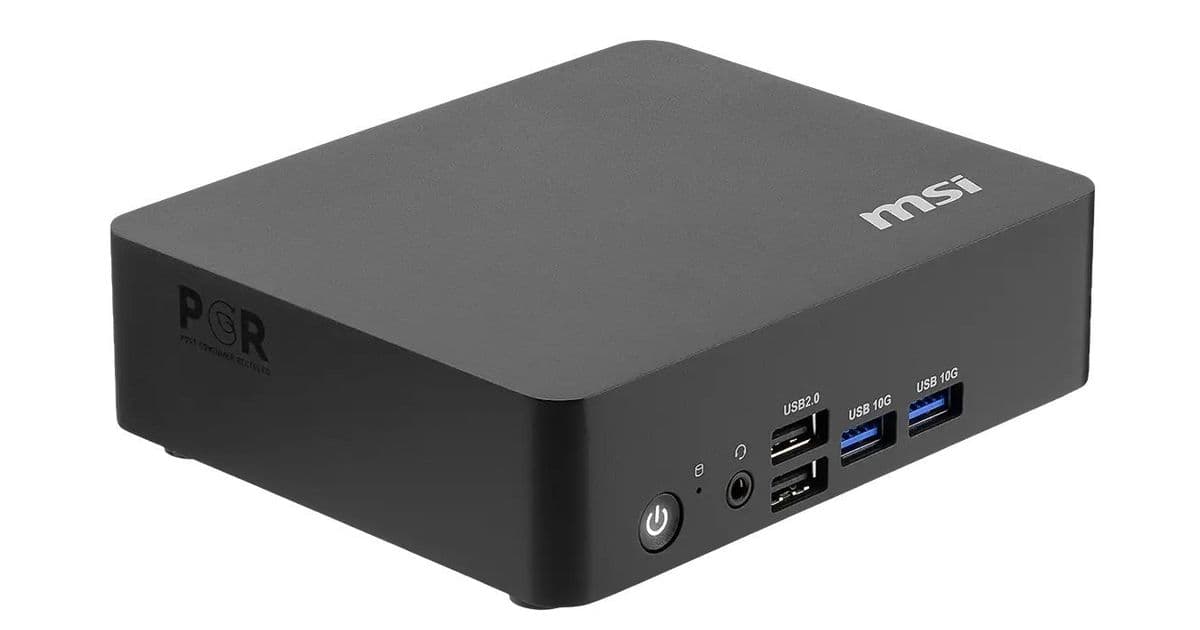
MSI launches two nearly identical compact desktop computers with Intel N150/N250 processors, dual Ethernet, and three-display support, differing only in their cooling approach.
MSI has introduced two new compact desktop computers in its Cubi NUC TWG series, offering developers and system builders a choice between active and passive cooling configurations. The MSI Cubi NUC TWG and TWG S are small-form-factor PCs measuring 135.6 x 112.6 x 40.1mm (5.34" x 4.43" x 1.58"), designed for energy-efficient computing in space-constrained environments.
Twin Lake Processors and Core Specifications
The new mini PCs are powered by Intel's Twin Lake processors - the N150 and N250 options. These 6-watt, quad-core chips represent Intel's latest entry-level processor family, offering modest performance improvements over previous-generation Alder Lake-N chips while maintaining the same ultra-low power envelope.
Both models share identical core specifications:
- Single SODIMM slot for DDR5-4800 memory
- Single M.2 slot for PCIe 3.0 x4 storage
- Compact dimensions suitable for VESA mounting
- Support for up to three displays via dual HDMI 2.1 ports
The memory and storage configuration suggests these systems are targeted at basic computing tasks, digital signage, kiosks, and lightweight desktop applications rather than demanding workloads.
Cooling Options: Fan vs Fanless
The primary distinction between the two models lies in their thermal management approach:
MSI Cubi NUC TWG: Features active cooling with an internal fan for heat dissipation. This configuration typically allows for better sustained performance under load and is suitable for environments where fan noise is acceptable.
MSI Cubi NUC TWG S: The "S" designation indicates a fanless design, relying on passive cooling through the aluminum chassis. This makes it completely silent, ideal for noise-sensitive environments like living rooms, bedrooms, or quiet office spaces.
Connectivity and Expansion
Both models offer a comprehensive port selection for their size:
- 1 x USB 3.2 Gen 2 Type-C (10 Gbps)
- 2 x USB 3.2 Gen 2 Type-A (10 Gbps)
- 4 x USB 2.0 Type-A (480 Mbps)
- 2 x HDMI 2.1
- 1 x 3.5mm audio
- 1 x 2.5 GbE LAN
- 1 x Gigabit LAN
The dual Ethernet ports are particularly noteworthy, providing both 2.5 GbE and Gigabit connectivity. This makes the systems well-suited for network-intensive applications, media servers, or environments requiring network redundancy.
Wireless Options
Users can choose between two wireless configurations:
- AzureWave card with WiFi 5 and Bluetooth 5
- Intel card with WiFi 6 and Bluetooth 5.2
The WiFi 6 option provides better performance in congested wireless environments and improved power efficiency, though WiFi 5 remains adequate for most basic use cases.
Practical Considerations
The inclusion of four USB 2.0 ports alongside three high-speed USB ports reflects the system's intended use case. While USB 2.0 might seem dated, it's perfectly adequate for connecting keyboards, mice, and other low-bandwidth peripherals. The three high-speed ports provide flexibility for external storage, docking stations, or high-bandwidth devices.
Target Applications and Market Position
MSI positions these systems as cost-effective, energy-efficient solutions rather than high-performance workstations. The compact size, VESA mounting compatibility, and dual display support make them ideal for:
- Digital signage and kiosk applications
- Home theater PCs (HTPCs)
- Office desktops and thin clients
- Development and testing environments
- Small business computing solutions
The fanless TWG S variant is particularly well-suited for living room PCs or bedroom setups where silent operation is paramount.
Pricing and Availability
MSI hasn't announced official pricing for the new models, but the company notes that previous-generation Alder Lake-N based models started around $150 for barebones configurations. Given the modest performance improvements and current market conditions affecting RAM and storage prices, expect the new Twin Lake models to be priced similarly or slightly higher.
The systems are currently listed on MSI's UK website but haven't appeared on the US site yet, suggesting a phased international rollout typical for mini PC launches.
Technical Implications for Developers
For developers and system builders, these new Twin Lake mini PCs offer several interesting possibilities:
- Low-power development environments: The 6-watt TDP makes these systems ideal for always-on development servers or continuous integration nodes
- Edge computing: The compact form factor and low power consumption suit edge computing applications where space and energy efficiency matter
- Multi-display setups: Support for three displays enables productive multi-monitor development environments in minimal desk space
- Network appliance development: Dual Ethernet ports make these suitable for testing network appliances, routers, or firewall configurations
The choice between active and passive cooling also provides flexibility for different deployment scenarios - developers can select the TWG for better sustained performance or the TWG S for completely silent operation in noise-sensitive environments.
While these systems won't replace high-performance development workstations, they represent a practical option for specific use cases where compact size, low power consumption, and flexible cooling options are priorities.
Comments
Please log in or register to join the discussion