
The upcoming vim.pack module in Neovim 0.12 represents a fundamental shift in how users manage their plugin ecosystem, offering native integration with simplified configuration patterns while maintaining flexibility for advanced use cases.
The emergence of vim.pack as Neovim's built-in plugin manager marks a significant milestone in the editor's evolution. Rather than relying on third-party solutions, Neovim users will soon have a first-class plugin management system integrated directly into the core. This development signals Neovim's maturation into a more self-contained ecosystem, where essential tooling becomes part of the standard distribution.
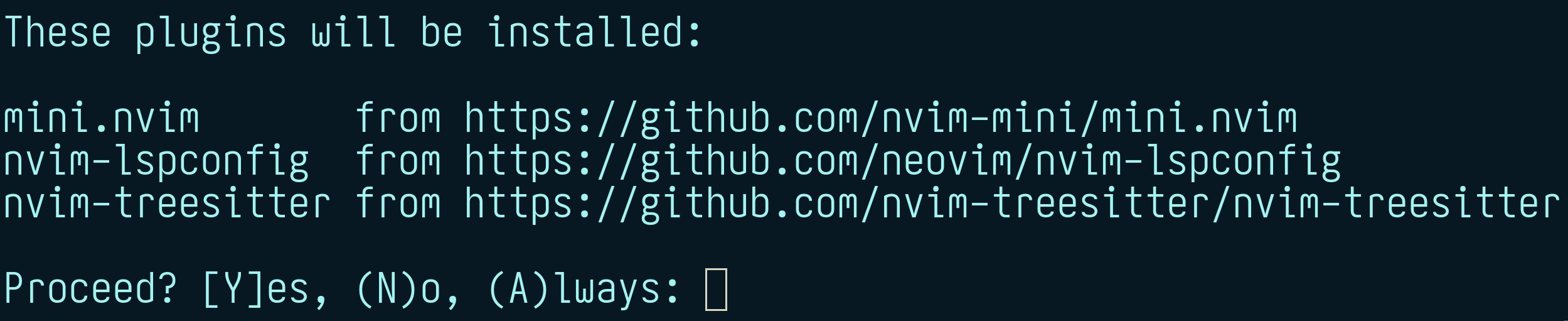
At its core, vim.pack embodies a philosophy of configuration simplicity. The central vim.pack.add() function serves as a "smart :packadd" that handles both installation and loading, allowing users to declare their plugins in a straightforward manner. This approach transforms plugin management from a separate concern into an integral part of the configuration workflow, creating a more unified experience where adding a plugin feels as natural as creating a mapping or defining an autocommand.
The design choices behind vim.pack reveal thoughtful consideration for different user needs. While the recommended single vim.pack.add() approach offers maximum simplicity and robustness, the system still accommodates more complex configurations through multiple add calls and lazy loading options. This flexibility ensures that users can choose their preferred balance between startup performance and configuration complexity.
A particularly elegant aspect of vim.pack is its lockfile mechanism. The nvim-pack-lock.json file serves as a reproducible snapshot of plugin states, enabling consistent environments across machines and simplifying collaboration. This approach mirrors modern dependency management in other ecosystems, where lockfiles have become standard practice for ensuring reproducible builds.
The migration guidance provided in the article demonstrates vim.pack's compatibility with existing workflows. Whether transitioning from mini.deps or lazy.nvim, users can adapt their configurations with clear mapping of concepts. The article acknowledges that some features from established plugin managers may not have direct equivalents in vim.pack, suggesting that users may need to adjust their expectations around certain advanced capabilities.

The implications of vim.pack extend beyond mere convenience. By integrating plugin management directly into Neovim, the editor's ecosystem becomes more cohesive and potentially more stable. With dedicated core team maintaining the plugin manager, users benefit from the same stability guarantees as the Neovim core itself. This native integration could also foster closer alignment between plugin development practices and Neovim's architecture.
However, the transition to vim.pack is not without trade-offs. The immediate loading approach, while simplifying configuration, may not satisfy users who prioritize startup speed above all else. The article wisely suggests that extreme lazy loading often comes with hidden cognitive overhead, but the performance implications will vary significantly based on individual use cases and hardware.
For users of sophisticated plugin managers like lazy.nvim, vim.pack may initially feel restrictive. The absence of built-in lazy loading specifications means that users must implement their own loading logic, potentially leading to more complex configurations. The article provides several patterns for lazy loading, but these require more manual implementation than the declarative approaches offered by some third-party solutions.
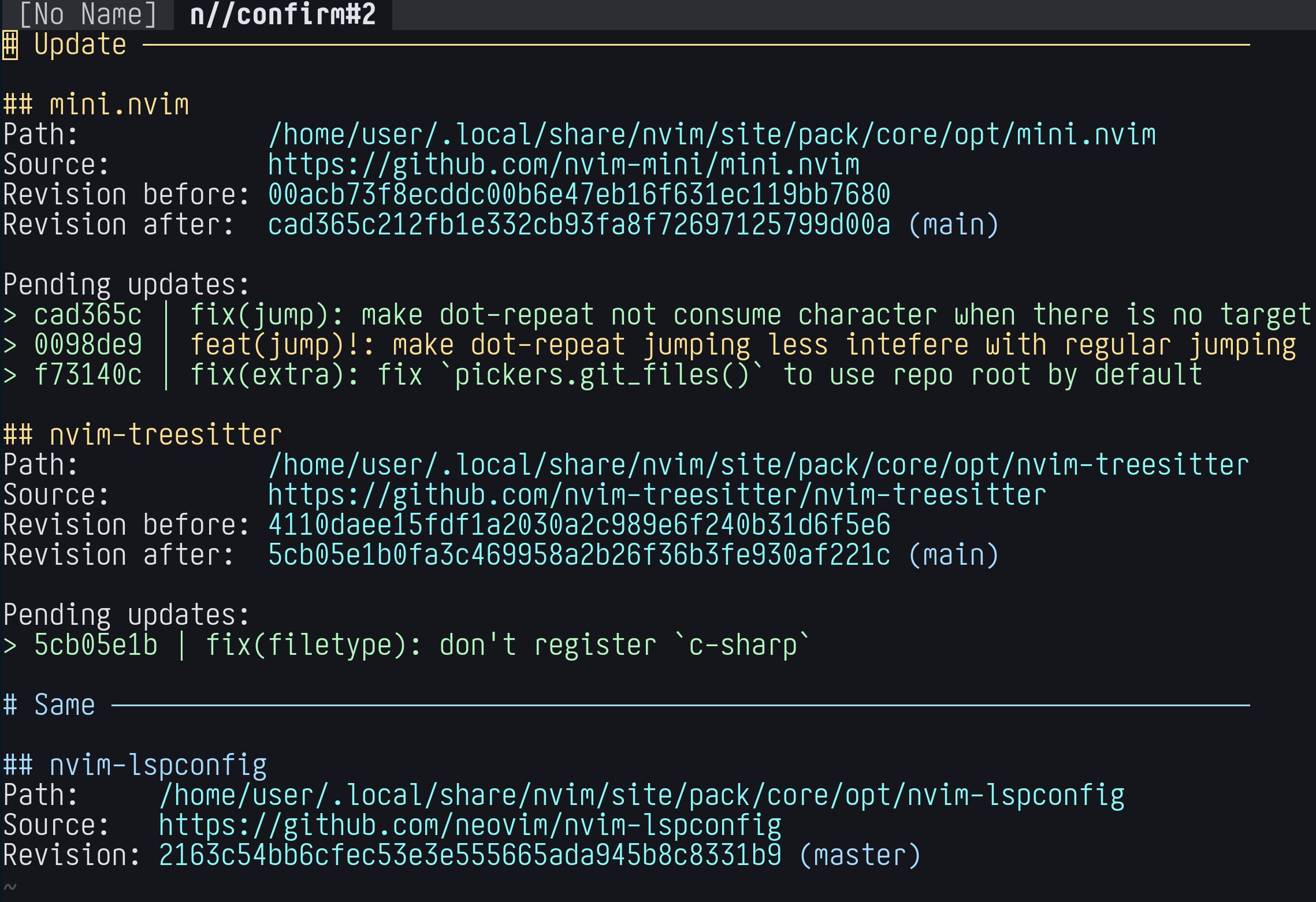
The confirmation buffer for updates represents an interesting UX decision. By presenting update information in an interactive buffer with LSP support, vim.pack transforms what could be a mundane maintenance task into a more engaging experience. This approach aligns with Neovim's philosophy of leveraging its editor capabilities for tooling, rather than relying on external interfaces.
Looking ahead, the long-term vision for vim.pack includes potential enhancements like packspec support, which could standardize plugin hooks and reduce the need for custom autocommands. Such developments would further streamline the plugin management experience while maintaining the system's core design principles.
For the Neovim community, vim.pack represents both an opportunity and a challenge. It offers the chance to simplify configuration practices and reduce dependency on external tools, but requires users to adapt their established workflows. The article's balanced approach acknowledges these tensions while providing practical guidance for adoption.
Ultimately, vim.pack's success will depend on its ability to balance simplicity with flexibility. By providing clear patterns for common use cases while allowing customization for advanced scenarios, it has the potential to become the de facto standard for Neovim plugin management. As with any significant change in developer tools, the transition may involve some initial friction, but the long-term benefits of a native, well-integrated solution likely outweigh the costs for most users.
For those interested in exploring vim.pack further, the official documentation accessible via :h vim.pack and :h vim.pack-examples provides comprehensive reference material. Additionally, the demo video mentioned in the article offers a visual introduction to the system's capabilities.
The evolution of vim.pack will be worth watching as it moves through development and into stable release. As Neovim continues to mature, built-in solutions like this one may increasingly define the editor's identity and shape best practices within its ecosystem.
Comments
Please log in or register to join the discussion