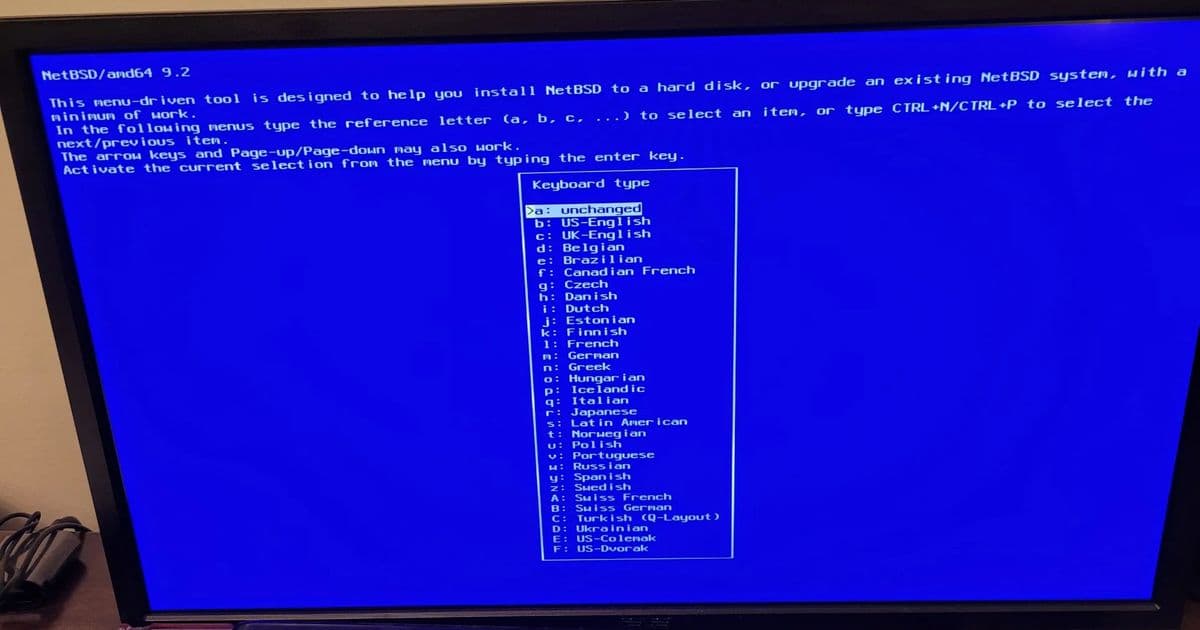
The NetBSD project has released NetBSD 11.0-RC2 as the latest test candidate ahead of the major 11.0 milestone, featuring initial 64-bit RISC-V support, Snapdragon X SoC compatibility, enhanced Linux syscall handling, and a new MICROVM kernel for fast VM booting.
The NetBSD project has released NetBSD 11.0-RC2 as the second release candidate for the upcoming NetBSD 11.0 milestone, marking significant progress toward what developers describe as a major release for the BSD operating system family. The release candidate is now available for testing, with the final 11.0 release expected in the coming weeks.
Technical Highlights
NetBSD 11.0-RC2 builds upon the foundation established in earlier development versions, with several key architectural improvements that expand the operating system's hardware compatibility and performance characteristics.
The most notable addition is initial 64-bit RISC-V CPU support, which brings NetBSD into alignment with other major operating systems that have been expanding their RISC-V capabilities. This support represents a significant step for NetBSD in targeting emerging processor architectures beyond the traditional x86 and ARM ecosystems.
Qualcomm Snapdragon X SoC support has also been introduced in this release candidate. The Snapdragon X series represents Qualcomm's push into high-performance ARM-based computing, particularly in laptop and desktop form factors. This support positions NetBSD to run on next-generation ARM hardware that's increasingly appearing in commercial devices.
Enhanced Linux System Call Compatibility
The improved compat_linux subsystem represents a major enhancement for users who need to run Linux binaries on NetBSD. The better Linux system call handling yields a much better Linux emulation experience on NetBSD 11.0, addressing long-standing compatibility issues that previously limited the effectiveness of running Linux applications on the BSD platform.
This enhancement is particularly significant for users who rely on specific Linux-only applications or need to maintain compatibility with Linux-based development tools and workflows. The improved syscall handling should reduce the friction typically associated with cross-platform binary execution.
POSIX.1-2024 Compliance and MICROVM Kernel
NetBSD 11.0-RC2 includes enhanced POSIX.1-2024 compliance, bringing the operating system in line with the latest standards for portable operating system interfaces. This compliance improvement ensures better compatibility with modern software that relies on standardized system calls and behaviors.
The introduction of a new MICROVM kernel for x86/x86_64 architectures is designed for fast virtual machine booting. This specialized kernel variant optimizes the boot process for virtualized environments, potentially reducing startup times for containerized applications and cloud-based deployments where rapid instance initialization is critical.
Software Stack Updates
Alongside the core system improvements, NetBSD 11.0-RC2 includes updated versions of key development tools:
- GCC 12.5 - The GNU Compiler Collection provides the latest optimizations and language standard support
- GDB 15.1 - The GNU Debugger offers improved debugging capabilities and toolchain integration
- OpenSSH 10 - The secure shell implementation includes the latest security patches and protocol enhancements
These software updates ensure that NetBSD 11.0 maintains compatibility with contemporary development practices and security standards.
Testing and Availability
NetBSD 11.0-RC2 is available for download from the official NetBSD.org website, where users can access installation images and documentation for various supported architectures. The release candidate designation indicates that while the core functionality is considered stable, testing by the broader community is essential to identify any remaining issues before the final release.
Users are encouraged to test the release candidate on their hardware configurations, particularly those involving the new features like RISC-V support or Snapdragon X compatibility. Feedback from the community helps ensure that the final 11.0 release meets the stability and compatibility expectations of production deployments.
The NetBSD project continues its tradition of incremental improvement and architectural refinement, with version 11.0 representing a significant step forward in hardware support, standards compliance, and cross-platform compatibility. The release candidate process allows for thorough testing while maintaining momentum toward the final release schedule.
Comments
Please log in or register to join the discussion