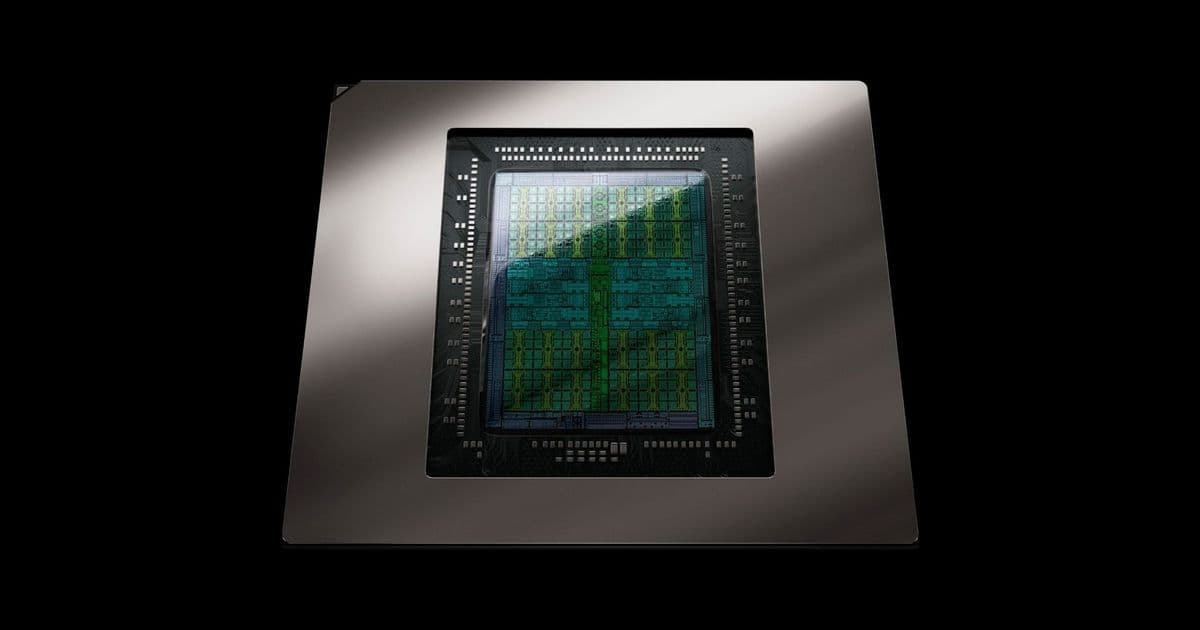
Nvidia's RTX 5070 mobile GPU will feature 12GB GDDR7 memory across multiple laptop models, matching desktop specs and addressing gaming demands despite ongoing global memory constraints.
Nvidia's GeForce RTX 5070 Mobile is set to receive a significant upgrade that addresses one of the most pressing concerns for laptop gamers: memory capacity. Despite the ongoing global memory shortage that has constrained the entire semiconductor industry, multiple manufacturer listings indicate that the mobile variant will now feature 12GB of GDDR7 memory, matching its desktop counterpart.
The Memory Upgrade That Gamers Wanted
The upgrade represents a 50% increase from the originally planned 8GB configuration, a change that comes as welcome news to mobile gamers who have watched desktop RTX 5070 cards ship with 12GB since launch. The shift addresses growing concerns about 8GB graphics cards struggling with modern games, where texture-heavy titles and high-resolution assets increasingly push against memory limitations.
Lenovo's new Panther Lake-powered Yoga Pro 7i Aura Edition (12IPH11) appears in official listings with "Up to NVIDIA GeForce RTX 5070 GPU with 12GB GDDR7 and DLSS 4." Asus has also confirmed the specification for its upcoming ROG Zephyrus G14 2026 (GU405AP-SY022X), advertising it with a "NVIDIA GeForce RTX 5070 Laptop GPU 12GB GDDR7."
Why This Matters in Today's Gaming Landscape
Memory capacity has become increasingly critical as game developers push visual fidelity to new heights. Recent Steam Hardware Survey data reveals that 8GB graphics cards still represent nearly 30% of the gaming population at 29.37%, but 12GB and 16GB configurations are steadily gaining ground at 15.22% and 18.26% respectively. This trend reflects the industry's recognition that modern gaming demands more VRAM than ever before.
The timing of this upgrade is particularly noteworthy given the current memory shortage affecting DRAM and GDDR6/7 production worldwide. Industry analysts have reported constrained supplies and elevated prices throughout 2025, making Nvidia's decision to increase memory capacity rather than maintain the original 8GB configuration a significant strategic move.
Technical Implications and Performance Expectations
While the memory boost is substantial, the RTX 5070 Mobile will still operate within the tight thermal constraints of laptop designs. The desktop version is a 250W graphics card, while the mobile variant must function within a 50W thermal envelope. This fundamental limitation means the mobile GPU will never match desktop performance, regardless of memory capacity.
Based on the desktop specifications, the RTX 5070 Mobile features 4,608 CUDA cores, a 128-bit memory interface, and memory clocked at 24 Gbps. The increased memory capacity may result in a modest TDP increase, though exact specifications remain unconfirmed by Nvidia.
Market Context and Competitive Landscape
AMD's absence from the mobile RDNA 4 market creates an interesting dynamic. While RDNA 4 desktop cards launched in 2024, mobile variants have yet to appear, leaving the mobile gaming market without direct competition from Team Red. The Radeon RX 9000M series, reportedly including the RX 9080M, RX 9070M XT, RX 9070M, and RX 9060M, remains unreleased.
This gives Nvidia a clear runway to establish the RTX 5070 Mobile as the premium mobile gaming option. When compared to existing mobile options, the 12GB configuration matches the Radeon RX 7800M in capacity but still trails the Radeon RX 7900M, which features 16GB of memory.
Manufacturing and Supply Chain Considerations
The decision to boost memory capacity during a supply shortage suggests Nvidia has secured favorable positioning in the memory supply chain. This could indicate several possibilities: preferential allocation from memory manufacturers, strategic stockpiling of GDDR7 modules, or confidence in supply stabilization in the coming months.
Industry sources suggest that Nvidia's Blackwell architecture, which powers the RTX 5070, may have been designed with memory flexibility in mind, allowing for capacity adjustments without major architectural changes. This design foresight would enable rapid response to market demands and supply chain realities.
What This Means for Laptop Buyers
For consumers shopping for gaming laptops in 2025, the RTX 5070 Mobile with 12GB memory represents a compelling option that balances performance, portability, and future-proofing. The restored memory capacity ensures compatibility with demanding games for years to come, while the Blackwell architecture brings features like DLSS 4 and improved ray tracing capabilities.
Multiple manufacturers confirming the specification independently suggests this is a finalized decision rather than a placeholder or error. The consistency across Lenovo, Asus, and retail listings indicates broad industry adoption of the 12GB configuration.
Looking Ahead
The RTX 5070 Mobile upgrade signals Nvidia's commitment to addressing gamer feedback and adapting to market realities, even amid challenging supply conditions. As laptop gaming continues to grow in popularity, memory capacity has become a key differentiator, and this move positions Nvidia strongly against future competition from AMD's mobile RDNA 4 launch.
With the first laptops featuring the upgraded RTX 5070 Mobile expected to ship in the coming months, mobile gamers finally have access to a configuration that matches desktop capabilities in one crucial aspect: memory capacity. In an era where 8GB is increasingly becoming a limitation rather than a standard, this upgrade ensures the RTX 5070 Mobile remains relevant throughout its product lifecycle.
Comments
Please log in or register to join the discussion