OpenRouter announced a $113 M Series B led by CapitalG, backed by a slate of infrastructure‑focused investors. The round underscores rising developer adoption of its routing platform, while also raising questions about market concentration and the challenges of scaling a multi‑model gateway.
OpenRouter’s $113 M Series B Signals Growing Demand for Multi‑Model AI Gateways
Trend observation
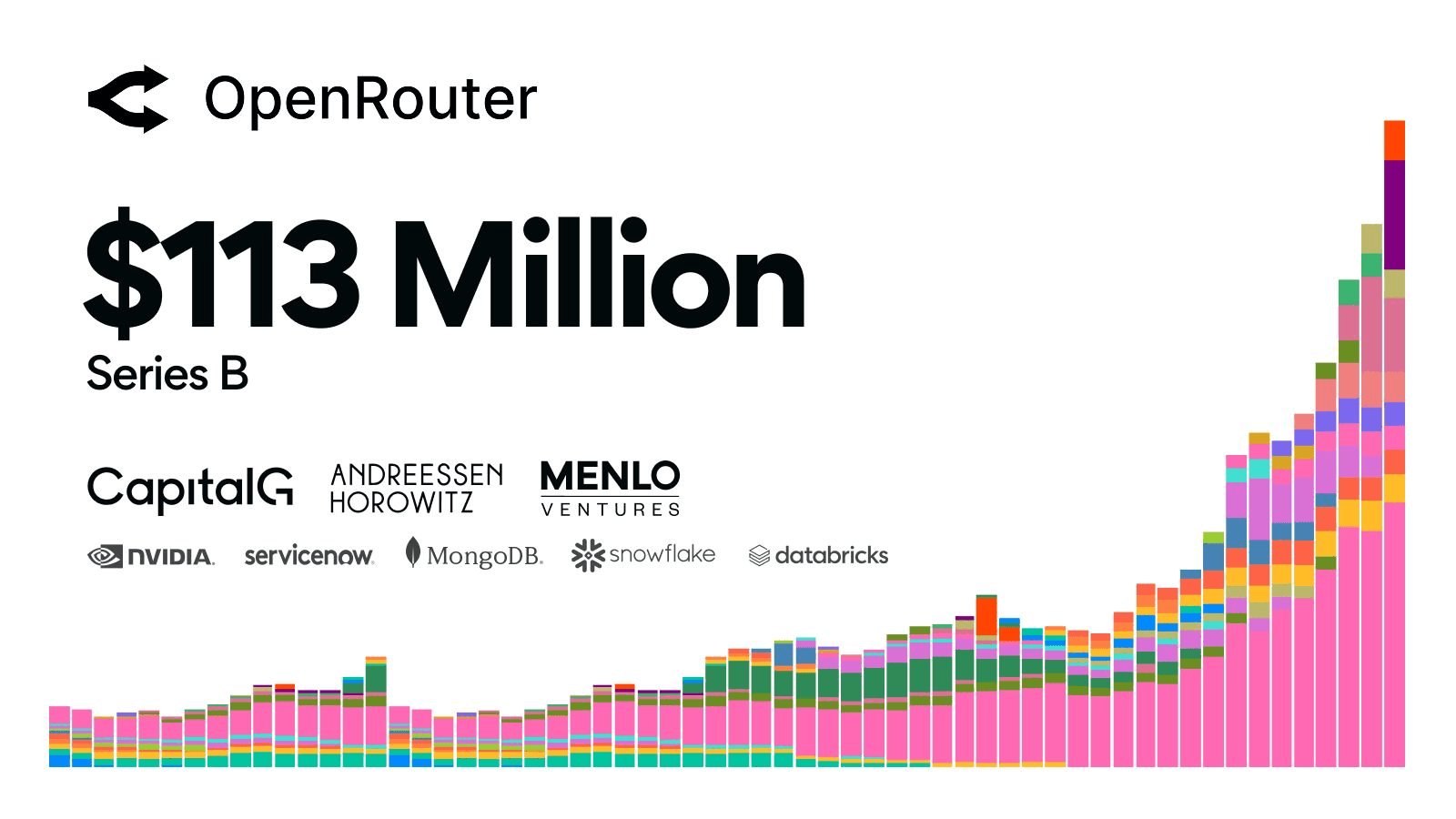
Over the past half‑year, OpenRouter’s token volume has jumped from 5 trillion to 25 trillion per week, putting the company on track to process more than a quadrillion tokens this year. That surge mirrors a broader shift: developers are moving from isolated, single‑model experiments to production‑grade applications that stitch together dozens of models across text, image, audio, and video. The need for a reliable routing layer that can balance cost, latency, and compliance is becoming a recurring theme in AI‑focused forums and on GitHub discussions.
Evidence of adoption
- Developer metrics – OpenRouter now reports over 8 million developers using its service across more than 400 models. The public dashboard shows a steady rise in daily active users, and several high‑profile open‑source agents have added OpenRouter as their default backend.
- Product extensions – In the last twelve months the platform added multimodal inference (image, audio, speech, transcription, embedding, video), enterprise workspaces, spend‑management tools, and zero‑data‑retention policies. Each feature is documented in the official docs and referenced in recent blog posts from partners such as MongoDB Ventures and Snowflake.
- Strategic investors – The Series B round was led by CapitalG and included NVentures, ServiceNow Ventures, MongoDB Ventures, Snowflake Ventures, Databricks Ventures, AMP PBC, and Pace Capital, alongside existing backers Andreessen Horowitz and Menlo Ventures. All of these firms supply core infrastructure that enterprises already rely on, suggesting they see OpenRouter as a complementary piece of the stack.
Why the financing matters
The composition of the investor group is intentional. CapitalG, NVentures, and the other venture arms represent companies that run massive AI workloads for their customers. Their involvement implies a belief that a dedicated routing and gateway service will become a standard component of enterprise AI pipelines, much like load balancers are for web traffic today. The capital infusion will allow OpenRouter to:
- Expand its global edge infrastructure to reduce latency for multimodal requests.
- Enhance intelligent routing algorithms that factor in model quality, cost, and provider health.
- Strengthen compliance features such as audit logs and data‑retention controls, which are increasingly required by regulated industries.
Counter‑perspectives
While the funding round paints a picture of confidence, a few concerns linger:
- Concentration risk – With many of the investors also operating AI platforms, there is a potential for preferential treatment of certain providers. Independent developers may worry about hidden biases in routing decisions.
- Complexity vs. simplicity – OpenRouter’s value proposition hinges on abstracting away the intricacies of multi‑model orchestration. However, adding more enterprise controls can make the API surface harder to learn, especially for hobbyist developers who currently make up a sizable portion of the user base.
- Alternative approaches – Some teams are opting to build custom routing logic using open‑source tools like LangChain or lightweight edge proxies. These solutions give full visibility into routing policies but require more operational effort. The community debate on Reddit’s r/MachineLearning highlights a split between those who prefer a managed gateway and those who favor DIY stacks.
Looking ahead
OpenRouter plans to reinvest the Series B proceeds into scaling its infrastructure and deepening enterprise capabilities. If the current growth trajectory holds, the platform could become a de‑facto standard for multi‑model AI services, much like how API gateways dominate microservice architectures. Yet the path forward will depend on how well the company balances the needs of large enterprises with the accessibility that attracted early adopters.
The next few quarters will reveal whether the market coalesces around a single routing layer or continues to fragment across bespoke solutions.
Comments
Please log in or register to join the discussion