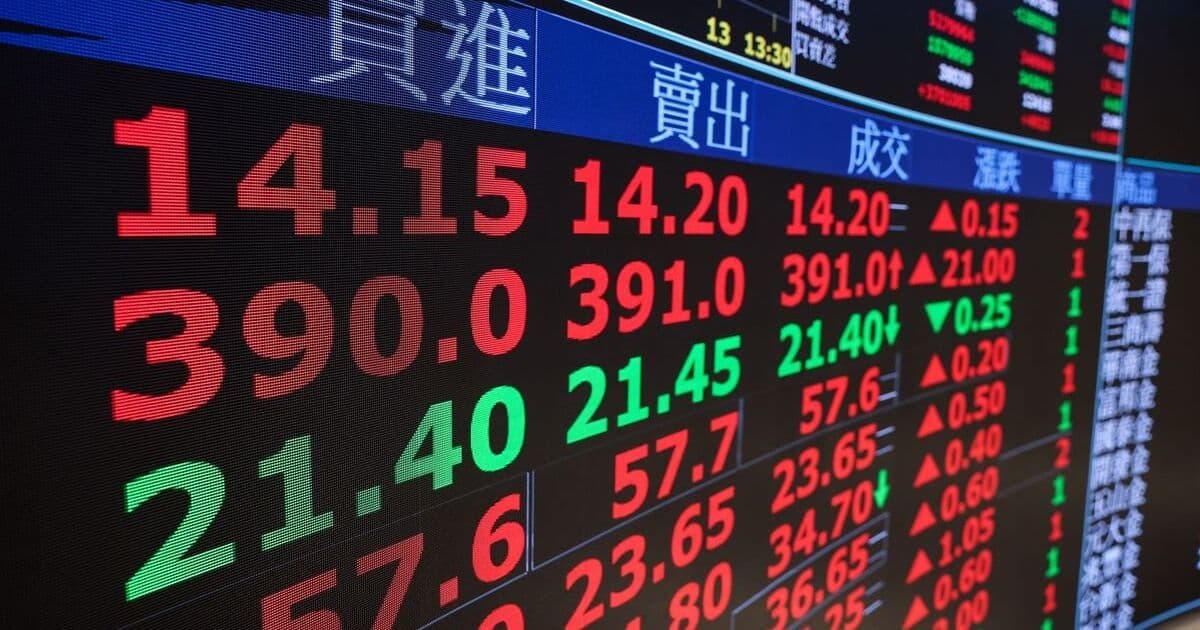
Foreign investors made their largest single-day purchase of Taiwan equities since 2005, signaling strong confidence in the island's AI-driven semiconductor industry as global demand for advanced chips surges.
Overseas investors bought a net $2.77 billion of Taiwan equities on February 24, marking the largest single-day inflow since December 2005, according to Bloomberg analysis. This massive capital influx signals growing international confidence in Taiwan's semiconductor industry, particularly as AI-driven demand for advanced chips continues to surge globally.
The timing is significant. Taiwan Semiconductor Manufacturing Company (TSMC), which dominates global chip production, has been at the center of geopolitical tensions between the U.S. and China. Yet despite these risks, foreign investors appear to be betting that Taiwan's technological advantages and manufacturing expertise will continue to drive the AI revolution.
This investment surge comes amid broader market movements in the tech sector. While software stocks experienced volatility following Anthropic's standoff with the U.S. military over AI access, hardware and semiconductor investments remain robust. The contrast highlights how different segments of the tech industry are responding to both geopolitical pressures and technological opportunities.
Taiwan's position as the world's leading semiconductor manufacturer gives it unique leverage in the AI supply chain. Companies like TSMC produce the advanced chips that power everything from data centers to autonomous vehicles, making Taiwan equities particularly attractive to investors seeking exposure to AI infrastructure growth.
The scale of this investment—the largest since 2005—suggests that institutional investors are increasingly viewing Taiwan's semiconductor dominance as a long-term strategic advantage rather than a short-term geopolitical risk. This shift in sentiment could have lasting implications for global tech investment patterns and the balance of power in the AI industry.
However, the investment also raises questions about sustainability. Taiwan's semiconductor industry faces challenges including potential Chinese military pressure, competition from other manufacturing hubs, and the need for continuous technological innovation to maintain its edge in AI chip production.
For investors, this development represents both opportunity and risk. The massive inflow suggests confidence in Taiwan's economic fundamentals, but also highlights the concentration of AI infrastructure in a geopolitically sensitive region. As AI continues to drive demand for advanced semiconductors, Taiwan's role in the global tech ecosystem appears more central than ever, even as the risks of that centrality become more apparent.
Comments
Please log in or register to join the discussion