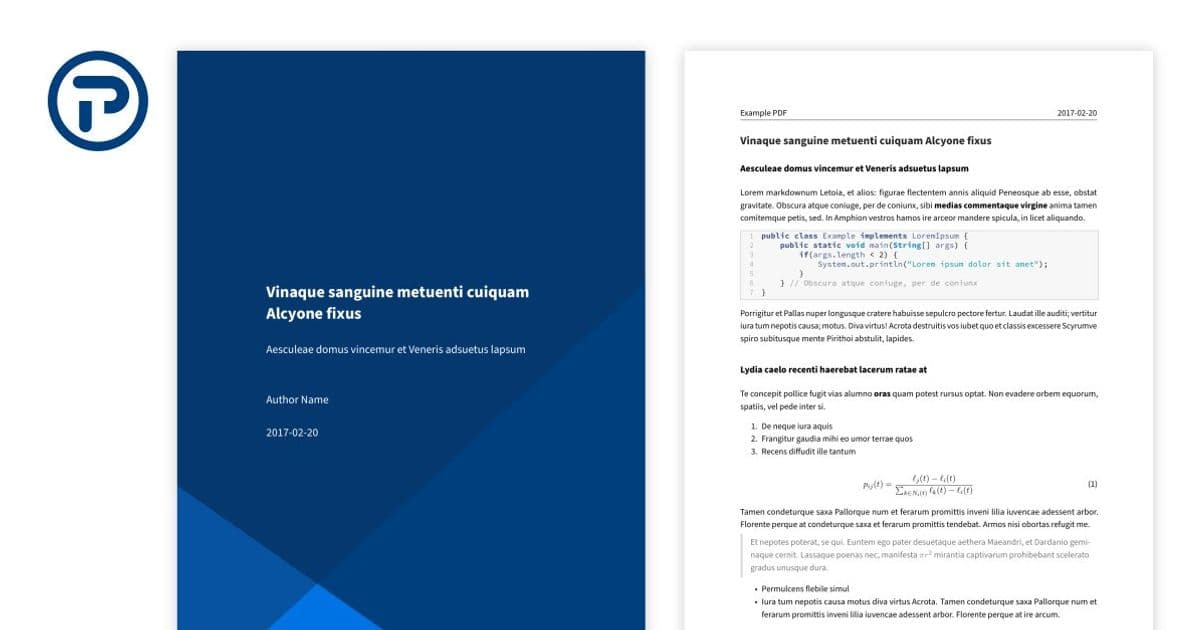
A look at the growing ecosystem of Pandoc templates, why developers gravitate to them, the signals of wider adoption, and the criticisms that remind us the markdown‑to‑PDF pipeline is still a work in progress.
Pandoc‑Templates.org – A Community‑Driven Hub for Markdown Publishing
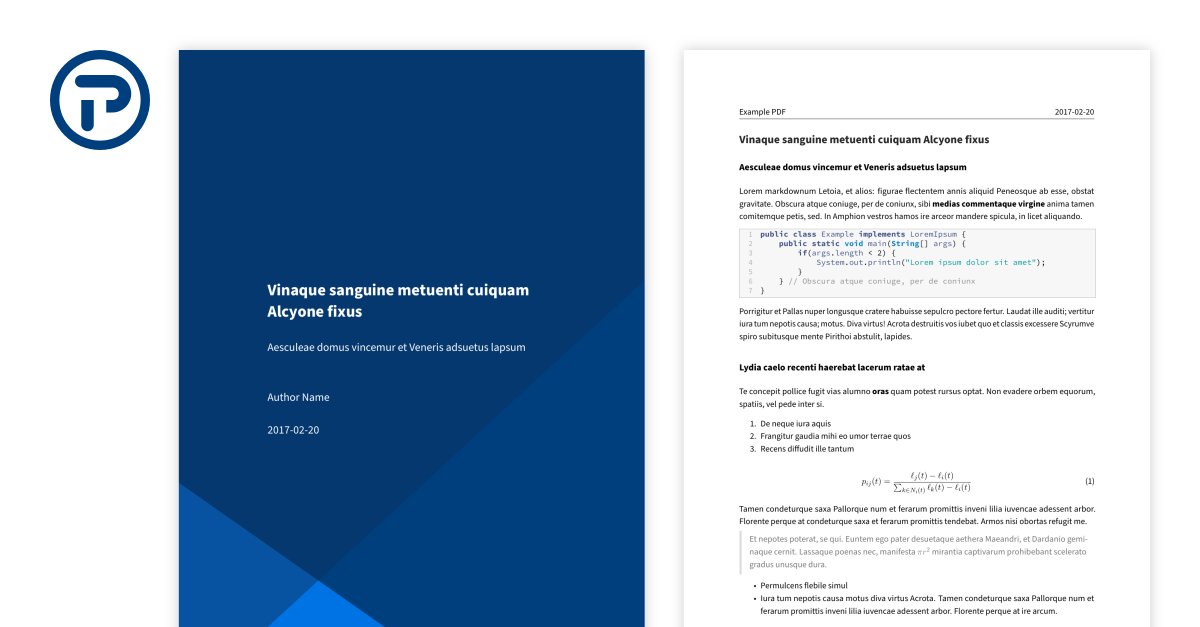
The pandoc‑templates.org collection has become a de‑facto index for anyone who wants to turn plain Markdown into a polished PDF, HTML, or e‑book. Over the past two years the repository has attracted more than 30 000 stars across its constituent projects, and the number of forks per template regularly exceeds a hundred. Those metrics are not just vanity – they indicate a genuine shift in how developers, researchers, and technical writers approach document production.
Why the community is rallying around these templates
- Low‑friction workflow – Most templates ship with a single
pandoccommand (or a tiny Makefile) that produces a final document in seconds. For a graduate student who needs a thesis PDF, the Eisvogel or thesis‑markdown‑pandoc templates eliminate the need to learn LaTeX internals. - Version‑controlled assets – Storing the template alongside the source Markdown in a Git repo means the exact rendering pipeline is reproducible. CI pipelines can now generate PDFs automatically on every push, a practice that is spreading from academia to internal engineering docs.
- Cross‑format consistency – Templates such as the Markdown Resume or pandoc‑markdown‑book‑template let authors maintain a single source file while publishing to PDF, HTML, EPUB, and DOCX. The ability to produce a clean résumé for LinkedIn and a printable PDF for job applications from the same Markdown file is a compelling productivity boost.
- Community‑driven maintenance – Many of the most popular templates are kept up‑to‑date with Pandoc 3 releases. For example, the Eisvogel template was refreshed just four months ago to accommodate new Lua filters, and the pandoc‑letter repo still receives contributions despite being three years old.
These factors combine into a clear adoption signal: developers are choosing Markdown as the source of truth for documents, and Pandoc templates are the glue that turns that source into publishable output.
Evidence of momentum
| Template | Stars | Last update | Primary output |
|---|---|---|---|
| Eisvogel (Pascal Wagler) | 7 154 | 4 months ago | PDF/LaTeX |
| Markdown Resume (Mark Szepieniec) | 1 748 | 2 years ago | PDF/HTML |
| IEEE Paper (Santos Gallegos) | 136 | 2 years ago | PDF/LaTeX |
| pandoc‑letter (Aaron Wolen) | 435 | 3 years ago | PDF/LaTeX |
| pandoc‑bootstrap‑template (Tony Blundell) | 66 | 13 years ago | HTML |
The star counts are not evenly distributed, but the long tail of smaller projects (e.g., tufte‑pandoc‑css, pandoc‑jurnal‑templates) still shows regular forks and issue activity. A quick search on GitHub for pandoc template returns over 12 000 repositories, many of which reference pandoc‑templates.org as a starting point.
Counter‑perspectives and friction points
1. Complexity hidden behind simplicity
While a one‑liner pandoc -s mydoc.md -o mydoc.pdf feels easy, the underlying LaTeX or Lua filters can be opaque. Users often encounter cryptic compilation errors when a template expects a specific YAML front‑matter field. The community response is mixed: some contributors add extensive documentation, while others argue that the learning curve is a necessary price for high‑quality typesetting.
2. Lock‑in to LaTeX toolchain
Most PDF‑oriented templates rely on a full LaTeX distribution. On CI runners this adds several hundred megabytes to build times and can cause version mismatches (e.g., older texlive packages breaking a template that expects newer fontspec features). A subset of developers therefore prefers pure HTML‑to‑PDF solutions like puppeteer or weasyprint, even though they sacrifice fine‑grained typographic control.
3. Maintenance sustainability
A handful of highly starred templates receive regular updates, but many smaller repos have not been touched for years. When Pandoc 3 introduced breaking changes to Lua filters, several niche templates stopped working entirely. The community has started a “template health” issue tracker, yet the effort remains volunteer‑driven.
What the trend tells us about the future of documentation
- Markdown as a universal authoring format – The breadth of templates—from academic theses to recipe books—shows that Markdown is no longer confined to README files. Its plain‑text nature makes it ideal for version control, collaborative editing, and automated publishing pipelines.
- Tooling convergence – As more CI services add native Pandoc steps, the friction of installing LaTeX disappears. Projects like GitHub Actions’
pandoc-actionalready bundle a minimal TeX distribution, lowering the barrier for newcomers. - Potential for standardisation – The community’s repeated recreation of similar templates (letter, resume, thesis) hints at a need for a more formal specification. A future “Pandoc Template Standard” could define required metadata fields, naming conventions, and compatibility guarantees across major versions.
Bottom line
Pandoc‑templates.org illustrates a pragmatic approach to document generation: write once in Markdown, let a community‑maintained template handle the heavy lifting of formatting. The growing star counts and CI adoption indicate a healthy momentum, but the ecosystem still wrestles with hidden complexity, LaTeX dependencies, and uneven maintenance. If the community can address those pain points—perhaps through better documentation, lighter‑weight PDF back‑ends, or a shared standards effort—the template landscape will likely become the default publishing layer for both academic and industry writers.
Further reading
- Official Pandoc documentation – https://pandoc.org
- Eisvogel template repository – https://github.com/Wandmalfarbe/pandoc-latex-template
- Markdown Resume – https://github.com/mszep/pandoc_resume
- A guide to CI‑based PDF generation – https://github.com/marketplace/actions/pandoc-action
Comments
Please log in or register to join the discussion