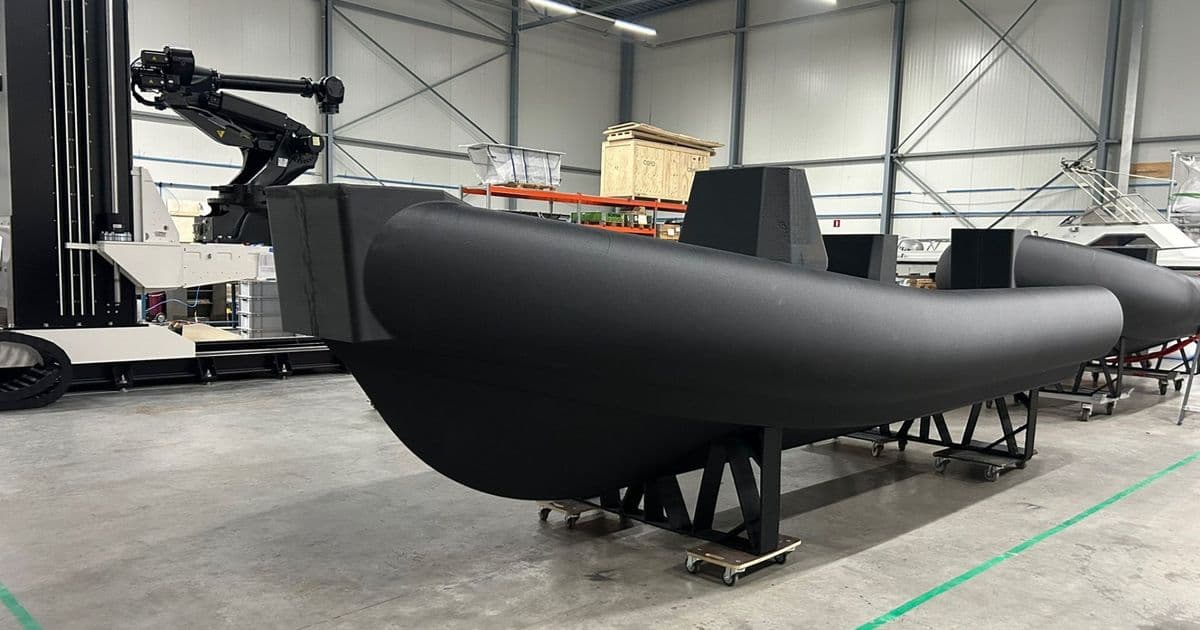
Voltage Vessels proposes a 6‑meter rigid‑hull inflatable boat printed from recycled PETG and chopped basalt fiber, offering non‑conductive, radar‑quiet hulls and the potential to produce up to 25,000 units a year at forward bases, dramatically shortening the Navy’s logistics chain.
Announcement
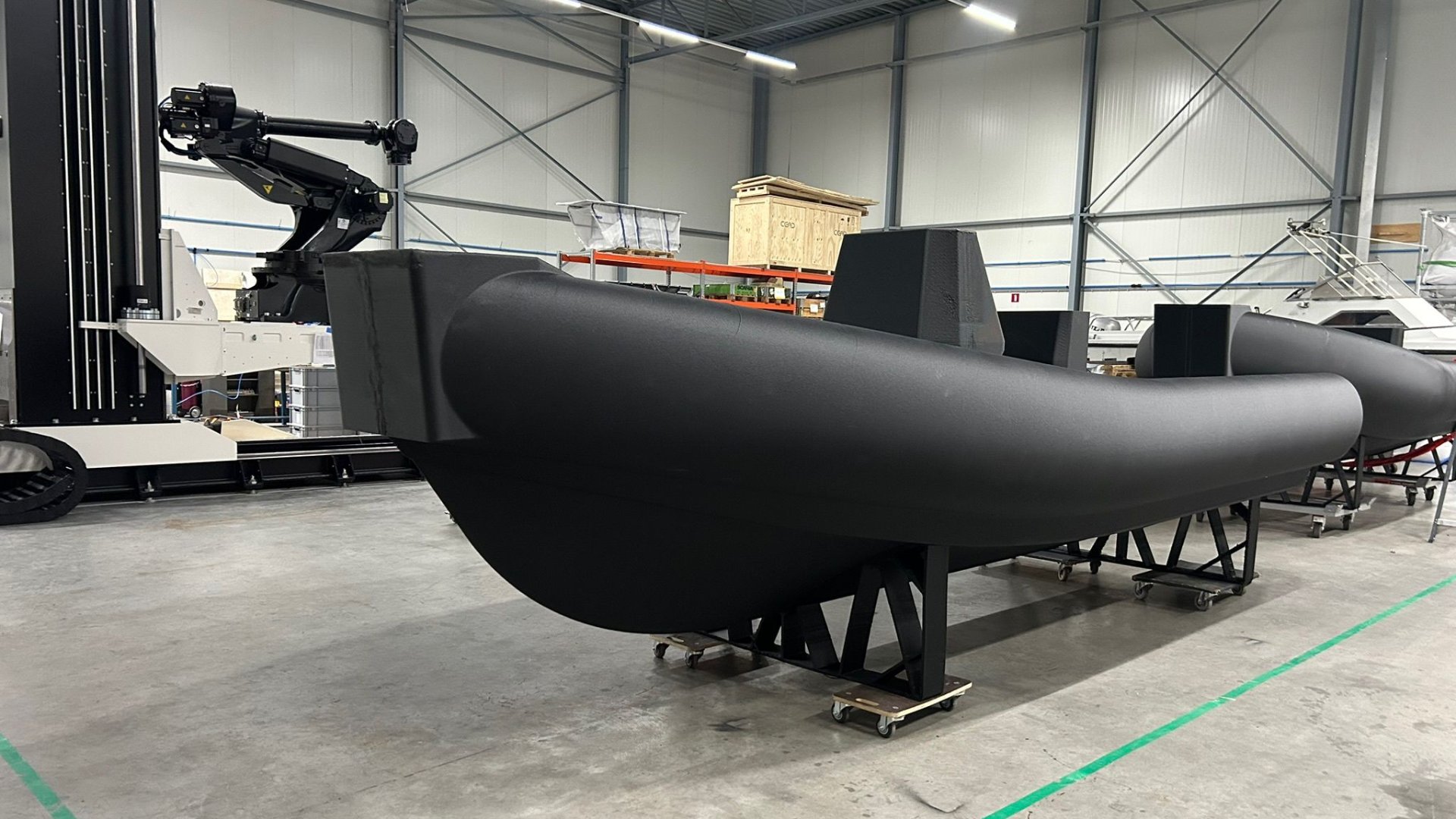
Voltage Vessels, a Hawaii‑based startup, has submitted a six‑meter rigid‑hull inflatable boat (RHIB) to the U.S. Department of Defense for evaluation. The hull is fabricated on a CEAD large‑format additive‑manufacturing system and is made from a recycled PETG matrix reinforced with chopped basalt fiber – a material the company brands Eclipse X9. The Pentagon’s interest centers on two claims: the hull’s non‑conductive, radar‑transparent properties and the ability to replace a 6,545‑mile logistics chain (Okinawa ↔ San Diego) with on‑site printing at forward operating bases.
Technical specs
| Parameter | Value / Detail |
|---|---|
| Print volume | CEAD L‑FDM platform supports up to 1 m³ build envelope, sufficient for a 6‑m RHIB hull in a single pass |
| Material composition | 70 % recycled PETG, 30 % basalt fiber by weight; basalt fibers are 3‑5 µm in diameter, providing a tensile strength of ~250 MPa, roughly 30 % higher than the HDPro filament currently used for maritime parts |
| Hull mass | Approx. 600 kg (1,300 lb) per boat, 30 % lighter than comparable glass‑fiber RHIBs |
| Electrical conductivity | Basalt is an insulator; bulk resistivity >10¹⁴ Ω·cm, effectively eliminating conductive pathways that could interfere with ship‑board RF systems |
| Radar cross‑section (RCS) impact | Preliminary simulations show a 2‑3 dB reduction versus standard fiberglass when the hull is paired with a low‑RCS geometry; full‑scale testing pending |
| Production rate | Startup targets 15 000 t/yr of printed material. At 0.6 t per hull, that equates to ~25 000 RHIBs per year, or roughly 68 hulls per day assuming 24‑hour operation |
| Supply‑chain shift | Digital file can be transferred via secure network; raw PETG pellets and basalt fiber can be sourced locally or shipped in bulk, cutting the transit distance from 6,545 mi to a few hundred miles for raw feedstock |
The basalt‑reinforced PETG offers a unique combination of strength, impact resistance, and dielectric behavior. Basalt fibers are derived from volcanic rock, giving them a high Young’s modulus (~90 GPa) while remaining non‑metallic. This contrasts with carbon‑fiber composites, which can act as antennas for unintended RF signals. The non‑conductive hull therefore reduces the risk of electromagnetic interference (EMI) with autonomous navigation, sonar, and communications suites that increasingly populate modern littoral vessels.
Market and logistical implications
- Logistics compression – Replacing a trans‑Pacific shipment of finished RHIBs with on‑site printing eliminates a 6,545‑mile leg of the supply chain. Assuming a container load of 12 RHIBs, each shipment currently incurs $12‑$15 k in freight, plus handling and customs fees. Printing on demand could slash that cost by >80 % and reduce lead time from 8‑12 weeks to under 48 hours.
- Scalability at forward bases – The Navy’s plan to field 100 large‑format metal printers worldwide focuses on spare‑part production. Adding a dedicated CEAD printer for hulls would expand the portfolio to complete platforms, not just components. With a daily output of ~70 hulls, a single base could support a small patrol flotilla without external resupply.
- Strategic resilience – Non‑conductive, low‑RCS hulls support stealthy, unmanned surface vessels (USVs) that rely on low‑observable signatures. The material’s RF transparency also means onboard antennas can be placed without worrying about shielding effects, simplifying integration of 5 GHz radar, L‑band communications, and low‑frequency sonar.
- Environmental angle – Using recycled PETG reduces virgin plastic demand by an estimated 40 % per hull. Basalt fiber is sourced from abundant volcanic ash, a by‑product of mining operations, further lowering the carbon footprint relative to glass‑fiber lay‑up.
- Economic outlook – If the Navy adopts the technology for its entire RHIB fleet (approximately 2,000 units), annual spend on traditional hull procurement could drop from $150 M to under $30 M, freeing budget for sensor upgrades and autonomous control software.
Outlook
The Pentagon’s evaluation will hinge on three practical tests: (1) full‑scale RCS measurement in an anechoic chamber, (2) long‑duration fatigue testing of basalt‑reinforced PETG under marine loading, and (3) verification of the material’s resistance to salt‑water corrosion and bio‑fouling. Success would validate a supply‑chain model where digital designs travel faster than physical parts, and where forward bases become mini‑fabrication hubs capable of delivering up to 25 000 hulls per year.
For more details on the CEAD printer platform, see the official CEAD website. Voltage Vessels’ technical brief on Eclipse X9 is available on their product page.
Comments
Please log in or register to join the discussion