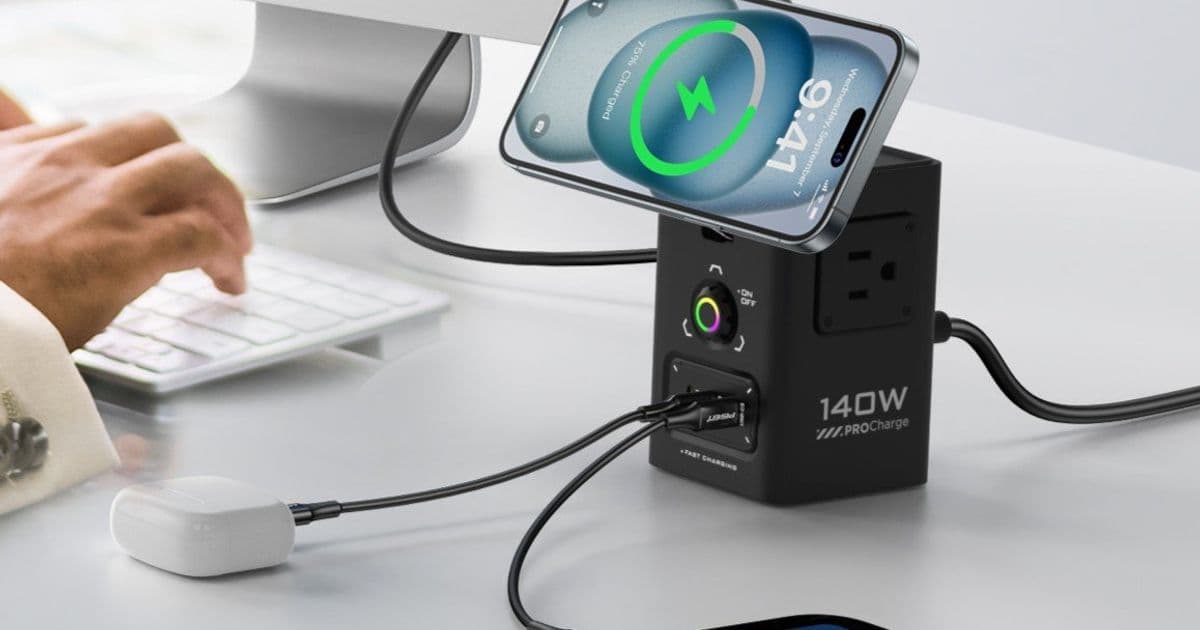
Pisen's new 140W charger combines AC power, multiple high-wattage USB-C ports, and Qi2 magnetic charging pads into a single desktop unit, targeting users who need to power laptops, phones, and accessories simultaneously without a tangle of separate adapters.
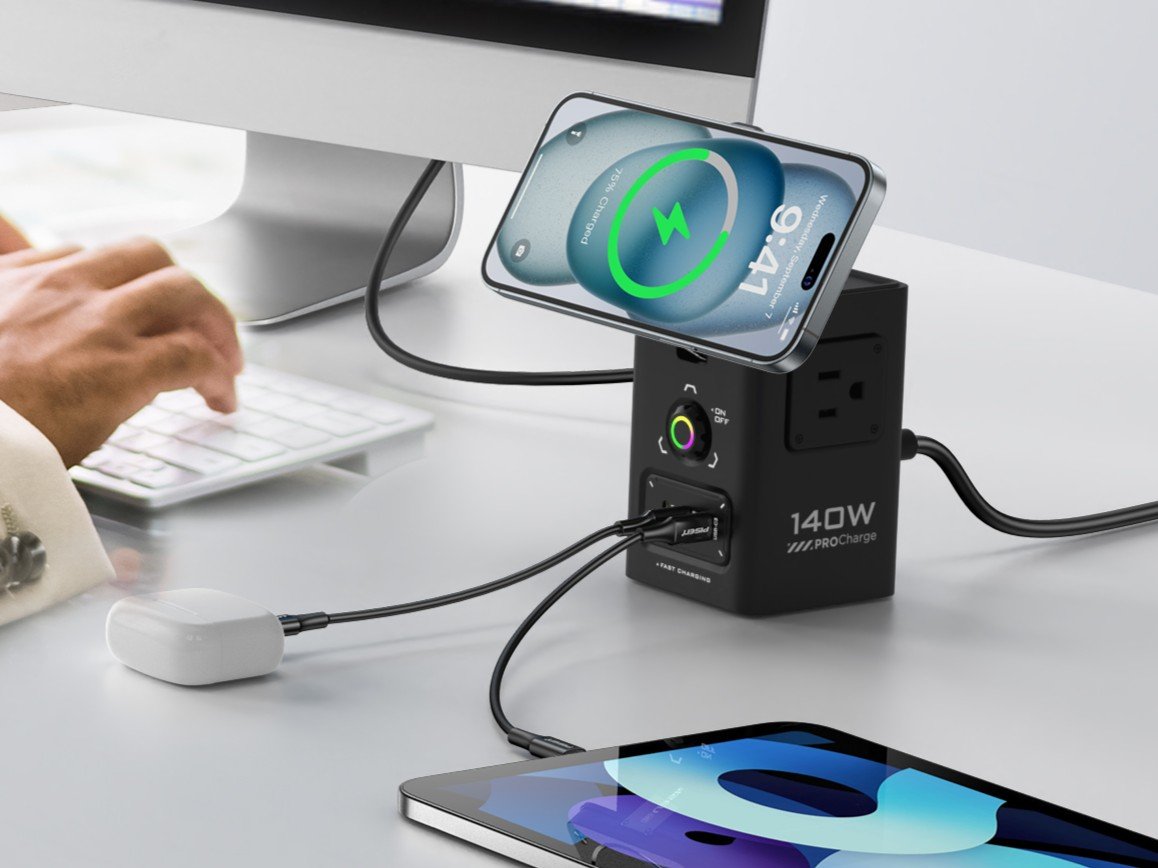
Pisen has announced a new all-in-one charging hub that consolidates a surprising amount of power delivery and versatility into a single desktop unit. The Pisen 140W All-in-One Charger is designed to replace a clutter of wall adapters and power strips, offering a combination of AC outlets, high-wattage USB-C ports, and magnetic wireless charging pads for both smartphones and smartwatches.
What's New: A True Power Hub
The core of the Pisen charger is its ability to distribute up to 1625 watts of total AC power through two standard AC sockets, while simultaneously delivering up to 140 watts of combined DC power via its USB ports and wireless pads. This makes it a compelling centerpiece for a desk or bedside table where multiple devices need charging.
The physical design is straightforward. A magnetic wireless charging pad sits on top, compatible with MagSafe and the newer Qi2 standard, delivering up to 15 watts to a smartphone. This pad can flip open to reveal a secondary, smaller pad for smartwatches, which provides 2.5 watts—sufficient for most wearables. On the front, three USB-C ports offer varying power levels. The primary port supports up to 140 watts, capable of charging high-performance laptops like a MacBook Pro 16-inch or a Razer Blade 18 at full speed. The two secondary USB-C ports each support up to 100 watts, enough for most other laptops or tablets. A single USB-A port on the back provides a legacy 5-watt output for older accessories or low-power devices.
Power Distribution and Real-World Use
While the headline specs are impressive, the practical application involves understanding the power budget. When all ports and pads are active simultaneously, the power output is intelligently managed. The 140W primary USB-C port drops to a maximum of 65 watts, while the two 100W USB-C ports are each limited to 20 watts. The USB-A port remains at 5 watts, and the wireless pads maintain their rated 15W and 2.5W outputs. This dynamic allocation ensures the total power draw doesn't exceed the charger's internal limits, but it also means users won't get maximum speed from every port at once.
The two AC sockets are rated for pass-through power up to the unit's 1625-watt total capacity. This is a standard feature for power strips and charging hubs, allowing users to plug in monitors, lamps, or other peripherals without overloading the circuit. However, it's crucial to remember that the 1625-watt rating is the sum of all AC and DC outputs; drawing heavily from both AC and USB ports simultaneously will stress the unit and could trip a household circuit if the total load exceeds the wall outlet's capacity.
How It Compares to the Market
The Pisen 140W charger enters a crowded market of GaN (Gallium Nitride) chargers and multi-port hubs. Its main differentiator is the combination of high-wattage USB-C (140W), AC outlets, and magnetic charging in one package. Most competing products specialize in one area: either a compact USB-C charger with multiple ports (like Anker's 737 GaNPrime 120W), a desktop power strip with USB ports, or a dedicated magnetic charging stand.
For example, Anker's 737 is smaller and lighter but lacks AC outlets and magnetic charging. A standard desktop power strip with USB ports might offer more AC outlets but typically provides lower USB wattage (often 18W-65W total) and no wireless charging. The Pisen unit bridges these gaps, making it a unique solution for users who want a single device to charge a laptop, phone, watch, and power a small monitor or desk lamp.
However, its size and likely weight (though not specified) will be a consideration. Combining GaN technology for efficient DC conversion with AC transformers and wireless charging coils requires a larger footprint than a simple USB-C brick. It's also worth noting that while the Qi2 standard ensures compatibility with future iPhones and Android devices, the 15W wireless charging speed is standard and not the fastest available—some proprietary solutions can reach higher speeds.
Who Is This For?
This charger is not for everyone. It's overkill for someone who only needs to charge a phone and a tablet. However, it's an excellent fit for:
- The Mobile Professional or Student: Someone who works from a dorm room, coffee shop, or shared space and needs to power a laptop, phone, and accessories from a single outlet. The AC sockets allow for a monitor or desk lamp without needing a separate power strip.
- The Tech-Heavy Household: For a bedside table where a phone, smartwatch, and a laptop (or a portable monitor) all need overnight charging, this hub eliminates the need for multiple wall warts.
- Travelers with Multiple Devices: While not a compact travel charger, it could serve as a single solution for a hotel room, replacing a tangle of chargers for a laptop, phone, watch, and perhaps a portable battery pack.
Pricing and Availability
The Pisen 140W All-in-One Charger has an MSRP of $129.99 and is available for purchase on Amazon. At this price point, it competes directly with buying a high-wattage USB-C charger (around $50-$80) and a separate magnetic charging stand ($30-$50), but the convenience of integration and the inclusion of AC outlets add value for the right user.
The Bottom Line
Pisen's new charger is a practical piece of hardware that addresses a common modern problem: the proliferation of charging needs. It won't be the smallest or the cheapest option for any single task, but its strength lies in consolidation. By combining AC power, high-speed USB-C, and magnetic charging into one device, it offers a clean, centralized solution for powering a modern tech ecosystem. For users tired of hunting for free outlets and managing a drawer full of chargers, the Pisen 140W hub presents a compelling, if niche, alternative.
Comments
Please log in or register to join the discussion