
Google's Pixel 10a arrives with minimal upgrades, Samsung teases Galaxy S26 Ultra features, and Xiaomi prepares global launch of 17 series in a week dominated by flagship phone news.
The mobile tech world saw a flurry of activity in week 8 of 2026, with Google's Pixel 10a launch, Samsung's Galaxy S26 teasers, and Xiaomi's global expansion plans dominating headlines. While the week was heavily influenced by Galaxy S26-related stories, several other manufacturers made significant moves that could reshape the mid-range and flagship smartphone landscape.
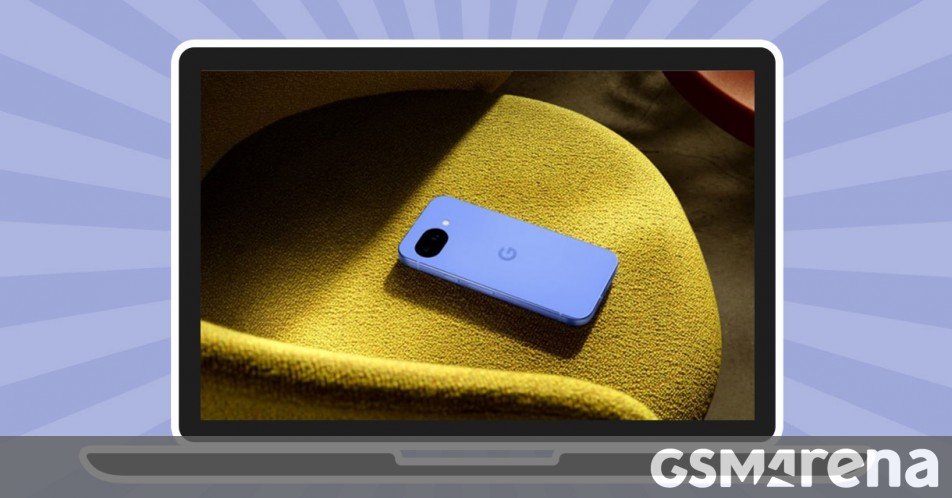
Google's Pixel 10a: Evolution, Not Revolution
Google unveiled the Pixel 10a, and the reception was decidedly mixed. The device represents what many consider the most conservative update in the Pixel A-series history. At first glance, the Pixel 10a appears nearly identical to its predecessor, the 9a, with only minor tweaks distinguishing the two models.
The most noticeable change is the color palette, though "slightly different" truly is the operative phrase here. Google has opted for subtle variations rather than bold new hues, maintaining the Pixel's understated aesthetic. The display sees a marginal improvement, jumping from 2,700 nits to 3,000 nits of peak local brightness – a difference that most users likely won't perceive in everyday use.
Where the Pixel 10a does make tangible improvements is in durability and charging speed. The device now features Gorilla Glass 7i, offering enhanced protection against drops and scratches. Charging speeds have also received a boost, though Google hasn't disclosed specific wattage figures. Perhaps most importantly for budget-conscious consumers, the Pixel 10a maintains its $499 price point, making it one of the most compelling value propositions in the Android ecosystem.
However, the decision to retain the Tensor G4 chipset has drawn criticism from tech enthusiasts who were hoping for a performance leap. The aging processor, now in its fourth iteration, continues to struggle with thermal management and battery efficiency compared to Qualcomm's latest offerings.
Samsung's Galaxy S26 Teasers: Innovation or Marketing?
The Galaxy S26 Ultra dominated much of the week's coverage, with Samsung strategically releasing teasers that hint at both evolutionary and potentially revolutionary features.
The Exynos vs Snapdragon Debate Reignites
Early benchmarks have reignited the perennial debate between Exynos and Snapdragon variants. The Exynos 2600, which will power S26 units in certain markets, reportedly delivers stronger Ray Tracing performance than the Adreno 840 found in Snapdragon-powered models. This marks a significant shift, as GPU performance has traditionally been a weakness for Samsung's in-house chips.
However, this GPU advantage comes with a caveat. The single-core performance of the Snapdragon 8 Elite Gen 5-powered Galaxy S26 Ultra significantly outperforms its Exynos counterpart. This performance gap could influence purchasing decisions, particularly for users who prioritize everyday responsiveness over gaming capabilities.
The Galaxy S26 Ultra uses an overclocked "for Galaxy" version of the Snapdragon 8 Elite Gen 5, suggesting Samsung is pushing the limits of mobile processing power. This approach has worked well in previous iterations, though it often comes at the cost of increased heat generation and potential throttling under sustained loads.
Privacy Display: A Genuine Innovation?
One of the most intriguing features Samsung has teased is the privacy display for the Galaxy S26 Ultra. The technology uses per-pixel control to selectively black out specific parts of the display when needed, effectively preventing prying eyes from viewing sensitive information.
This feature represents a clever solution to a common problem. Rather than simply dimming the entire screen or relying on software-based privacy filters, Samsung's approach allows for granular control over what information remains visible. The demonstration video shows the display appearing completely black to onlookers while maintaining full legibility for the primary user.
Camera Capabilities and Design Refinements
Samsung is also promoting the Galaxy S26 Ultra's low-light camera performance through an AI-enhanced video demonstration. The footage showcases impressive detail retention and noise reduction in challenging lighting conditions, though some critics have questioned whether the results represent typical user experiences or carefully curated best-case scenarios.
Design leaks suggest the selfie camera will feature a slightly larger hole-punch cutout compared to the Galaxy S25 Ultra. While the increase is minimal, it indicates Samsung may be accommodating a new sensor or additional camera components for enhanced front-facing photography.
The Mid-Range Battle Heats Up
While flagship phones grabbed headlines, the mid-range segment saw equally important developments.
Nothing's Phone (4a) Series Approaches
Nothing confirmed its Phone (4a) series launch event for March 5, strategically scheduled one day after Apple's "special experience event." This timing suggests Nothing is positioning itself as an alternative for consumers who might be underwhelmed by whatever Apple announces.
Leaked specifications and pricing information reveal Nothing's strategy for competing in the increasingly crowded mid-range market. The company appears to be focusing on distinctive design elements and a clean software experience to differentiate itself from competitors like Google, Samsung, and Xiaomi.
Infinix Enters the Premium Mid-Range
The Infinix Note 60 Pro unboxing revealed a device that punches above its weight class. The inclusion of a 90W charger in the box demonstrates Infinix's commitment to fast charging technology, while the MagSafe-capable case suggests the company is targeting users who value accessory ecosystems.
Xiaomi's Global Expansion Strategy
Perhaps the most significant news for international consumers came from Xiaomi's announcement that the 17 and 17 Ultra series will make their global debut on February 28.
Battery and Pricing Adjustments
The global versions will feature slightly smaller batteries than their Chinese counterparts – the Xiaomi 17 will get a 6,330mAh battery (down from 7,000mAh in China), while the 17 Ultra will pack a 6,000mAh unit (reduced from 6,800mAh). These adjustments likely reflect different regulatory requirements and usage patterns across markets.
European pricing has also leaked, with the Xiaomi 17 starting at €999 for the 12/256GB model and €1,099 for the 12/512GB variant. The Ultra starts at €1,499 for a 16/512GB unit. These prices position the devices competitively against Samsung's Galaxy S25 series and Apple's iPhone 16 lineup.
Leica Edition: A Marketing Masterstroke?
The Xiaomi 17 Ultra Leica Edition is headed to global markets with a different name, though the company hasn't disclosed what that name will be. This rebranding effort suggests Xiaomi is trying to balance its partnership with Leica while potentially avoiding confusion with other Leica-branded devices in certain markets.
Looking Ahead: What's Next?
As we move into week 9, several questions remain unanswered. Will the Pixel 10a's conservative approach resonate with consumers who prioritize software support over cutting-edge hardware? Can Samsung's privacy display feature become a must-have rather than a niche offering? And will Xiaomi's global expansion strategy pay off in markets dominated by Apple and Samsung?
One thing is certain: the smartphone industry continues to evolve, with manufacturers finding new ways to differentiate their products in an increasingly saturated market. Whether through innovative features like Samsung's privacy display, strategic pricing like Xiaomi's global launch, or software-focused approaches like Google's Pixel series, each company is carving out its own path in the competitive mobile landscape.

The coming weeks will reveal whether these strategies succeed or if consumers gravitate toward different priorities in their smartphone purchasing decisions.
Comments
Please log in or register to join the discussion