The Poco M8 arrives with a curved 120Hz AMOLED display, Snapdragon 6 Gen 3 processor, and HyperOS 2 at a $230 starting price, positioning itself as a compelling budget alternative to Xiaomi's Redmi Note series.
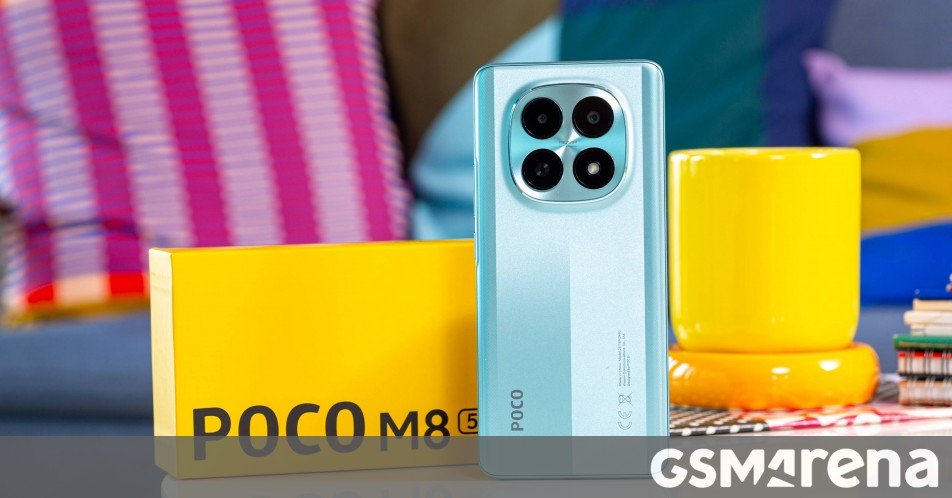
The Poco M8 has landed in GSMArena's review labs, showcasing Xiaomi's latest budget strategy with notable hardware upgrades at aggressive pricing. As the newest entry in Poco's M-series, this device challenges expectations for sub-$250 smartphones with premium display technology and thoughtful design choices.
Immediately noticeable is the curved 6.77-inch AMOLED display featuring FHD+ resolution and 120Hz refresh rate. This curved panel pairs with a similarly contoured back panel, creating a symmetrical design that feels slimmer than its 7.4mm thickness and 178g weight would suggest. Our review unit features the Green colorway with a dual-tone matte finish and textured side grips, complemented by IP66 dust/water resistance.
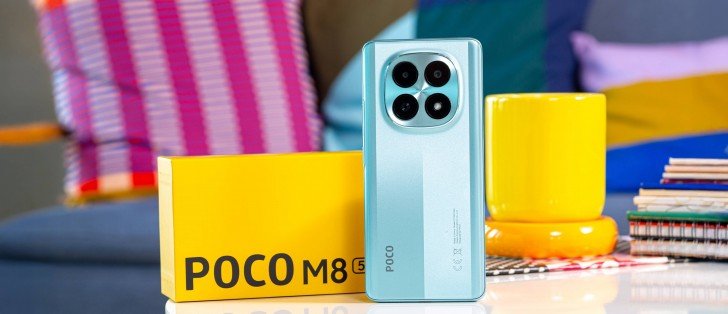
Beyond aesthetics, the M8 includes practical extras often omitted at this price point: a bundled 45W power adapter, USB-C cable, and silicone case (though European markets may exclude the charger). The top edge houses an IR blaster for controlling appliances, while the hybrid SIM tray supports dual nano-SIMs plus microSD expansion.
Internally, Qualcomm's Snapdragon 6 Gen 3 powers operations alongside 8GB RAM and 256GB/512GB storage options. The camera system centers on a 50MP Light Fusion 400 primary sensor paired with a 2MP depth assistant. While lacking an ultrawide lens, the setup prioritizes computational photography capabilities through HyperOS 2's imaging algorithms.
Software marks one compromise, as the device ships with HyperOS 2 based on Android 15 instead of the newer HyperOS 3 with Android 16. Power comes from a 5,520mAh silicon-carbon battery supporting 45W wired charging and 18W reverse charging for accessory top-ups.
At $230/£230 starting price, the M8 undercuts the nearly identical Redmi Note 15 5G (€301) while sacrificing only the latter's 108MP main camera and ultrawide lens. This strategic positioning leverages Xiaomi's ecosystem, offering core Redmi features at approximately 25% lower cost without compromising display quality or chipset performance.
As review testing commences, key evaluation points include real-world battery endurance with the high-refresh display, thermal management during sustained performance, and HyperOS 2's optimization on mid-tier hardware. The M8's success hinges on whether these hardware compromises deliver sufficient value against competitors retaining additional camera hardware at higher price brackets.
Comments
Please log in or register to join the discussion