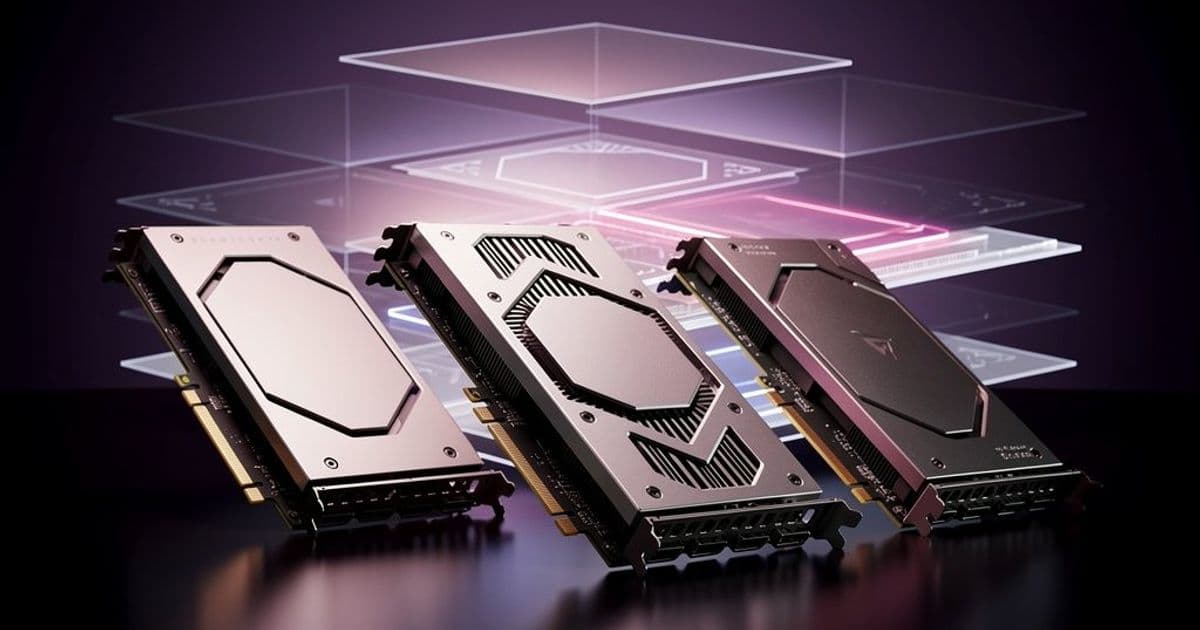
The latest PyTorch release delivers substantial improvements for AMD ROCm and Intel GPU compute stacks, while continuing to push NVIDIA CUDA forward. Key updates include grouped GEMM for ROCm, expanded Intel XPU APIs, and Python 3.14 compatibility for torch.compile().
PyTorch 2.10 has arrived, bringing a wave of optimizations and feature expansions across all major GPU vendors. While NVIDIA CUDA remains the dominant platform, this release demonstrates the library's commitment to heterogeneous compute environments, with particularly significant advancements for AMD's ROCm stack and Intel's XPU architecture.

AMD ROCm: From Fallback to First-Class Citizen
AMD's ROCm support in PyTorch continues its maturation trajectory. The most notable addition is grouped GEMM support, which now operates via regular GEMM fallback and through the CK (Composable Kernel) library. This is critical for workloads that batch multiple smaller matrix operations together—a common pattern in transformer models where attention heads process different sequences in parallel.
The hardware support matrix expands with GFX1150/GFX1151 RDNA 3.5 GPUs added to the hipblaslt-supported GEMM lists. For homelab builders running consumer Radeon cards or workstation GPUs, this means better out-of-the-box performance without manual kernel tuning.
Windows users get improved ROCm support, addressing a long-standing gap. The torch.cuda._compile_kernel support and load_inline functionality now work more reliably on Windows, making cross-platform development smoother for teams that need to support both Linux and Windows deployments.
Performance improvements include:
- scaled_mm v2 support for more efficient quantized operations
- AOTriton scaled_dot_product_attention for optimized attention kernels
- Improved heuristics for pointwise kernels on ROCm
- Code generation support for fast_tanhf activation functions
These changes reduce the performance gap between ROCm and CUDA for common deep learning operations, making AMD GPUs a more viable option for production inference workloads.
Intel XPU: Expanding the Operator Set
Intel's discrete GPUs see substantial API expansion in PyTorch 2.10. The release adds several critical ATen operators:
- scaled_mm and scaled_mm_v2 for quantized matrix multiplication
- _weight_int8pack_mm for efficient int8 weight packing
The SYCL support in PyTorch's C++ Extension API now allows custom operator implementation on Windows, a crucial step for developers building domain-specific optimizations for Intel GPUs.
Performance optimizations target Intel's Xe architecture specifically, with improvements to memory management and kernel scheduling. For homelab builders using Intel Arc GPUs or data center GPUs like the Ponte Vecchio, these changes translate to better utilization of the hardware's tensor cores and memory subsystem.
NVIDIA CUDA: Refining the Incumbent
CUDA support continues to evolve with features that benefit both researchers and production deployments:
- Templated kernels enable more flexible kernel generation
- Pre-compiled kernel support reduces startup times
- Automatic CUDA header inclusion simplifies extension development
- cuda-python CUDA stream protocol support for better Python integration
- Nested memory pools for improved memory management in complex models
- CUTLASS MATMULs on Thor for optimized matrix operations
The CUDA 13 compatibility improvements ensure forward compatibility as NVIDIA's ecosystem evolves.
Python 3.14 and torch.compile() Evolution
PyTorch 2.10 adds Python 3.14 support for torch.compile(), the library's graph compilation system. This is particularly relevant for homelab builders who want to stay on the latest Python versions while maintaining performance optimizations.
The release also introduces experimental support for Python 3.14's free-threaded build. This is a forward-looking feature that addresses Python's ongoing GIL (Global Interpreter Lock) removal efforts, potentially enabling better multi-threaded performance for certain workloads.
Performance Optimizations Across the Board
Several cross-platform improvements benefit all GPU vendors:
- Lower kernel launch overhead through combo-kernels horizontal fusion in Torch Inductor
- Enhanced debugging capabilities for troubleshooting model performance
- Quantization enhancements for deploying smaller, faster models
The combo-kernels horizontal fusion is particularly interesting—it reduces the overhead of launching multiple small kernels by fusing them into larger, more efficient operations. This is especially beneficial for models with many small tensor operations, like certain transformer architectures.
Practical Implications for Homelab Builders
For homelab enthusiasts building AI/ML systems, PyTorch 2.10 offers several concrete benefits:
AMD GPU Owners: If you're running a Radeon RX 7000 series card or a workstation GPU like the Radeon Pro W7900, the improved ROCm support means you can now run more models out-of-the-box without manual kernel patches. The grouped GEMM support is particularly valuable for inference servers handling multiple concurrent requests.
Intel GPU Users: Intel Arc GPU owners get better operator coverage, making more models runnable without fallbacks. The Windows SYCL improvements are significant for developers building custom extensions.
NVIDIA Users: While CUDA support continues to mature, the Python 3.14 compatibility and kernel launch optimizations provide tangible performance improvements, especially for production inference servers where startup time and latency matter.
Build Recommendations
For a new AI/ML homelab build in Q1 2026:
Budget Option: AMD Radeon RX 7800 XT (RDNA 3) with ROCm 6.2+ - The PyTorch 2.10 improvements make this a viable entry point for model fine-tuning and inference.
Balanced Option: Intel Arc A770 (16GB) - The expanded XPU operator support in PyTorch 2.10 makes this GPU more competitive for mixed workloads, especially if you're already in the Intel ecosystem.
Performance Option: NVIDIA RTX 4090 - Still the performance king, but now with better Python 3.14 support and lower kernel overhead for production deployments.
Multi-GPU Considerations: PyTorch 2.10's improved memory pool management benefits multi-GPU setups, particularly for models that don't fit in a single GPU's memory.
The Bigger Picture
PyTorch 2.10 represents a maturing of the multi-vendor GPU ecosystem. While NVIDIA still leads in absolute performance and ecosystem maturity, the gap is narrowing. For homelab builders, this means more choice and better value—AMD and Intel GPUs are becoming genuinely viable alternatives for many workloads.
The emphasis on Windows support across all vendors is particularly noteworthy. It reflects the reality that many developers and researchers use Windows workstations, and the library's commitment to cross-platform parity.
For those tracking the Python ecosystem, the Python 3.14 free-threaded build support is a glimpse into the future. While experimental, it shows PyTorch is preparing for a post-GIL Python, which could significantly impact multi-threaded ML workloads.
Getting Started
PyTorch 2.10 is available via the usual channels:
- Official PyTorch website for installation instructions
- GitHub repository for source code and issues
- Release notes for the complete changelog
For AMD users, ensure you're running ROCm 6.2 or later. Intel GPU users should update their GPU drivers and SYCL runtime. NVIDIA users need CUDA 12.x or later for full feature support.
The release demonstrates that the deep learning framework landscape is becoming increasingly heterogeneous. While NVIDIA's CUDA remains the reference platform, PyTorch's commitment to AMD and Intel ensures that homelab builders have real alternatives for building capable AI/ML systems without vendor lock-in.
Comments
Please log in or register to join the discussion