
Redmi has launched the R70 and R70m in China, featuring Unisoc T8300 chipsets, large batteries up to 6,300mAh, and starting prices under $300.
Redmi has expanded its budget smartphone lineup with the launch of the R70 and R70m in China, two nearly identical devices that differ primarily in battery capacity. The new models showcase Redmi's strategy of offering capable hardware at accessible price points, with both phones featuring Unisoc's T8300 chipset, large batteries, and starting prices under $300.
Display and Design
Both the R70 and R70m sport a 6.9-inch LCD display with 720x1600 resolution, delivering a tall 20:9 aspect ratio that's well-suited for media consumption and one-handed use. The screen supports a 120Hz refresh rate for smooth scrolling and animations, complemented by a responsive 240Hz touch sampling rate that enhances gaming and typing responsiveness. With a peak brightness of 800 nits, the display remains visible in outdoor conditions, though it falls short of the 1,000+ nit panels found on more premium devices.
Performance Hardware
The Unisoc T8300 powers both models, representing the Chinese chipmaker's push into the mid-range smartphone market. This octa-core processor features four performance cores and four efficiency cores, designed to balance everyday performance with power efficiency. While not as powerful as Qualcomm's Snapdragon 7-series or MediaTek's Dimensity lineup, the T8300 should handle typical smartphone tasks, social media apps, and casual gaming adequately.
Memory configurations vary between the two models. The R70 offers 4GB, 6GB, or 8GB of LPDDR4x RAM paired with either 128GB or 256GB of UFS 2.2 storage. The R70m steps up with 6GB, 8GB, or 12GB RAM options, all paired with 256GB storage. UFS 2.2 provides faster read and write speeds compared to older eMMC storage, improving app launch times and file transfers.
Camera System
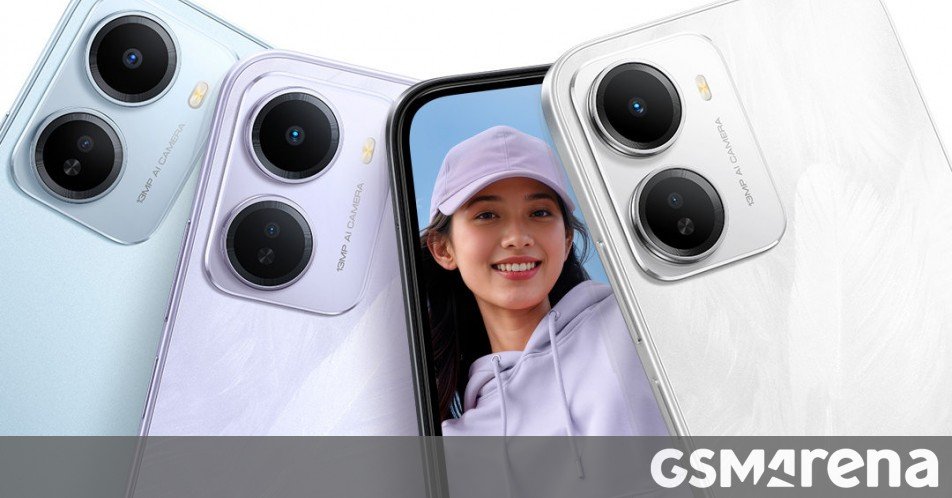
Photography capabilities remain modest with a 13MP main camera on the rear and an 8MP front-facing camera. This setup targets basic photography needs rather than enthusiasts, with the 13MP sensor likely using pixel binning to improve low-light performance. The camera system appears designed for social media sharing and video calls rather than professional photography.
Battery Life and Charging
The most significant difference between the two models lies in their battery capacities. The standard R70 packs a substantial 6,000mAh battery, while the R70m increases this to 6,300mAh. Both support 15W wired charging, which is relatively slow by current standards but helps preserve battery longevity. Additionally, both models support 7.5W reverse wired charging, allowing them to function as power banks for other devices.
Pricing and Availability
Redmi has positioned these devices aggressively in the budget segment. The R70 starts at CNY 1,599 (approximately $234) for the 4/128GB configuration, scaling up to CNY 2,099 ($307) for the 8/256GB variant. The R70m begins at CNY 1,799 ($263) for 6/128GB and tops out at CNY 2,299 ($336) for the 12/256GB model.
The devices come in four color options: black, white, blue, and purple. However, Redmi has not announced plans for international availability, suggesting these models may remain exclusive to the Chinese market initially. This follows a pattern seen with many Redmi and Xiaomi devices, where certain models launch in China before potentially expanding to other markets.
Market Context
The R70 and R70m enter a competitive budget smartphone segment where brands like Realme, Samsung, and Motorola offer compelling alternatives. The use of Unisoc's T8300 chipset is particularly noteworthy, as it represents growing competition in the mobile processor market traditionally dominated by Qualcomm and MediaTek.
For consumers in China, these devices offer a compelling combination of large displays, substantial batteries, and modern features like high refresh rates at prices that undercut many competitors. The question remains whether Redmi will eventually bring these models to international markets, where they could potentially disrupt the budget smartphone landscape.
The launch of the R70 and R70m continues Redmi's strategy of flooding the market with options across various price points, ensuring there's a device for nearly every budget and use case. While these particular models may not reach global markets, they demonstrate the direction of budget smartphone development and the increasing capabilities available at lower price points.
Comments
Please log in or register to join the discussion