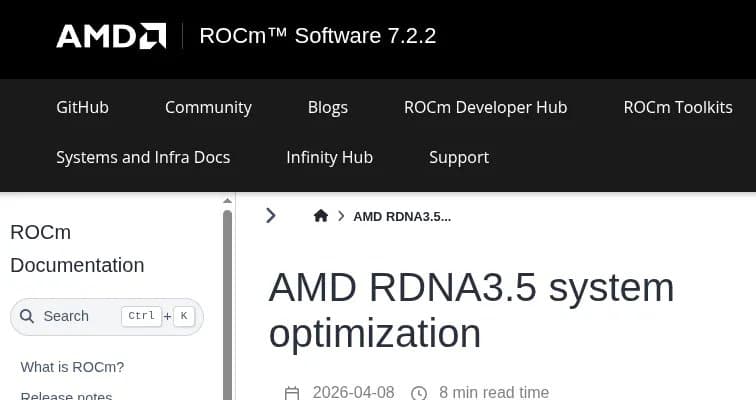
AMD releases ROCm 7.2.2 with documentation for optimizing Ryzen AI NPUs and RDNA 3.5 graphics, including Strix Point and Strix Halo platforms.
AMD has released ROCm 7.2.2, a minor update to their open-source GPU compute stack that brings a significant addition to the documentation side. While the code changes are minimal, the new RDNA 3.5 system optimization guide is arguably the most noteworthy feature of this release.
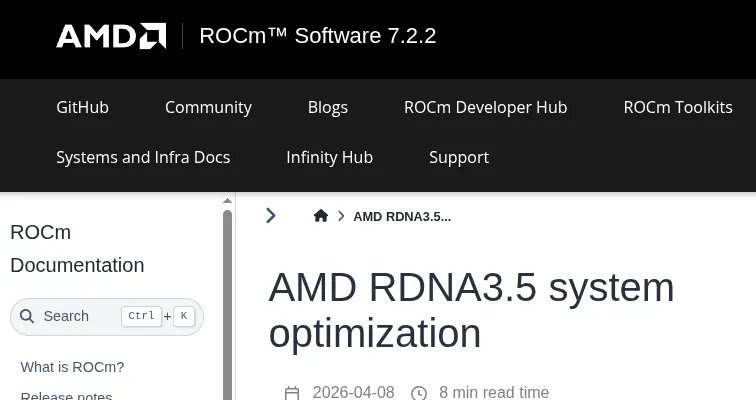
ROCm 7.2.2 addresses a few technical issues including a fix for ROCTracer reporting failures and updates to user-space, driver, and firmware dependency details. However, the spotlight falls on the newly added AMD RDNA 3.5 system optimization page, which provides comprehensive guidance for optimizing AMD Ryzen AI NPUs with RDNA 3.5 graphics.
The optimization guide specifically targets both Ryzen AI systems with RDNA 3.5 like Strix Point and the flagship Ryzen AI Max "Strix Halo" platforms. These integrated graphics solutions have garnered significant interest from the compute community due to their powerful performance capabilities.
Key optimization areas covered in the documentation include:
- Recommended memory settings and tunables
- Configuring shared memory limits under Linux
- Operating system support details
- Linux kernel version requirements
- Other system-specific configuration details
The timing of this documentation release raises some questions about AMD's software support strategy. Strix Halo hardware first began shipping in devices like the HP ZBook Ultra G1a approximately one year ago, while Ryzen AI 300 "Strix Point" hardware with RDNA 3.5 graphics has been available for about a year and a half. The fact that comprehensive optimization documentation is only arriving now, rather than at or near launch, represents a missed opportunity for AMD.
Early adopters and developers working with these platforms have had to navigate optimization challenges without official guidance, potentially limiting the adoption and performance tuning of ROCm on these capable integrated graphics solutions. The delay in documentation could have impacted the initial momentum and community engagement around these platforms for compute workloads.
Despite the timing concerns, the addition of this optimization guide is a positive development for the ROCm ecosystem. As AMD continues to push forward with their AI and integrated graphics strategy, having comprehensive documentation available for developers and system builders is crucial for maximizing the potential of these platforms.
The RDNA 3.5 architecture represents a significant step forward in AMD's integrated graphics capabilities, and proper optimization can make a substantial difference in performance for compute workloads. This guide should help users extract maximum performance from their Ryzen AI systems, whether they're running Strix Point or the more powerful Strix Halo configurations.
For those interested in the technical details of ROCm 7.2.2, the full release notes and code changes are available on GitHub. The optimization guide itself provides specific recommendations that can help users configure their systems for optimal ROCm performance on RDNA 3.5 hardware.
Moving forward, it would be beneficial for AMD to align their documentation releases more closely with hardware launches. Having optimization guides available at launch would provide a better experience for early adopters and could accelerate the adoption of ROCm on new platforms. This is particularly important as AMD continues to compete in the AI and high-performance integrated graphics space.
The ROCm 7.2.2 release demonstrates AMD's ongoing commitment to improving their open-source compute stack, even if the timing of certain features could be better aligned with hardware availability. As the ecosystem continues to evolve, comprehensive documentation and timely software support will be key factors in the success of AMD's AI and graphics initiatives.
Comments
Please log in or register to join the discussion