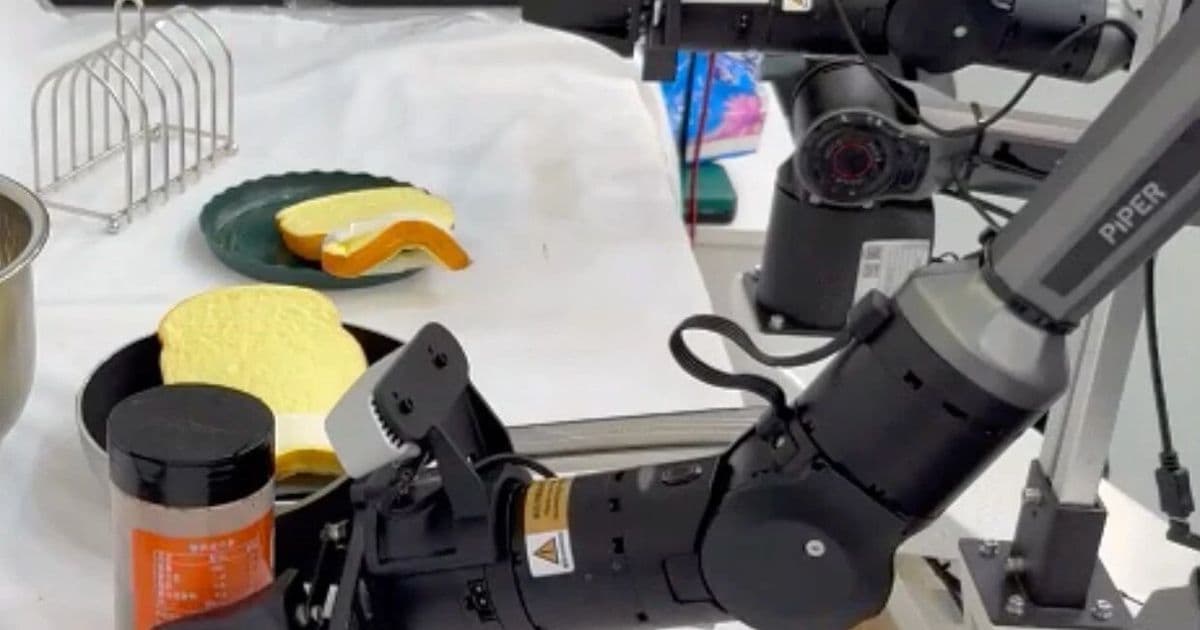
A Chinese research consortium released RoboMemArena, a benchmark that isolates memory demands in robotic manipulation. It offers 26 simulated tasks, 5 real‑world setups, and a public leaderboard, but its impact will depend on how well existing models can actually use the data and on the reproducibility of the real‑world portion.
RoboMemArena: A New Benchmark for Robot Memory in Long‑Horizon Tasks
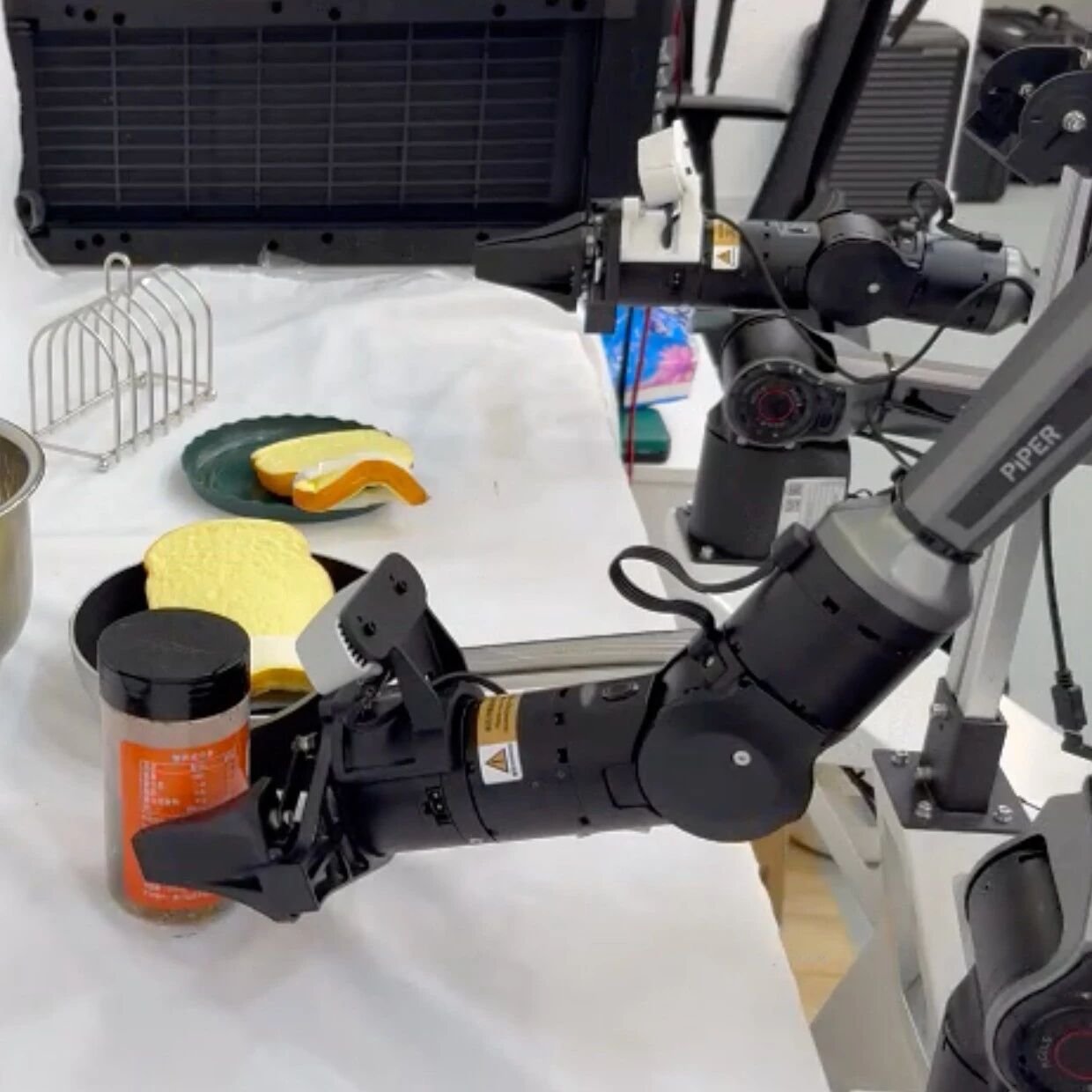
A group of universities in China – HKUST (Guangzhou), Tsinghua, Zhejiang, Westlake, and Shanghai Jiao Tong – have published RoboMemArena, a benchmark that tries to measure how well robots can retain and use information over extended manipulation sequences. The authors argue that most current embodied‑AI tests stop after a few dozen steps, so they never reveal whether a system can remember earlier events when later decisions depend on them.
What the paper claims
- Four memory‑centric scenarios: object transfer (move an item through several hand‑offs), target occlusion (track a hidden object), action counting (e.g., pour exactly three bottles), and sequence execution (follow a multi‑step recipe).
- 26 simulated tasks, broken into 151 subtasks, each accompanied by 2,600 expert demonstrations. Over two‑thirds of the subtasks are explicitly marked as memory‑dependent.
- Average episode length > 1,000 timesteps, far longer than the 100‑step horizons typical in benchmarks like Meta‑World or RLBench.
- Five real‑world tasks that mirror the simulated ones, including a 3‑minute “imitate‑human‑to‑make‑breakfast” (IHMB) scenario. Only the authors’ own PrediMem pipeline succeeded on IHMB.
- Open resources: dataset on Hugging Face, code on GitHub, and a public leaderboard for external submissions. The accompanying paper is on arXiv (2605.10921).
What is actually new?
- Explicit memory annotation – Most existing suites provide a flat list of demonstrations, leaving it to the researcher to infer which steps require recall. RoboMemArena tags each subtask with a binary “memory‑required” flag and supplies keyframe annotations that point to the relevant past observations. This makes it easier to train models that separate perception from episodic recall.
- Long‑horizon scale – The 1,000‑step average pushes the limits of current reinforcement‑learning and imitation‑learning pipelines, which often suffer from compounding error after a few hundred steps. The benchmark therefore forces developers to address drift, hierarchical planning, or learned world models.
- Real‑world bridge – The five physical setups are a modest but valuable addition. They expose the same memory patterns that appear in simulation, allowing a direct test of sim‑to‑real transfer for memory‑centric policies.
- Leaderboard with standardized metrics – Success is measured both by task completion and by a memory fidelity score that penalizes policies for ignoring the annotated keyframes. This dual metric is a step toward quantifying how much a robot actually remembers versus just reacting to the current frame.
Limitations and practical concerns
- Hardware requirements – The simulated environments run on Unity‑based physics with high‑resolution RGB‑D streams. Running 1,000‑step episodes at 30 Hz needs a GPU with at least 12 GB VRAM; many academic labs will have to down‑sample or truncate episodes, which defeats the purpose of testing long‑term memory.
- Real‑world reproducibility – The five physical tasks rely on custom rigs (e.g., a specially‑designed breakfast station). The repository includes CAD files, but assembling them demands tools and parts that are not universally available. Without a standardized kit, external labs may struggle to reproduce the results.
- Baseline diversity – The paper only reports results for their PrediMem model and a handful of off‑the‑shelf RL baselines. There is no systematic comparison with recent memory‑augmented architectures such as Transformer‑based world models, Neural Turing Machines, or Retrieval‑augmented policies. This makes it hard to gauge how far the field actually is from solving the benchmark.
- Evaluation overhead – Computing the memory fidelity score requires aligning each timestep with the provided keyframe annotations, a process that adds non‑trivial CPU load during evaluation. For large‑scale leaderboard submissions, this could become a bottleneck.
- Scope of tasks – While the four scenarios cover classic memory challenges, they omit more nuanced forms of episodic reasoning, such as causal inference across unrelated objects or long‑term goal re‑planning after unexpected disturbances. Future extensions will need to broaden the task set to avoid over‑fitting to the current patterns.
How to get started
- Clone the repository:
git clone https://github.com/RobomemArena/robomemarena.git. - Download the dataset from the Hugging Face hub:
datasets.load_dataset("robomemarena"). - Follow the quick‑start notebook in the
examples/folder to train a simple behavior‑cloning policy on the object‑transfer task. - Submit results to the leaderboard at
https://robomemarena.org/leaderboard– the site expects a JSON report containing task success rates and the memory fidelity score.
Bottom line
RoboMemArena fills a noticeable gap in embodied‑AI evaluation by foregrounding memory as a first‑class problem. Its scale and the inclusion of real‑world tasks are commendable, but the benchmark will only become a useful yardstick if the community can overcome the hardware and reproducibility hurdles and if more diverse baselines are benchmarked against it. Until then, it is a promising data set that will likely spur a handful of papers on memory‑augmented robot policies, but it is not yet the definitive test of robotic long‑term reasoning.
Comments
Please log in or register to join the discussion