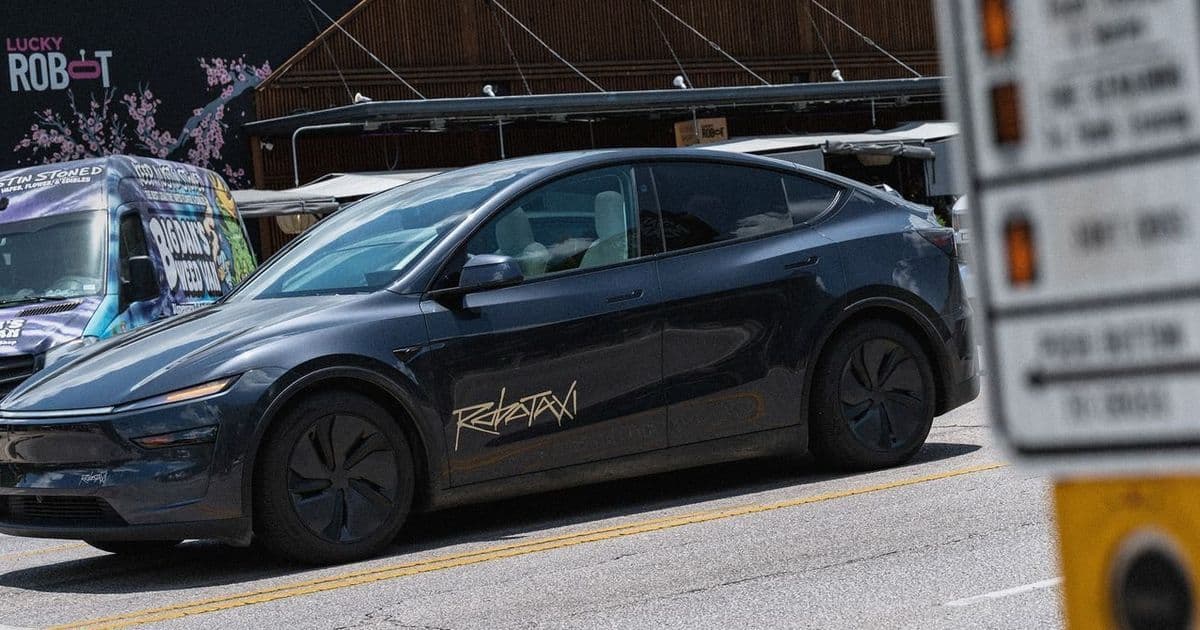
Newly disclosed documents from Waymo and Tesla to US regulators reveal extensive human involvement in robotaxi operations, challenging the narrative of full autonomy and raising questions about safety transparency.
The dream of fully autonomous vehicles navigating city streets without human intervention faces a reality check. Documents submitted by Waymo and Tesla to US federal regulators reveal unprecedented details about their remote assistance programs—teams of human operators who regularly intervene when robotaxis encounter challenging situations. These disclosures, obtained through federal safety reporting requirements, show that behind every 'self-driving' vehicle stands a network of human safety nets.
Both companies operate extensive remote command centers where human operators monitor multiple vehicles simultaneously. According to the filings, Waymo's remote assistants handle approximately one intervention every 160 miles traveled in complex urban environments. Tesla's system—still in limited testing—reported similar intervention rates during specific operational scenarios. Common triggers include construction zones, emergency vehicles, and unpredictable pedestrian behavior. Operators can redirect vehicles, override navigation decisions, or provide contextual instructions like "ignore that temporary stop sign" (Waymo Safety Report).
This reliance on remote humans presents operational challenges. Both companies acknowledge latency constraints—critical decisions must occur within 1.5 seconds to avoid compromising safety. Waymo's documents describe proprietary compression algorithms to maintain video feed quality during low-bandwidth scenarios, while Tesla emphasizes redundant cellular connections (Tesla AI Day 2025). Yet neither fully addresses how systems would scale if deployed across entire fleets. Current models show remote operators managing 3-5 vehicles concurrently, but scaling to thousands of cars would require exponential growth in human oversight.
Safety advocates counter that this reveals a fundamental flaw in autonomy claims. "These documents prove robotaxis are still teleoperation systems with automation enhancements," notes Consumer Watchdog's vehicle safety director. "The term 'driverless' becomes misleading when humans intervene multiple times per trip." Critics highlight inconsistencies in reporting standards: While Waymo categorizes interventions by type (navigation, perception, behavior), Tesla aggregates them under broader classifications, making direct comparisons difficult.
Company engineers argue remote assistance serves as a necessary training mechanism. Each intervention feeds back into machine learning systems, gradually reducing the need for human input. Waymo points to a 40% year-over-year reduction in required interventions as evidence of progress. Tesla's filings emphasize how remote assistance handles rare "edge cases" during the company's supervised FSD testing phase.
Regulatory gaps remain glaring. NHTSA currently lacks standardized metrics for reporting remote assistance frequency or latency. California's DMV requires disclosure of disengagement rates during testing, but federal rules don't mandate equivalent transparency for commercial deployments. The newly revealed documents emerged through voluntary submissions rather than compulsory frameworks.
As robotaxis expand beyond controlled test zones into cities like San Francisco and Phoenix, the tension between technological ambition and operational reality grows. These disclosures underscore that true autonomy remains aspirational—and that the path forward still relies heavily on human oversight, whether companies advertise it or not.
Comments
Please log in or register to join the discussion