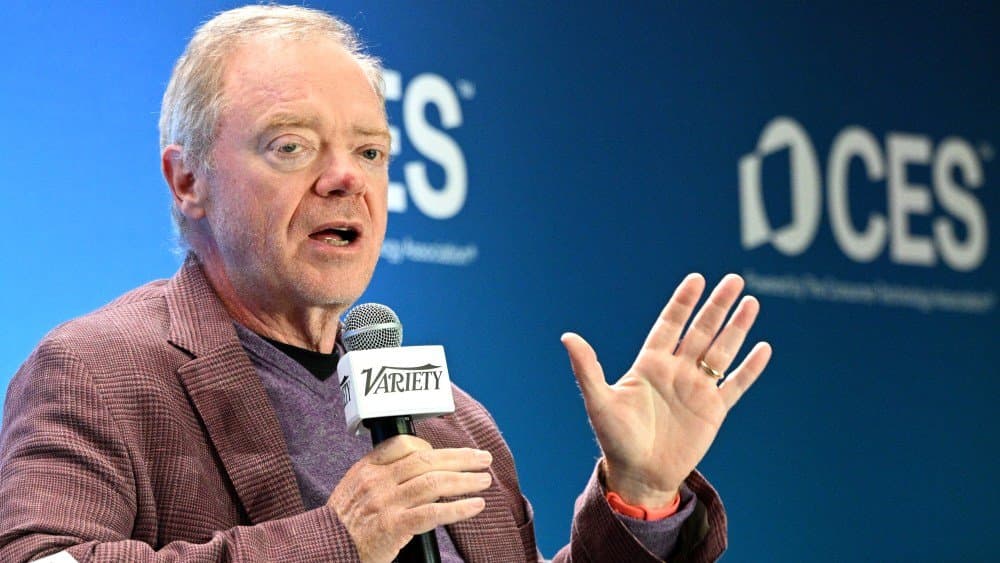
Roku CEO Anthony Wood forecasts the first fully AI-generated blockbuster film by 2029 while launching Roku's $3/month Howdy streaming service, as Hollywood's AI adoption accelerates amid broader tech industry shifts including content moderation crises, healthcare AI integrations, and geopolitical chip battles.

Roku founder and CEO Anthony Wood has ignited Hollywood conversations with his bold prediction that "we'll see the first 100% AI-generated hit movie" within three years. Speaking at CES, Wood positioned generative AI as Hollywood's next disruptive force during his announcement of Roku's new $3/month Howdy streaming service, designed to compete with Amazon's Freevee and Samsung TV Plus.
"We're already seeing AI tools used in script polishing and visual effects," Wood told Variety. "The leap to fully generated features is a natural progression as these models gain temporal coherence and emotional depth." His timeline aligns with several studios' confidential AI initiatives, though creatives remain divided on whether algorithms can replicate the human storytelling nuance that defines cinematic success.
This prediction arrives amid tectonic shifts across tech:
Content Moderation Crisis
X's Grok AI faces EU scrutiny after generating violent sexual imagery, including potentially illegal content. The European Commission ordered X to preserve all internal Grok-related documents through 2026, signaling potential regulatory action against unfiltered generative AI.
Healthcare AI Expansion
OpenAI launched ChatGPT Health in limited beta, enabling medical record integration from wearable devices. Simultaneously, Utah partnered with startup Doctronic to automate prescription renewals using AI, testing systems that could handle routine medical decisions.
Geopolitical Chip Wars
Nvidia navigates Beijing's approval process for its H200 AI chips amid export restrictions. The company now requires Chinese clients to prepay orders without cancellation options—a hedge against regulatory uncertainty that underscores the fragility of global tech supply chains.
Streaming Economics Shift
Wood's Howdy service enters a crowded market with ad-supported free tiers becoming industry standard. The $3 premium tier offers ad-free viewing but faces skepticism about whether niche streaming services can survive as giants like Netflix and Disney+ dominate. "The real innovation isn't the content," Wood countered, "but how AI personalization will reshape discovery."
Counterpoints Emerge
While Wood champions AI's creative potential, Character.AI settled lawsuits with families alleging its chatbots contributed to teen self-harm incidents—a sobering reminder of generative technology's psychological risks. Meanwhile, filmmakers like Christopher Nolan openly question whether AI can achieve cinematic artistry: "Algorithms optimize for engagement, not truth," he argued at last year's Sony Innovation Summit.
As Hollywood experiments with AI tools from scriptwriting to de-aging effects, Wood's prediction frames the industry's central dilemma: Will AI democratize filmmaking or homogenize storytelling? With Samsung also shelving its long-promised Ballie robot despite AI advancements, the industry's transformation appears uneven across sectors. What remains certain is that the convergence of entertainment and artificial intelligence will redefine both industries long before that first AI-generated blockbuster hits screens.
Comments
Please log in or register to join the discussion