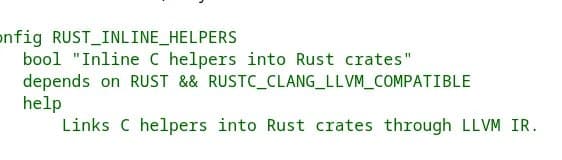
Linux 7.1 introduces CONFIG_RUST_INLINE_HELPERS, an experimental option that can boost Rust kernel code performance by up to 2% by inlining C helpers, but requires Clang and matching LLVM versions.
Rust For Linux 7.1 Brings Experimental Inline Helpers for Performance Gains
With the Linux 7.1 merge window approaching, Miguel Ojeda has sent out the latest Rust feature updates for the kernel. The changes include a minimum Rust version bump, new experimental performance optimizations, and various other improvements to the Rust support in the Linux kernel.
Minimum Rust Version Bumped to 1.85
The baseline Rust version for building the Linux kernel is increasing from 1.78 to 1.85. Additionally, Bindgen 0.71.1 is now required, up from 0.65.1. These versions align with what's shipped in Debian Trixie, the current stable release that debuted last August.
This conservative approach means that newer distributions like Ubuntu, Fedora, and openSUSE are already well-positioned to meet or exceed these new requirements. The alignment with Debian stable ensures a stable foundation for kernel builds across different Linux distributions.
Experimental CONFIG_RUST_INLINE_HELPERS Option
The most significant performance-related change in Linux 7.1 is the new CONFIG_RUST_INLINE_HELPERS Kconfig option. This experimental feature enables inlining C helpers directly into Rust code, similar to link-time optimizations (LTO) but specifically targeting C helper functions.
According to the developers, this approach provides measurable speedups for various workloads. One concrete example shows the Rust null block driver running approximately 2% faster with this option enabled. While 2% might seem modest, in kernel space where performance is critical, even small improvements can have meaningful impacts on overall system responsiveness.
Clang Requirement and LLVM IR Linking
There's an important caveat: this inlining approach requires using LLVM Clang as the C compiler rather than GCC. Additionally, the LLVM major version of Clang must match the Rust compiler version. This requirement exists because the optimization relies on LLVM IR (Intermediate Representation) linking together the Rust code with the C helpers before object code generation occurs.
The good news is that this approach works seamlessly for loadable kernel modules as well, meaning third-party drivers and modules can potentially benefit from these performance improvements without requiring kernel recompilation.
Other Rust Improvements in Linux 7.1
Beyond the performance optimizations, Linux 7.1's Rust support includes several other notable changes:
- Support for global per-version flags
- Enhancements to the kernel crate
- Rust analyzer improvements
- Various other incremental improvements
The complete list of Rust feature changes for Linux 7.1 is available in the pull request documentation.
Performance Implications and Future Directions
The introduction of CONFIG_RUST_INLINE_HELPERS represents an interesting approach to optimizing Rust code within the Linux kernel. By leveraging LLVM's IR linking capabilities, the kernel developers can achieve performance gains that would be difficult to obtain through traditional compilation methods.
This experimental feature highlights the ongoing maturation of Rust support in the Linux kernel. As more developers gain experience with kernel Rust programming and as the tooling continues to improve, we can expect to see more sophisticated optimizations emerge.
The 2% improvement in the null block driver serves as a proof of concept, but the real impact will depend on how widely this feature is adopted and in what types of kernel components. Drivers, file systems, and other performance-critical kernel subsystems could potentially see the most benefit.
For kernel developers and system builders, this change means that choosing Clang over GCC for kernel compilation may become increasingly attractive, especially for systems where every percentage point of performance matters. The matching LLVM version requirement does add some complexity to the build process, but for performance-sensitive deployments, this trade-off may well be worthwhile.
The Rust for Linux project continues to evolve rapidly, with each kernel release bringing new capabilities and optimizations. As Rust becomes more deeply integrated into the kernel ecosystem, features like inline helpers will likely play an important role in bridging the performance gap between Rust and traditional C kernel code.
Comments
Please log in or register to join the discussion